

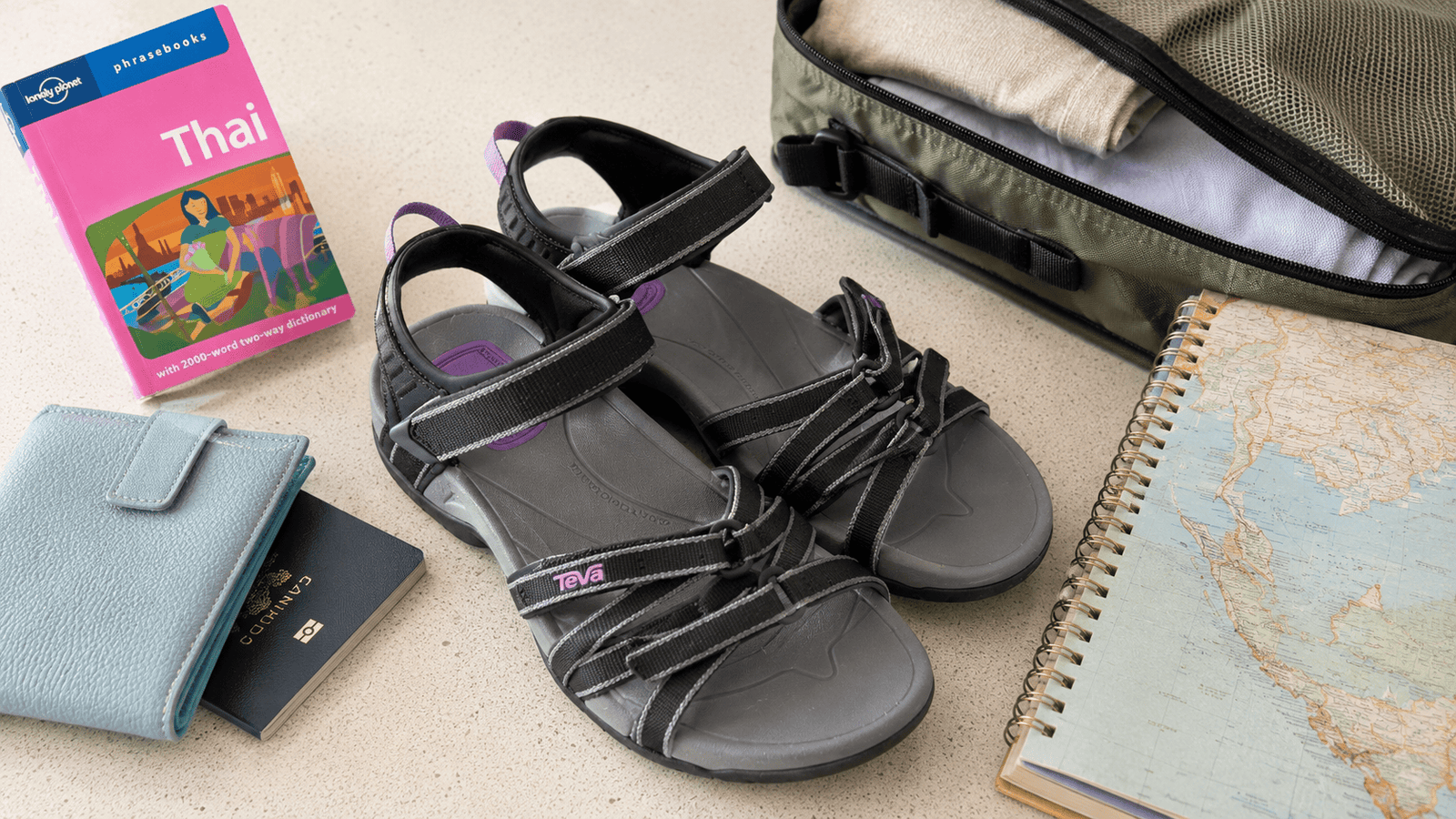
Choosing shoes for a four-and-a-half-month trip has been surprisingly difficult.
We are travelling through hot and humid parts of Southeast Asia before finishing in Japan in April and May, including some cooler alpine areas. I also want to travel carry-on only, which makes bringing shoes for every possible situation unrealistic.
Originally, I hoped to solve the problem with just two pairs: a substantial sandal that could handle almost everything, plus lightweight flip-flops for beaches and pools.
That plan did not survive the shoe-testing stage.
I eventually chose the original Teva Tirra as my main warm-weather walking sandal. It should cover most city days, sightseeing, lighter hikes and wet activities in Southeast Asia. But choosing it also meant accepting that I will probably need a third pair of shoes for situations where I want a covered toe, more protection or warmer footwear.
For me, that trade-off was better than trying to make one shoe do everything badly.
The quick decision
Why I chose the original Tirra
Immediate comfort, more adjustability around my foot, enough support for substantial walking, water-friendly construction and a less technical appearance than some alternatives.
The compromise
Open toes and limited protection mean I still want a covered shoe for rougher trails and cooler weather.
Who might choose differently
Someone with a narrower foot may prefer the Tirra Sport; someone prioritizing protection may prefer a closed-toe option.
What I needed from a travel sandal
The main reason I wanted a substantial sandal was simple: Southeast Asia will be hot.
I expect to do a lot of walking, and I did not want my only choices to be a fully enclosed shoe or a minimalist flip-flop. The flip-flops I am bringing are really for beaches, pools, walking around accommodation and short trips out for coffee or food. I would not want to rely on them for a full sightseeing day.
The main sandal therefore needed to be comfortable enough for substantial walking, supportive, relatively packable and secure on my foot. A heel strap was important because I wanted something that felt locked in rather than loose.
Water resistance was another advantage. We are likely to encounter beaches, waterfalls, wet paths and plenty of rain, so a shoe that does not immediately become useless when it gets wet makes sense.
I also wanted something that could look reasonably normal with everyday clothes. It did not have to be dressy, but I preferred a sandal that felt a little less technical if I wanted to wear it to a restaurant or around a city in the evening.
That combination narrowed the field more than I expected.
I originally though the Keen Hyperport would solve the problem
My original plan was the Keen Hyperport plus flip-flops.
On paper, it seemed almost ideal. It offered more toe protection than an open sandal, looked suitable for water and walking, and potentially could have handled enough different situations that I would not need a third pair.
Unfortunately, comfort overruled the spreadsheet.
I ordered the Hyperport and wore it around the house, but it rubbed the inside of my foot unless I wore socks. That defeated much of the purpose. I specifically wanted a shoe I could wear comfortably without socks in hot weather.
I could probably have tried to break it in and hope the rubbing improved, but for a trip this long, I do not want to start with a shoe that already requires me to make excuses for it.
The other sandals I tried
I tried several different options before settling on the Tirra.
The Keen Rose was too narrow and tight on my foot. The Leika sandal was comfortable, but I preferred having more adjustment points so I could fine-tune the fit.
I also tried Teva's newer Tirra Sport model. I actually really liked it. It was comfortable and I preferred its appearance, but the fit seemed narrower than the original Tirra.
I bought the Tirra Sport initially, then ordered the original Tirra to compare them. Once I had both, the original won because I had more room to adjust the straps around my foot.
I also tried the Teva Hurricane. The footbed itself felt very comfortable, but the strap placement rubbed almost immediately in the store. If I can feel a potential problem during a brief fitting, I am reluctant to assume it will disappear after several hours of walking.
The original Tirra was the pair that did not create an obvious problem I needed to solve.
How the sandals compared for me
This is a fit and decision comparison based on the pairs I personally tried, not a specification ranking.
| Shoe | What appealed to me | Main trade-off for me |
|---|---|---|
| Teva Tirra Original | Adjustable, comfortable immediately, roomier fit on my foot | Open toe means another shoe is still needed |
| Teva Tirra Sport | Comfortable and I preferred the appearance | Felt narrower on my foot |
| Teva Hurricane | Comfortable footbed | Strap placement rubbed almost immediately |
| Keen Hyperport | More toe protection and potentially more versatile | Rubbed the inside of my foot without socks |
| Keen Rose | More protected feel | Too narrow and tight |
| Leika sandal | Comfortable | Less adjustability than I wanted |
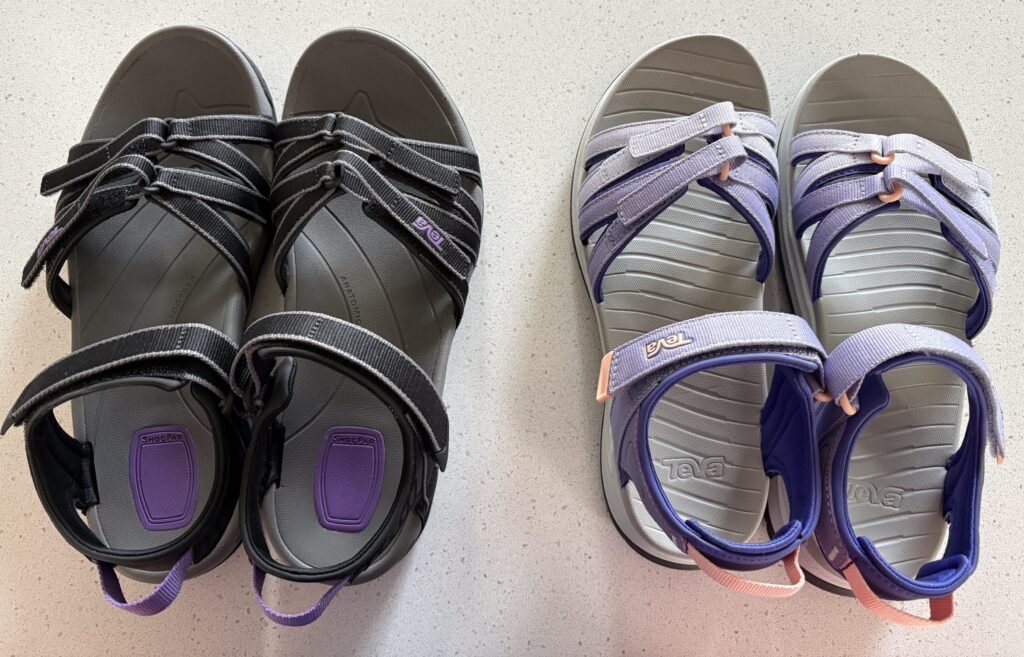
Why I chose the original Teva Tirra
The biggest advantage of the Tirra for me is adjustability.
The multiple straps give me much more control over the fit than many of the other sandals I tried. That matters when my feet are already somewhat wider and may swell after long days of walking in hot weather.
They also felt comfortable immediately. I have been wearing them around home and so far have not found any obvious pressure or rubbing points. Before the trip, I plan to take them on some much longer walks to see whether that remains true after several hours.
I also like that they sit somewhere between a purely functional hiking sandal and an everyday sandal. I would be comfortable wearing them around a city or out for dinner in a way I might not with some of the chunkier, more technical options I considered.
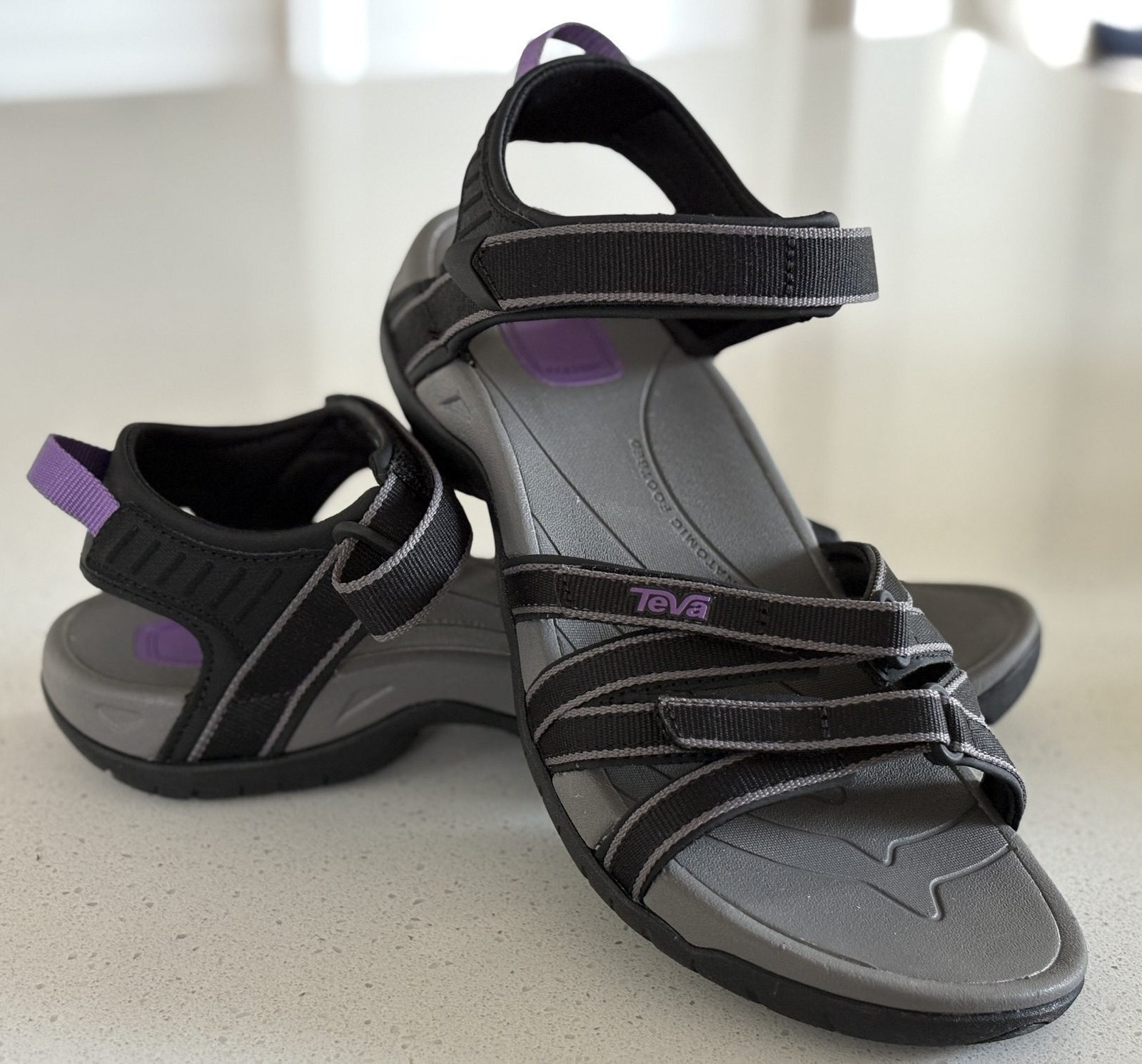
And they pack relatively easily, which matters because the footwear system only works if I can wear the bulkiest shoe in transit and fit both the Tirras and very minimalist flip-flops in my luggage.
What I still don't know about them
Choosing a shoe before a trip and knowing whether it was actually the right choice are two different things.
My biggest question is how the Tirras will perform when wet. I like the fact that they can get wet, but I still need to find out how good the traction is on slippery surfaces and how quickly they dry in humid conditions.
I am also not convinced they are the right shoe for every Southeast Asian hike.
For relatively straightforward trails, waterfall walks and light nature activities, I expect to use them frequently. But jungle trails with sharp rocks, rough terrain or situations where I would rather have more protection from the environment are another matter.
The open toe is the obvious compromise.
Toe protection matters to me, and choosing the Tirra means accepting that I still need another shoe for situations where a covered foot feels more appropriate.
This has become a three-shoe trip
I had hoped for two pairs.
Instead, I am now planning on three: minimalist flip-flops, the Teva Tirra and one covered shoe that I have not finalized yet.
That third shoe needs to handle bigger hikes, situations where I want more toe protection, cooler weather in Japan and days when my feet simply need a break from the sandals. I already own Skechers Go Walks, but I am also considering something more flexible and travel-oriented such as the Salomon Techamphibian 5.
Three pairs sounds like more than I originally wanted to carry, but the system still feels manageable. I can wear the largest pair on travel days and pack the Tirras and thin flip-flops.
More importantly, each pair would have a different job rather than bringing three versions of the same shoe.
My planned three-shoe system
Minimal flip-flops
Pool, beach, accommodation and very short outings
Teva Tirra
Hot-weather city walking, sightseeing, lighter hikes and wet activities
Covered shoe — still to be finalized
Rougher trails, toe protection, cooler Japan and alternate footwear on long days
Why not just bring running shoes and flip-flops?
That would certainly be simpler. For a shorter trip, I might do exactly that.
But Southeast Asia is a large part of this itinerary, and I expect substantial walking in heat and humidity. I do not want to spend months choosing between wearing an enclosed shoe when I would rather have airflow or walking long distances in flip-flops that were never designed for it.
The Tirra fills the space between those two extremes. It gives me a supportive walking shoe that happens to be a sandal rather than a sandal I am hoping can survive a long walking day.
Who might make a different choice
The Tirra will not be the right answer for everyone.
Someone with a narrower foot might prefer the newer Tirra Sport that I liked but ultimately returned. Someone who wants one sandal to handle rougher trails may prefer a model with more substantial toe protection. And someone travelling only in warm cities and beach areas might have no reason to bring a third shoe at all.
I also would not choose the Tirra as my only shoe for our entire trip. By the time we reach Japan in April and May, particularly in the alpine regions, I expect to want something enclosed and warmer.
For my trip, though, trying to find one pair that could handle humid Bangkok streets, waterfall trails and cooler mountain days in Japan was probably asking too much.
The Teva Tirra does not solve every footwear problem.
It solves the one I actually needed it to solve: giving me a comfortable, supportive and relatively versatile shoe for doing a lot of walking in Southeast Asian heat.
Whether it earns that place in my bag over four and a half months is something I will only know once I have actually travelled in it.
More from this trip
- Why We’re Taking Several Months to Travel Through Southeast Asia and Japan
- How We Planned 26 Nights in Thailand Without Trying to See Everything
- Booking Ferries in Thailand: Why I Booked Direct Instead of Through 12Go
Plan your own trip
Know How You travel
Understand how pace, comfort and the number of hotel changes fit the way you travel.
Plan Your Trip
Build a route around the time, priorities and logistics that actually matter.