

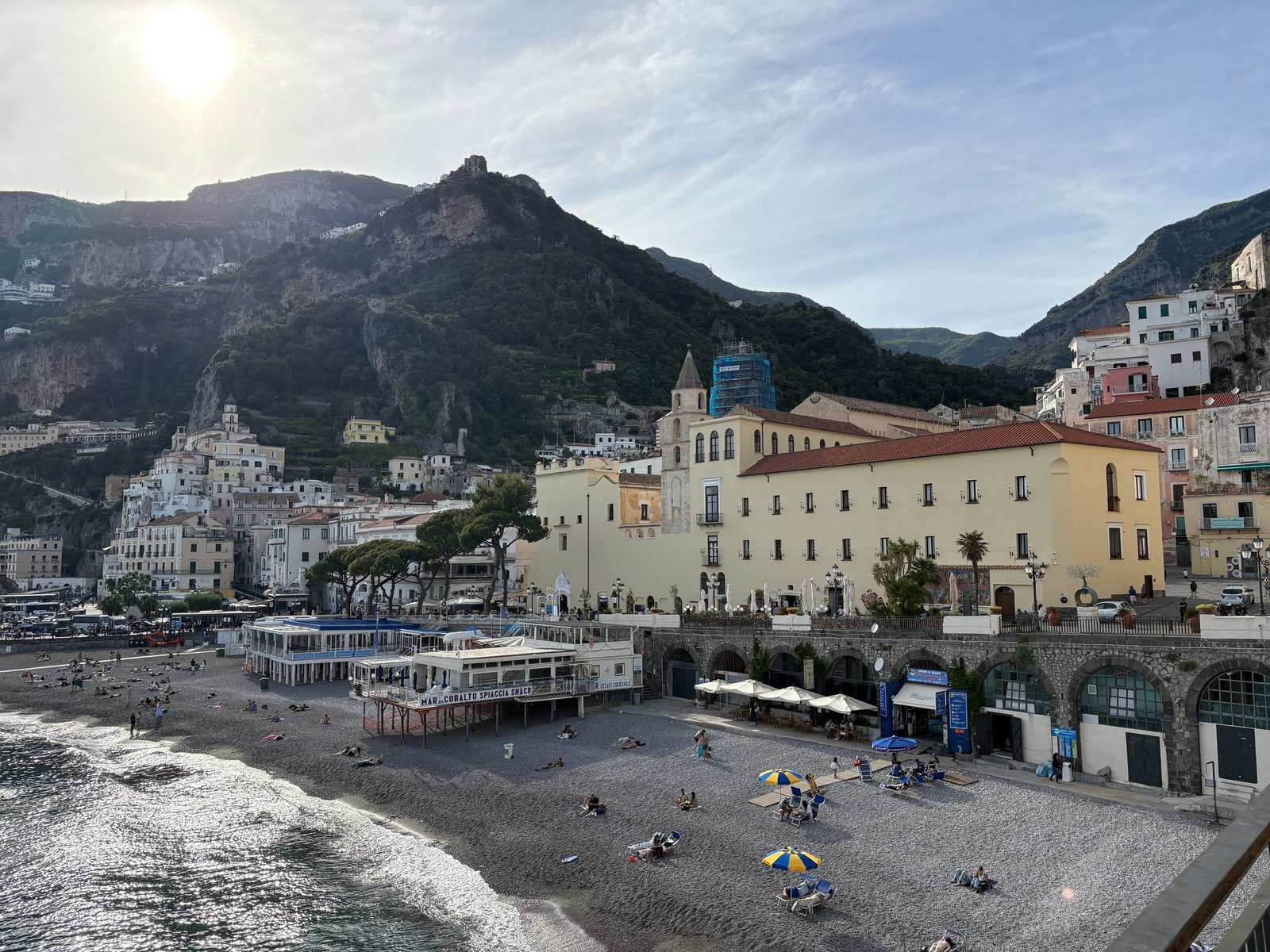
Four nights is not enough time to see Capri, the Amalfi Coast and Naples properly, but it was enough to get a taste of the region — and to make me want to come back one day.
My time was limited by a work schedule, and I already knew I would fly home from Naples. That gave me a fixed endpoint and only a few days to decide what to do between Rome and that final flight. After several days in the city, the sea, open spaces and nature were particularly appealing, so I settled on:
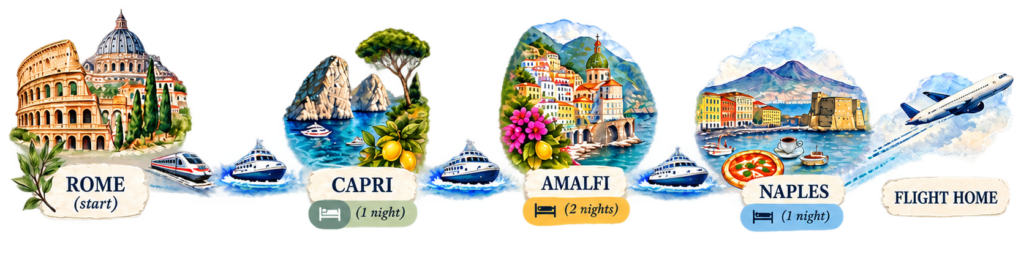
Getting there required some hard choices. Pompeii, Ravello and several other places were tempting, but four nights could not support all of them without turning the trip into a race. The itinerary I ended up with was short, but very satisfying.
Affiliate disclosure: This article contains affiliate links. If you book or buy through one of them, I may earn a commission at no additional cost to you. This does not affect the recommendations or comparisons in the article.
The quick decision
This is an assessment of this specific four-night route, not a recommendation for how long the Amalfi Coast deserves overall.
Best for...
Travellers with limited time who want a taste of Capri and the Amalfi Coast, are comfortable changing bases and do not expect to explore any one place deeply.
Add more time if...
You want Ravello, Pompeii, more hiking or nature, additional time on Capri, beach days or a slower experience of the coast.
Choose fewer bases if...
Hotel changes drain you, you are travelling with substantial luggage or you would rather settle into one place than use several short stays.
Why I chose four nights
Four nights was driven primarily by the time I had available. There was very little room to extend the trip, so the real question was how to use those days well.
I had been to Italy several times but never travelled south of Rome. Since I could fly home from Naples rather than returning to Rome, this seemed like a good opportunity to get a first look at a part of the country I had not experienced before.
Research quickly revealed the problem: there was far more within reach than I could realistically fit in. Capri, the Amalfi Coast, Pompeii, Ischia and Naples itself all looked appealing. I knew I did not want to spend the entire extension in another city, though. After Rome, I was much more interested in getting toward the coast, spending time outside and building at least one substantial hike into the trip.
The fourth night became particularly important once I decided the Path of the Gods was a priority. Trying to do the hike while checking out, managing luggage and moving to another base would have created exactly the kind of day I wanted to avoid.
Travelling solo made the resulting pace much more manageable. I had only my own luggage, energy and timing to manage, and I was travelling with a small carry-on roller and a daypack. I would plan the same four nights differently with a family.
Why Capri came first
I left Rome on a 9:41 a.m. train, which arrived in Naples at 10:53 a.m. I deliberately avoided the earliest possible departure because I did not want the personal part of the trip to begin with an unnecessarily rushed morning.
From Napoli Centrale, I took the metro toward the port. Public transportation was easy and well connected, and I could simply tap my Wise card rather than stopping to work out a separate ticket.
I had intentionally left a generous buffer before my 11:55 a.m. NLG ferry to Capri. There was an earlier ferry that looked possible on paper, but I worried the connection would be too tight. I was right: even with a straightforward metro trip from the station, I would not have made that earlier boat comfortably.
That extra buffer looked inefficient when I was planning, but it meant I did not need to race across Naples or start worrying the moment the train lost a few minutes. The details of trains, ferries and the strike uncertainty around this trip deserve their own practical article; the important lesson for this itinerary was that I preferred protecting the connection to maximizing every available minute.
Capri also kept the route moving logically toward the coast rather than spending the first night back in Naples. The final night in Naples was already spoken for because my flight home departed at 9 a.m., and I was not willing to depend on an early ferry from the coast before an international itinerary.
My actual ferry experience reinforced that decision. The Naples-to-Capri crossing arrived about 30 minutes late because of very rough seas, and the following day the Capri-to-Amalfi ferry skipped Positano entirely because the conditions prevented it from entering the port. Ferries are useful, but I would not build a flight connection around the assumption that they will always operate exactly as planned.
For the full breakdown of that part of the trip, see Is Staying Overnight in Capri Worth It?
One night in Capri was enough for this route
I wanted more from Capri than a rushed day trip, but I also did not want the island to take up most of my limited time.
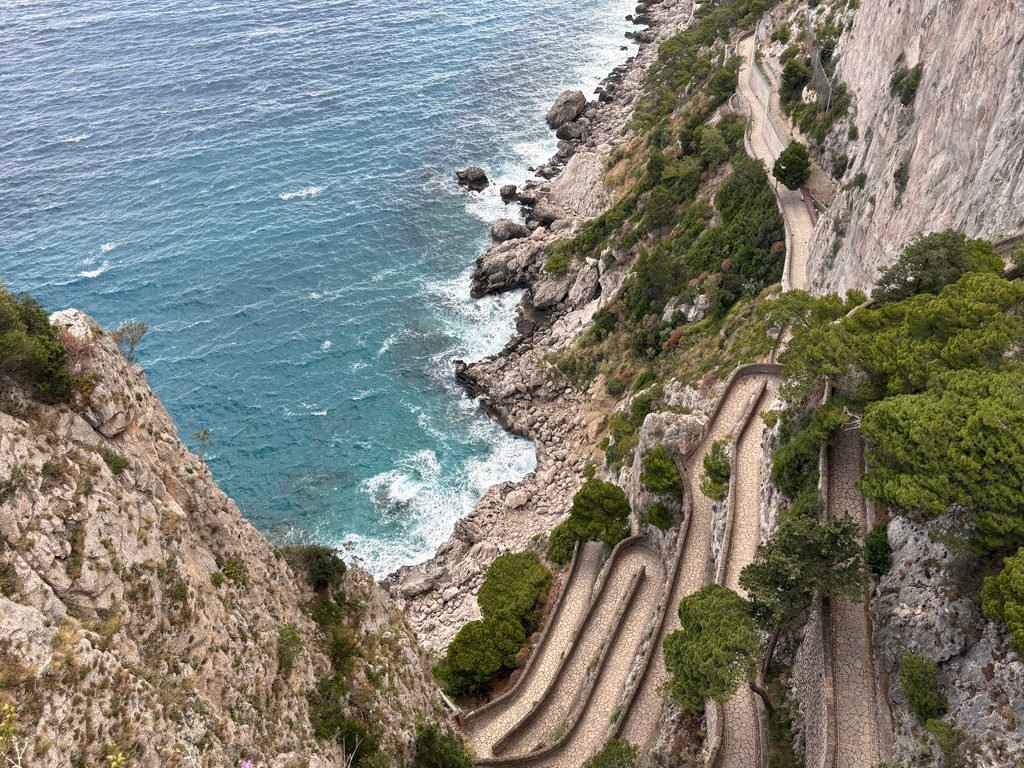
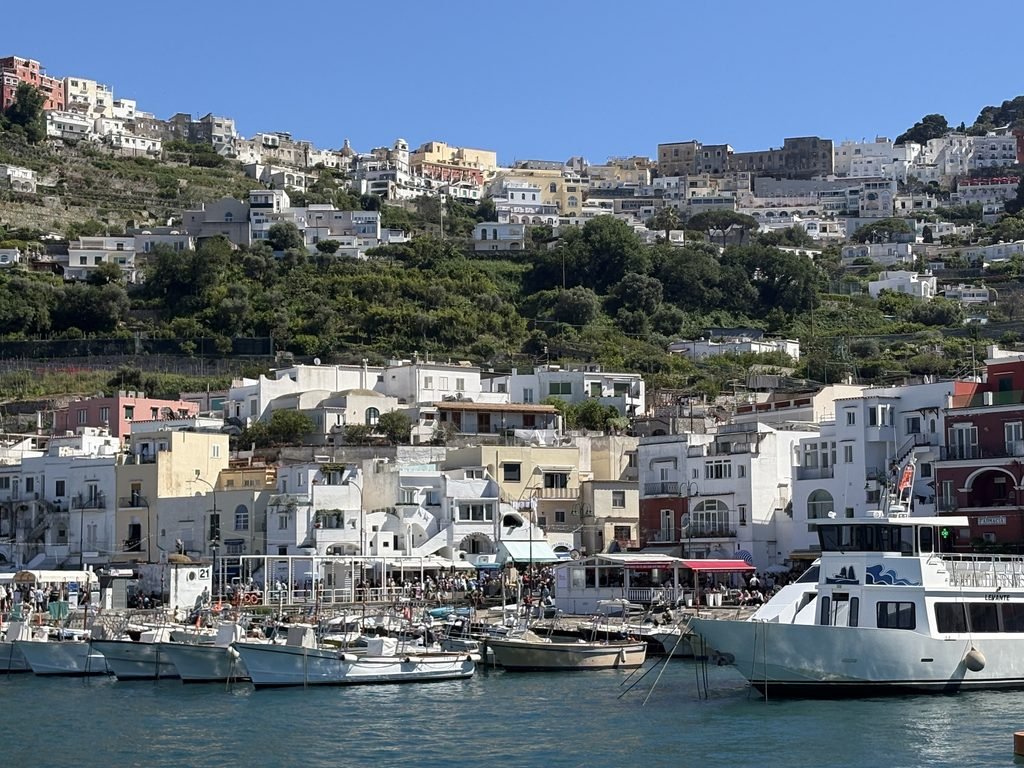
One night at Hotel Syrene let me explore Anacapri and Capri Town after arriving, experience the quieter streets once the day-trip crowds had left, and take a boat trip around the island the following morning before continuing to Amalfi.
For this itinerary, that was the right allocation. With more time, I could easily have stayed another night to explore more of Capri's coastal paths and quieter areas, but one night was enough to make the island feel like somewhere I had stayed rather than somewhere I had simply passed through.
Why I chose Amalfi Town as the main base
The biggest accommodation decision was where to put the two central nights.
I considered Positano, Ravello, Sorrento and Amalfi Town. Amalfi won because it aligned best with the actual trip: it is a major ferry stop, has useful connections to Capri and Naples, and looked easier to manage with luggage than Positano, where stairs are a much bigger part of getting around.
Sorrento is well connected, but for this trip it felt too far outside the stretch of coast I wanted to experience. Ravello appealed to me, but I would not choose it as a base for this kind of trip. Its location higher in the hills adds another transfer whenever you arrive or leave. For a slower stay where frequent movement and coastal sightseeing were not priorities, that could be much less of a drawback.
Most importantly, Amalfi Town was a practical base for the Path of the Gods. Two nights meant I could arrive, settle in, spend the next day hiking and leave for Naples the following day without combining the hike with a hotel change.
Looking for a base in Amalfi Town? Compare current hotel options and prices below.
Giving the Path of the Gods its own day
The Path of the Gods became the anchor of my Amalfi stay.
I took the 10 a.m. bus from Amalfi toward Bomerano, a small town in the hills above the coast and the starting point I had chosen for the hike. It was bus 5080, Amalfi–Agerola–Naples, and the journey took about 40 minutes with traffic.
The ride itself was enjoyable. The road climbed into the hills with beautiful views, and I had a seat for the journey. Buying the ticket was considerably less straightforward.
Before the trip, I had found several references saying that local shops around Amalfi sold bus tickets. I tried multiple shops — including some specifically listed online — and none sold them. Several had signs stating that they did not sell bus tickets at all.
Eventually, after asking around, I discovered that a man in a yellow vest near the bus area by the docks was selling them. I paid cash for a one-way ticket and waited near what Google Maps calls Amalfi Terminal, which sounds much more formal than it looks in person.
The bus driver was helpful and told those of us heading to the Path of the Gods where to get off in Bomerano. From the bus stop, the trailhead was not particularly obvious, so I used Google Maps until I reached the marked route.
The hike itself was one of the highlights of the trip. The views along the coast were extraordinary, and the trail felt much quieter than the towns below while still having enough other hikers around that I never felt isolated travelling alone. I took a little over two hours to reach Nocelle, another small town in the hills above Positano, with plenty of stops for photos.
There is enough to say about the hike — the route, transportation, difficulty and what I would do differently — that it deserves its own article. For this itinerary, the key point is that giving it a full day meant I could actually enjoy it rather than treating it as something to squeeze between transfers.
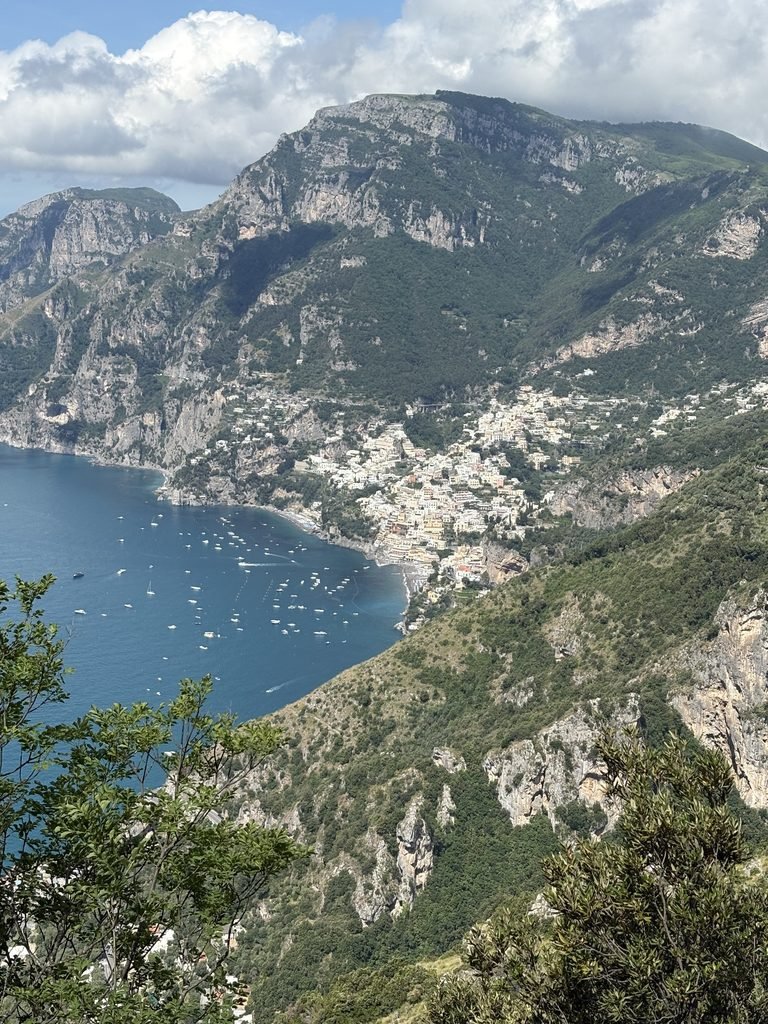
Getting from Nocelle to Positano was less obvious than expected
From Nocelle, it is possible to walk roughly 1,000 steps downhill toward Positano. After the hike, I had no desire to add that simply because it was an option, so I looked for the bus instead.
Finding it was not particularly intuitive. I continued through Nocelle until I eventually saw a sign pointing up a set of stairs toward a bus stop. The stop itself was tiny: no shelter, very little signage and not much reassurance that I was standing in the right place.
For a while, I wondered whether I had misunderstood where to wait. A few other travellers eventually appeared, which made me feel considerably better about my choice of roadside location. There may be a more obvious place to catch the bus, but I could not find it.
The bus was small and became increasingly crowded as it wound down the mountain roads toward Positano. I paid cash to the driver, and the ride took roughly 30 minutes.
Once there, I walked through part of Positano and visited the church, but the narrow streets were extremely crowded in the middle of the day. I made my way toward the beach and docks fairly quickly, bought a ticket for the next ferry back to Amalfi and enjoyed the coastal views while I waited.
Positano is undeniably beautiful. For this trip, that short visit was enough.
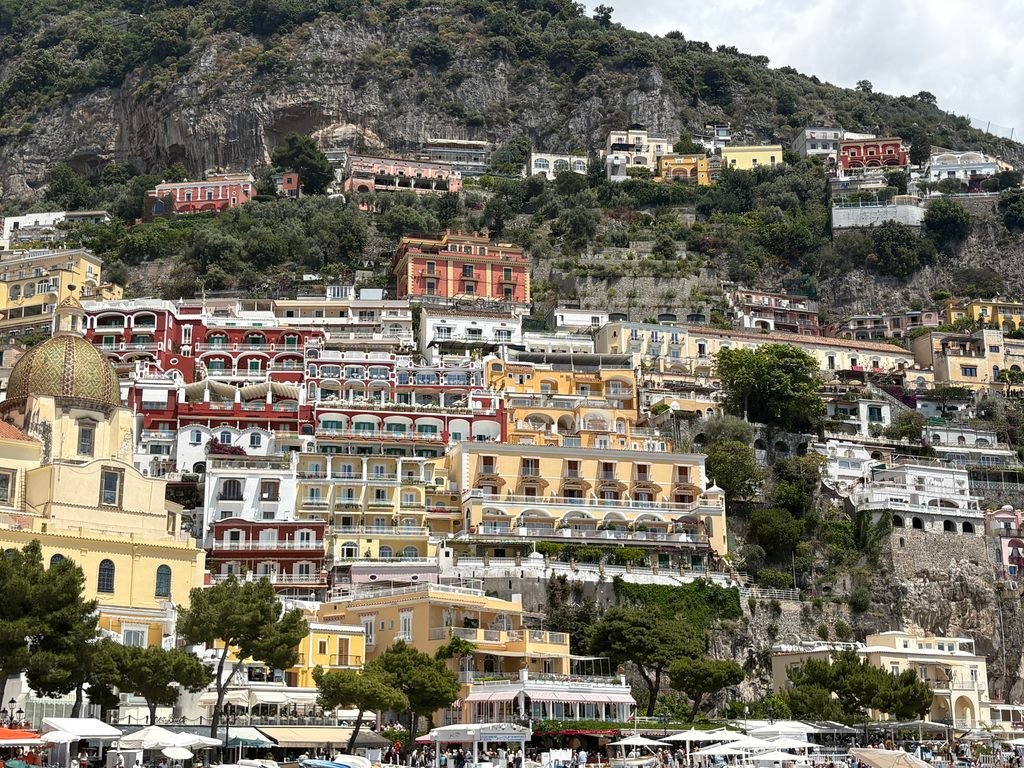
Amalfi still had plenty to offer after the hike
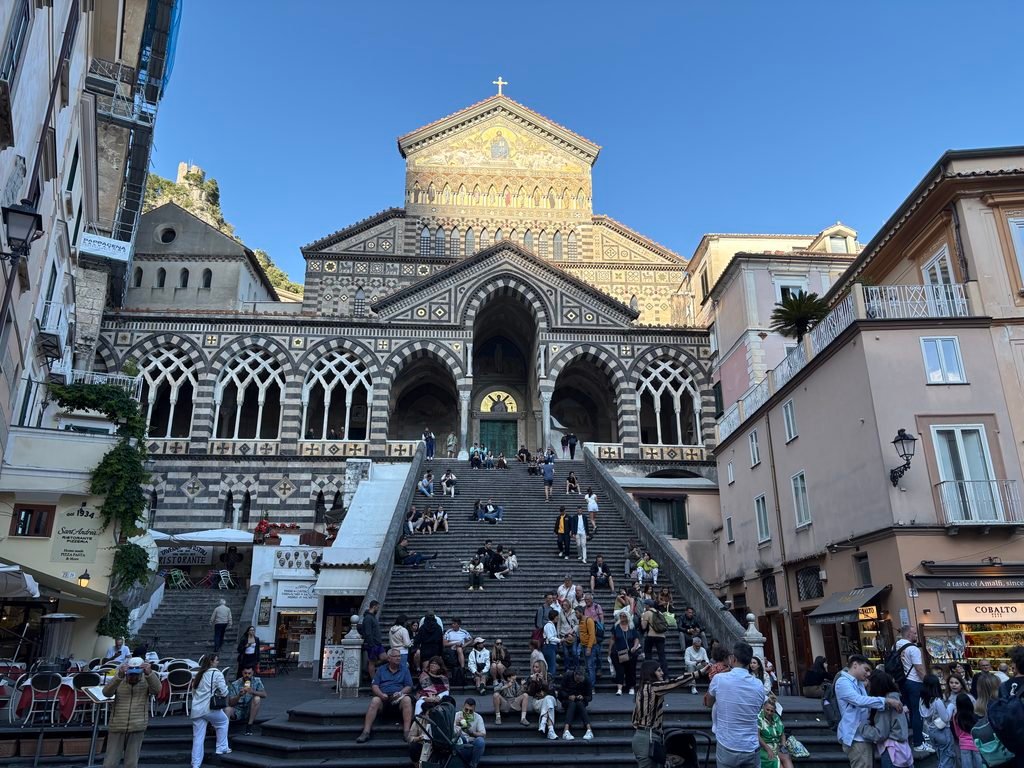
Back in Amalfi, I had an enormous lemon gelato, visited the Duomo in the main square and did some shopping before returning to the Airbnb for a rest.

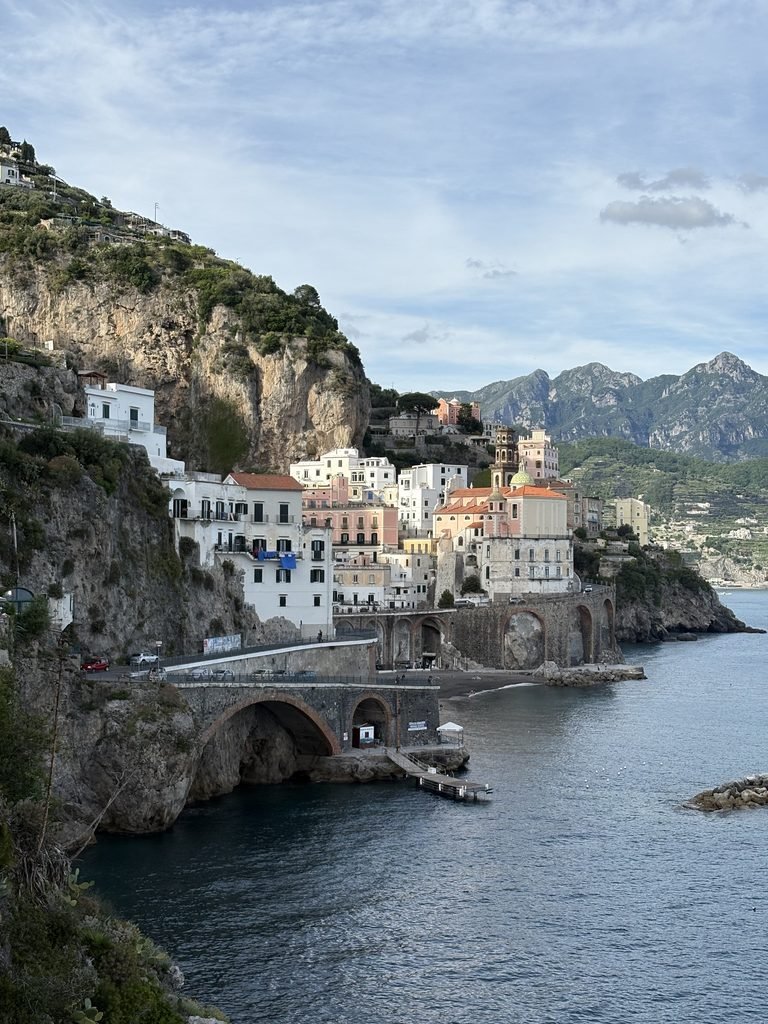
Later, I walked to Atrani. It is an easy and beautiful walk along the shoreline, just around the corner from Amalfi, and was exactly the kind of low-effort exploring I wanted after the hike. I wandered briefly through the town, took some photos and returned to Amalfi through the pedestrian tunnel.
For dinner, I ordered a €16 pizza from Pizzeria Donna Stella. The restaurant has a lovely outdoor seating area beneath lemon trees, and if I had been travelling with someone else I probably would have waited the 45 minutes or more for a table. Travelling solo, taking the pizza back to the Airbnb with a drink sounded better.
My first evening in Amalfi had been similarly simple. After arriving from Capri and checking in, I wandered the town, shops and beach area, then had dinner and drinks at Bar Della Valle for €26.50.
Those two nights were right for what I wanted to do. The hike was the anchor, but there was still enough room around it to enjoy Amalfi, Positano and Atrani without turning every hour into a scheduled activity.
Was Amalfi Town the right base?
For this trip, yes. It was central, well connected by ferry and bus, manageable with luggage and convenient for the activities I had chosen.
I could easily stay in Amalfi again on a future trip if those same logistics mattered. I might also choose somewhere quieter simply because I have already experienced the town itself. The decision would depend on what I wanted the next trip to be.
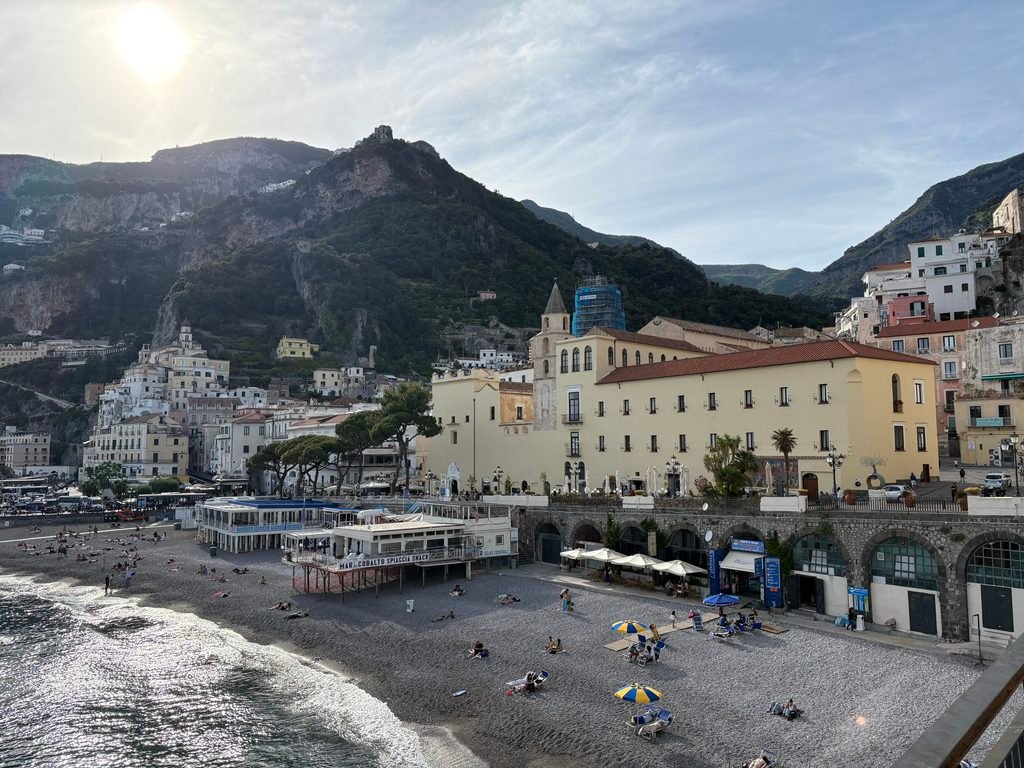
I would probably not choose Positano for myself. It was beautiful, but the crowds and narrow streets did not suit what I wanted from the coast. Ravello, however, is somewhere I would deliberately add to a future itinerary — as somewhere to visit, not somewhere I would personally use as the base for this kind of trip. I would also be interested in hiking one way if the route and timing made sense.
With one more day, Ravello and another hike from Amalfi would be high on my list.
Why Naples got the final night
The final night in Naples had a practical purpose: protecting my 9 a.m. flight home.
I took the noon Positano Jet ferry from Amalfi to Naples for €32, including my bag, and though I had considered buying the ticket in advance, when I asked at the ticket booth in Amalfi, the woman there advised that buying it that same morning would be fine. I followed that advice and bought the ticket shortly before departure.
The crossing took roughly an hour and a half and was much calmer than my earlier ferry to Capri.
My accommodation was near Piazza del Plebiscito, close enough that I could walk there from the ferry terminal. Like many of the mid-range options I found in Naples, it was not a traditional large hotel but a private room within a residential-style building, with check-in handled partly by phone.
The location worked extremely well for such a short stay, and because I had no must-do list or real expectations for Naples — beyond eating pizza — I could simply walk and see where the afternoon took me.
I wandered through the historic centre, visited several churches and eventually headed toward the port and promenade, where the atmosphere felt much more open and modern. I ate at Gino e Toto Sorbillo in the centro storico and, appropriately, finished the Italy portion of the trip with gelato.
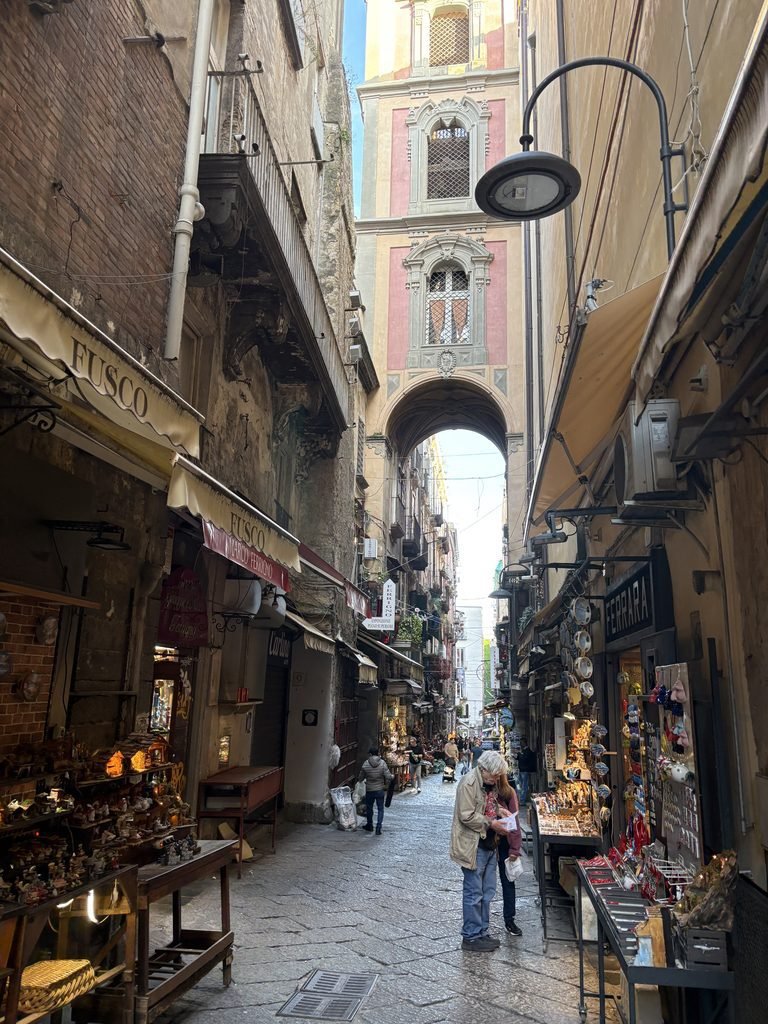
Naples felt grittier than some of the other Italian cities I had visited, but lively and interesting. I would return, particularly because it makes such a useful base for trains, flights and other places in the region. Personally, I would not necessarily allocate a large part of a future trip to Naples itself, but I only scratched the surface on this visit.
For these four nights, it did exactly what I needed: provided a safe buffer before the flight while still giving me an enjoyable afternoon and evening in the city.
Why I cut Pompeii
Pompeii was the biggest thing I seriously considered and ultimately removed.
The history appealed to me, as did the possibility of combining the archaeological site with hiking around Vesuvius. The problem was not whether those experiences were worthwhile; it was whether they fit this trip without making everything else rushed.
To include Pompeii comfortably, I think I would have needed either more nights in Naples — allowing me to take the train out with only a small daypack — or to stay closer to the archaeological sites themselves.
There is luggage storage available for travellers who want to stop at Pompeii while moving between destinations, and someone who prefers a faster itinerary could absolutely build the day that way. I did not want to spend this trip managing bags, storage and another fixed timeline simply to add one more important place to the list.
Saving Pompeii for a future trip felt much more satisfying than forcing it into this one.
What I would do with one more night
With the same four nights, I would keep the allocation exactly as it was:
Capri — 1 night
Amalfi — 2 nights
Naples — 1 night
If I had one additional night, it would most likely go to Amalfi. That would give me time for Ravello, another hike or simply a slower day on the coast without taking anything away from what already worked.
Capri would be the other possibility if hiking, nature and slower island exploration were the priority. Pompeii would make me reconsider the structure more substantially rather than simply adding it as another quick stop.
Would I recommend this route to everyone?
No. Four nights across three bases worked because I was travelling solo, fairly light and comfortable moving frequently for a short period. Whether that pace works for you depends a lot on how you travel.
With a family, I would make a different choice. On the same timeline, I would probably select either Capri or the Amalfi Coast as the main base for three nights, followed by the necessary Naples night before the flight.
Every hotel change has a cost: packing, checking out, reaching the ferry, managing luggage, finding the next accommodation and settling in again. When you are managing only yourself, that cost can be relatively small. With several people, it multiplies quickly.
Four nights gave me a taste, not a complete trip
I did not visit Pompeii or Ravello. I left walking routes unfinished on Capri, skipped other hikes around Amalfi and barely scratched the surface of Naples.
That was okay.
The four nights gave me an overnight on Capri, an extraordinary day hiking above the Amalfi Coast, enough time to enjoy Amalfi rather than simply pass through it, and an unhurried buffer in Naples before the flight home.
More importantly, they showed me what I would want to come back for.
If I had more days, I would add them gladly. If I had fewer, I would cut a base rather than try to move faster.
The goal was never to see the region properly in four nights. It was to use the time I had well enough to experience something meaningful — and leave with a good reason to return.
More from this trip
- Is Staying Overnight in Capri Worth It?
- How to Hike the Path of the Gods from Amalfi: Bus, Trail and Return Logistics
- Italy by Train and Ferry: Strikes, Connections and How Much Buffer to Leave
- Why I Chose Amalfi Town as My Base
Plan your own trip
Know How You Travel
Understand how pace, comfort and the number of hotel changes fit the way you travel.
Plan Your Trip
Build a route around the time, priorities and logistics that actually matter.
Explore more of Italy
Planning more of Italy? Explore our firsthand articles and practical advice from Rome, Capri, the Amalfi Coast and Naples.