
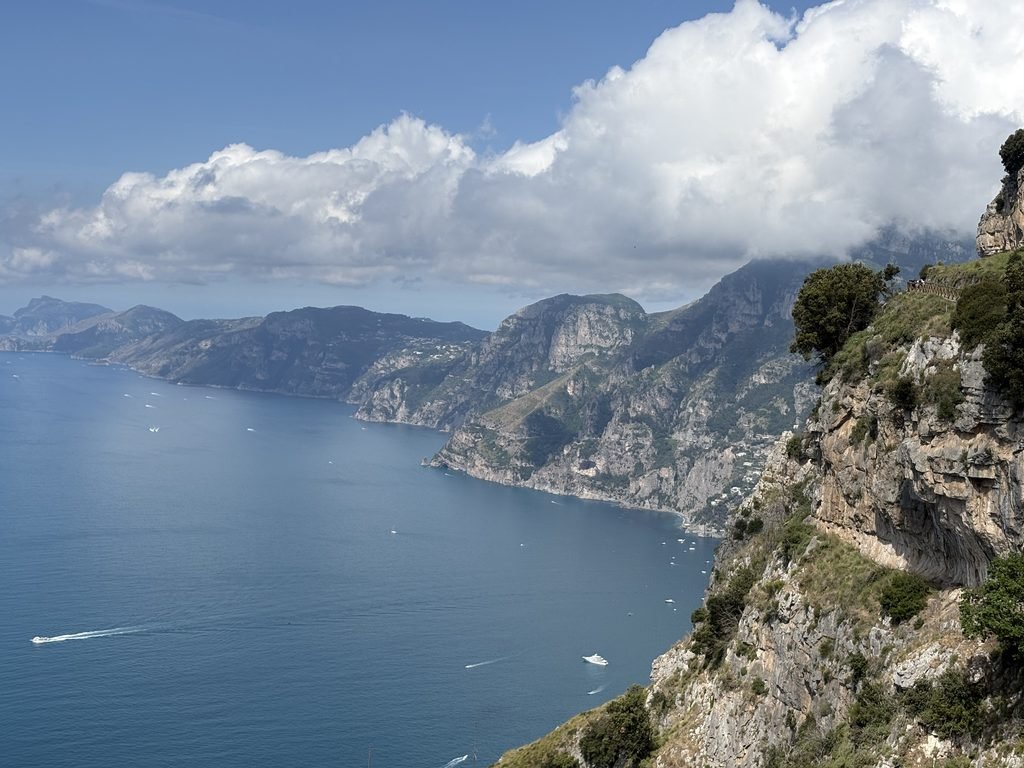
FROM EXPERIENCE
Rome • Capri • Amalfi Coast • Naples
This was a solo trip through Rome, Capri, the Amalfi Coast and Naples. Read about how the trip was planned, the limited nights were allocated, each stop was connected and travelling light made the route easier.
The Route
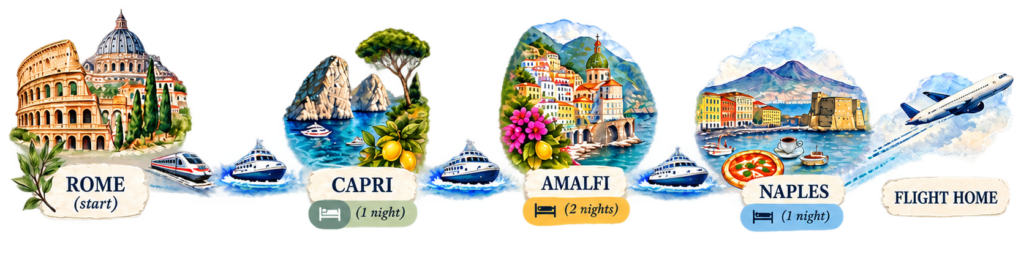
Explore Italy
On a return trip to Rome, I spent one day combining the Baths of Caracalla with a five-hour e-bike tour of the Appian Way, catacombs and aqueducts. It was a very different kind of Rome day — and exactly what I wanted after already seeing the major sights.
A Different Day in Rome: Baths of Caracalla, the Appian Way and the Aqueducts

On my first trip to Rome, back in 2012, I spent most of my time on the major highlights: the Colosseum, Roman Forum, Pantheon, Vatican Museums and the other places that usually define a first visit. I loved them, and some of those experiences are still among my strongest memories of the city.
When I returned years later and had one personal day during a work trip, I did not feel much need to repeat the same itinerary. The major sites also seemed harder to access than I remembered, with more advance planning, timed tickets and cost involved. That need to build more flexibility into popular trips is something I have noticed elsewhere in Italy too, particularly when transport or advance reservations can affect the day.
What I wanted instead was a day that still felt distinctly Roman but gave me something different: ancient history, more space, and some time outdoors. That led me to the Baths of Caracalla in the morning and a five-hour e-bike tour of the Appian Way, catacombs and aqueducts in the afternoon.
It turned out to be exactly the kind of second-visit day I was looking for.
Affiliate disclosure: This article contains affiliate links. If you book or buy through one of them, I may earn a commission at no additional cost to you. This does not affect the recommendations or comparisons in the article.
The quick decision
Best for…
Travellers who have already seen Rome’s major highlights and want a mix of ancient history, outdoor space and a more active day.
Worth considering on a first trip if…
You have enough time for the Colosseum, Forum, Pantheon and Vatican first, but also want something quieter and less concentrated around the usual centre.
Choose something else if…
Your priority is seeing Rome’s headline sights for the first time, or if a five-hour bike tour sounds more exhausting than enjoyable.
The day at a glance
MORNING
Baths of Caracalla
About 1.5 hours
Optional walk / time around the Colosseum area
AFTERNOON
Appian Way → Catacombs of San Callisto → ancient road → aqueduct park → aperitivo
Why I wanted a different kind of Rome day
My travel style has changed since my first visit. I still enjoy cities, but I now notice much more quickly when I need some nature, open space or physical movement to balance them. Understanding those kinds of preferences is one of the reasons I think it helps to know how you travel before building an itinerary.
Rome can be intense: traffic, crowds, stone, noise and an enormous concentration of things to see. I wanted to spend my one free day doing something that still connected me to the city’s history without repeating the same experience I had already had.
The Appian Way and aqueduct parks had caught my attention while looking at maps because of the large stretches of green space south of central Rome. I had barely ventured beyond the Colosseum on my first trip, so this part of the city felt almost entirely new.
The bike tour I found ran either first thing in the morning or in the afternoon. Because this was my first full day after arriving in Rome and I was not sure how jet lag would hit, I chose the 2 p.m. departure rather than forcing myself into an early start. That left the morning open, and the Baths of Caracalla were conveniently close to the bike-tour meeting point.
Baths of Caracalla: an unexpectedly peaceful start
I reached the Baths of Caracalla by taking the metro from Spagna, where I was staying, to Circo Massimo and walking from there.
Admission was €8, which I paid by tapping my Wise card at the entrance. I use Wise for many small local-currency purchases like this when travelling, although a regular credit card can work just as well depending on its foreign-transaction fees. There was barely a line, and once inside, the site felt remarkably spacious.
EXPERIENCED IN MAY 2026
Admission paid: €8
Time spent: About 1.5 hours
Getting there: Metro to Circo Massimo + walk
What stood out: Large-scale ruins, surviving mosaics, lawns and plenty of space
The scale of the ruins was the first surprise. Some of the structures are still substantial enough that it is easy to imagine how enormous the bathing complex once was, and there are surviving sections of mosaic flooring that give a glimpse of how elaborate it must have been.
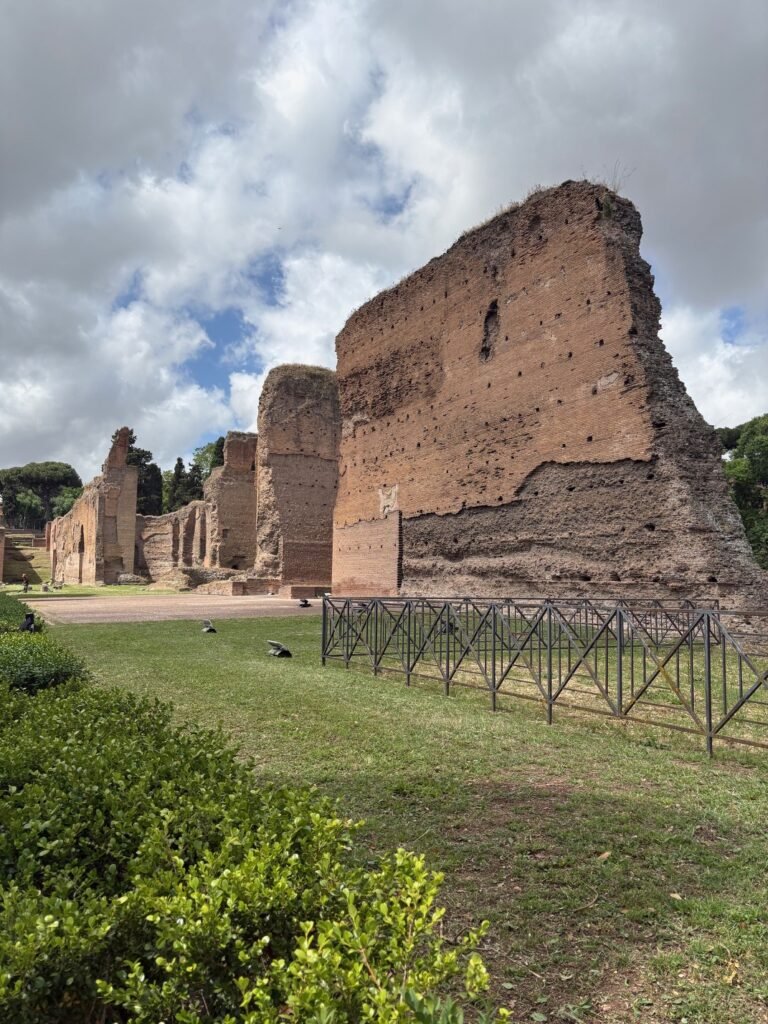
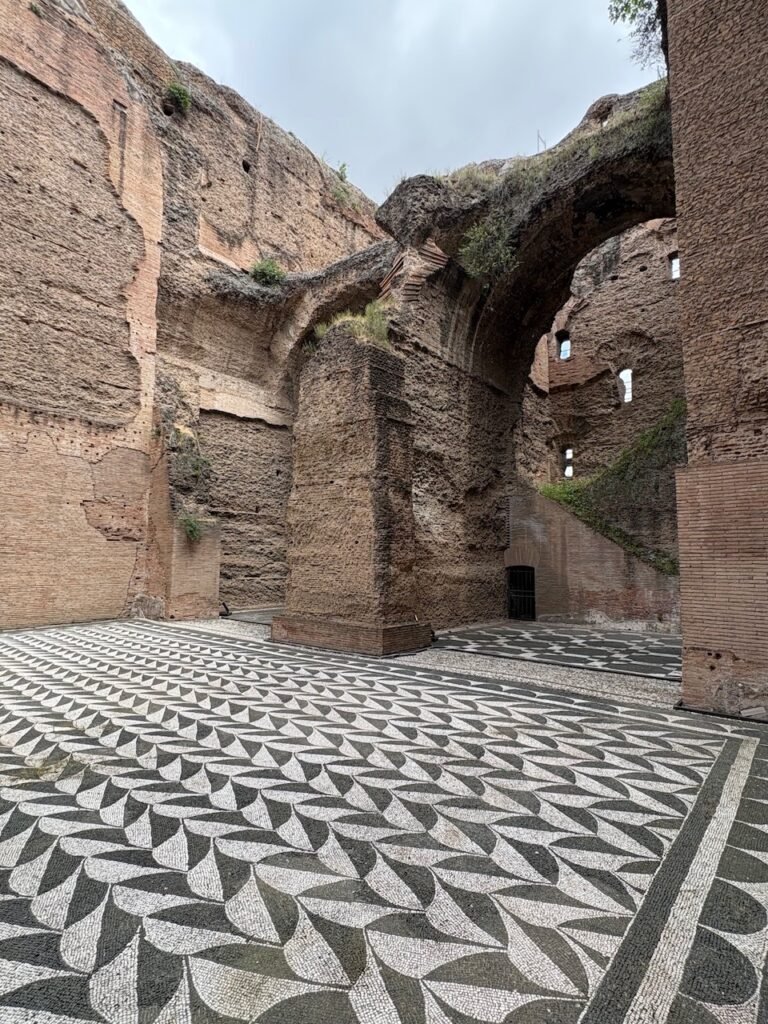
The second surprise was how much of the experience was about the grounds rather than just the ruins. There were lawns, fountains and plenty of seating, and visitors were spread across a large area. A school group was touring part of the site, but it was easy simply to move in another direction and find a quieter section.
I spent about an hour and a half exploring, then sat in one of the chairs facing the ruins and fountains for a while. I read, people-watched and enjoyed the sun without feeling any pressure to keep moving. For a major archaeological site in the middle of Rome, it felt like a small oasis.
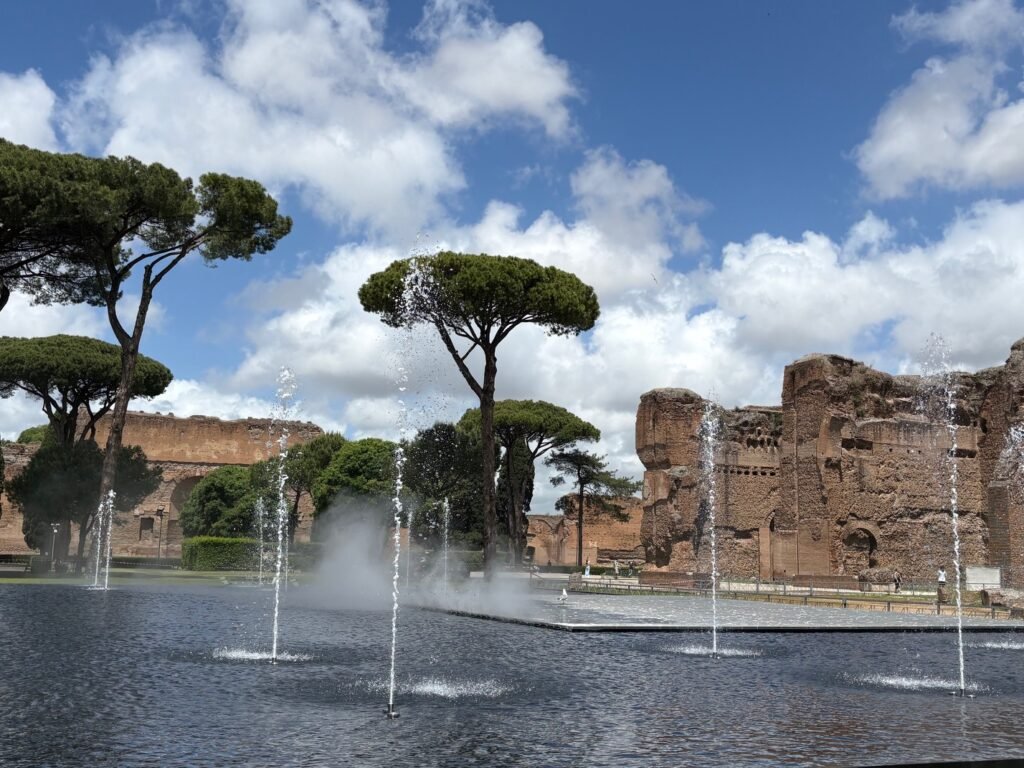
There are also bathrooms onsite, which is the kind of minor practical detail that becomes surprisingly useful when you are building one activity directly into another.
Would I include the Baths of Caracalla on a first trip?
Possibly, but not at the expense of the major ancient sites.
The Colosseum and Roman Forum made a huge impression on me the first time I visited Rome, and I would still prioritize them, along with the Pantheon and Vatican Museums, for someone who had never been.
But if you have enough time, the Baths of Caracalla offer something different: substantial Roman ruins without the same density of crowds, plus enough green space that the visit can double as a pause from the city.
They are also easy to reach, relatively inexpensive and do not require the same level of logistical planning that some of Rome’s headline attractions now seem to demand.
Revisiting the Colosseum without needing to go inside
After leaving the baths, I still had time before the bike tour, so I walked back toward the Colosseum.
This time I did not feel any need to queue for a ticket or repeat the full visit. I had already done that years earlier.
Instead, I walked around the exterior, took new photographs and spent some time in Parco del Colle Oppio and the area around the Baths of Trajan, which gives you different views toward the Colosseum without having to stand in the busiest part of the square below.
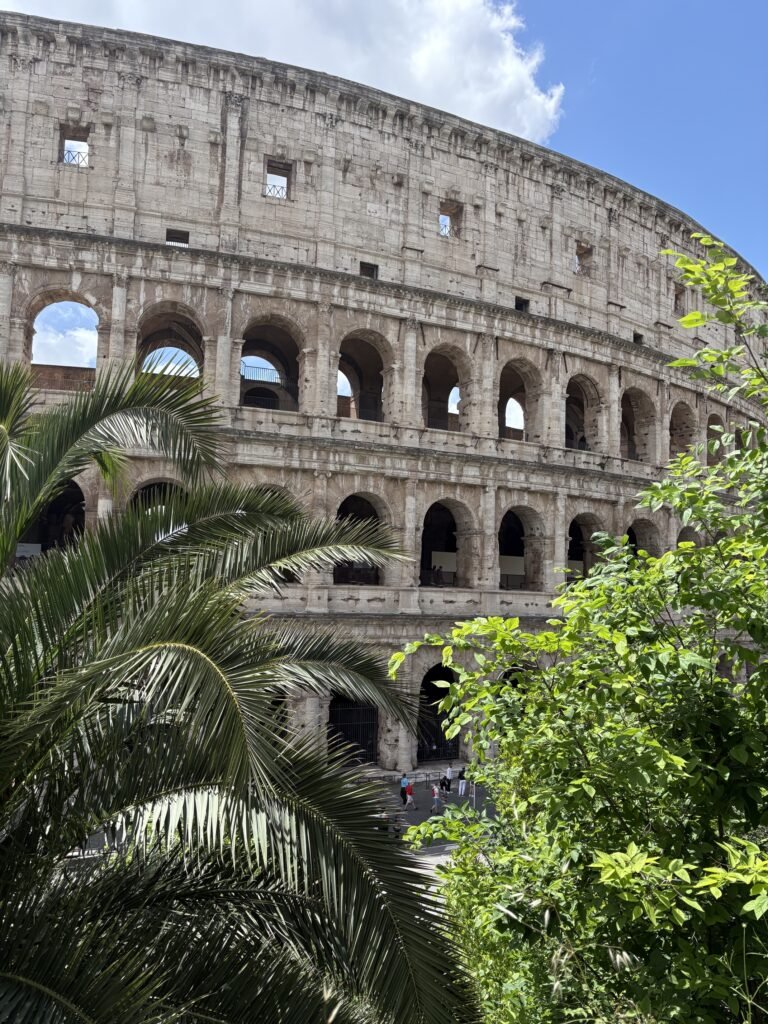
That was another small advantage of returning to a city I already knew: I could enjoy being near a famous sight without feeling that I needed to consume the entire experience again.
The afternoon e-bike tour
The main event of the day was the Rome: Appian Way & Aqueducts E-Bike Tour, which also included the Catacombs of San Callisto and an aperitivo stop.
I paid C$130.16 through GetYourGuide for the five-hour tour.
Tour: Appian Way & Aqueducts E-Bike Tour
Booked through: GetYourGuide
Price paid: C$130.16
Duration: 5 hours
Group: 6 guests + guide
Included: E-bike, guide, Catacombs of San Callisto and aperitivo
Difficulty experienced: Easy to moderate
The group met at a bike shop near the Colosseum about 15 minutes before the 2 p.m. departure. We were fitted with helmets and e-bikes, met our guide and had time to test the bikes before leaving.
There were only six guests plus the guide, which made the experience feel much more personal than a large-group tour.
Our guide was knowledgeable, spoke excellent English and explained each upcoming section before we rode it, including what traffic or road conditions to expect.
This was my first time using an e-bike. I had done bike tours before on regular bicycles and was curious about how much difference the electric assistance would make.
It turned out to be extremely easy to use. I stayed mostly on the lowest assistance setting, but having the extra support available made the ride feel relaxed rather than strenuous.
Getting out of central Rome
The first section involved some city traffic, which was probably the least relaxing part of the ride, but it did not last very long.
We passed the Baths of Caracalla — which was amusing after spending the morning inside them — and stopped near the Aurelian Walls before continuing toward the Appian Way.
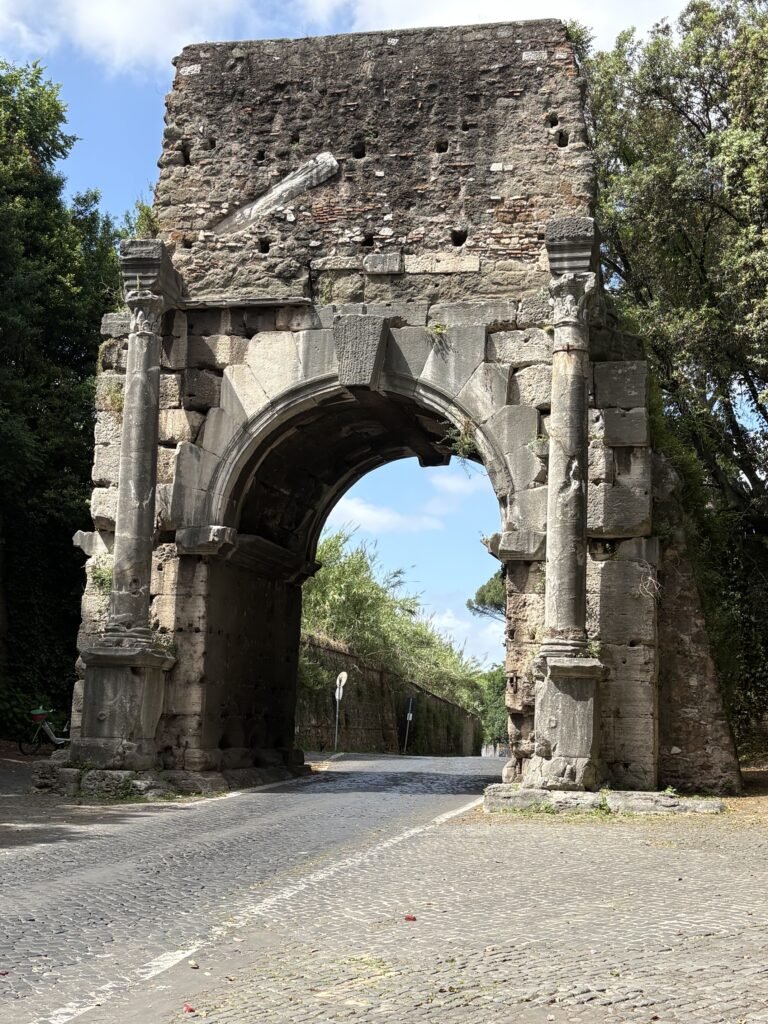
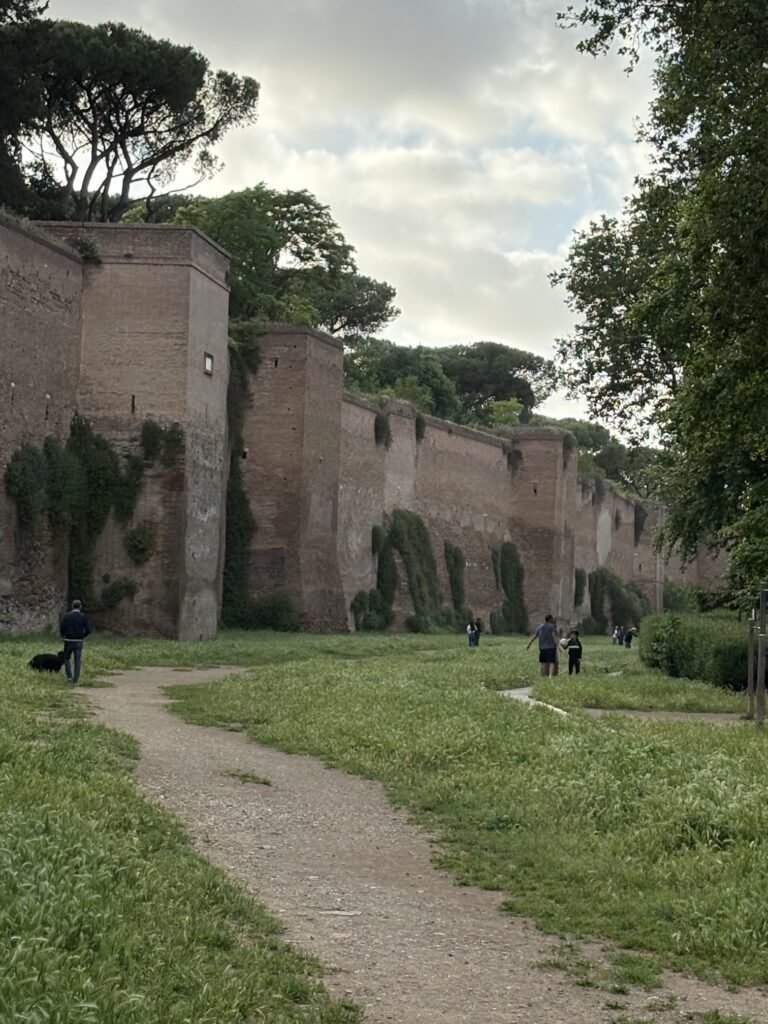
Once we reached the quieter stretches, the experience changed completely. Traffic fell away, the landscape opened up and Rome began to feel much less like a major European capital.
The Catacombs of San Callisto
A guided visit to the Catacombs of San Callisto was included in the bike tour, and this was one of the reasons I chose this particular option over similar tours that skipped them.
The catacombs added another layer to the day’s history.
We learned about how early Christians buried their dead underground and walked through part of the network of passages and tombs. What visitors see is only a small fraction of the excavation, but even that gave a sense of how extensive the burial system became.
There were also reminders that the catacombs are not simply an archaeological attraction. Religious visitors, including priests and nuns, still come there for prayer and ceremonies.
After spending the morning looking at the monumental public world of ancient Rome, going underground into the history of early Christianity felt like a completely different perspective on the same city.
Riding on the ancient Appian Way
After the catacombs, we continued farther along the Appian Way and stopped around the Church of San Nicola in Capo di Bove and the Mausoleum of Cecilia Metella.
Then we reached older sections of the road.
This was probably the most physically awkward part of the ride because the ancient paving stones are enormous, uneven and separated by deep gaps. Riding over them required slowing down considerably and choosing a careful line. Where possible, I sometimes moved onto narrow paths beside the main stones rather than bouncing directly across them.
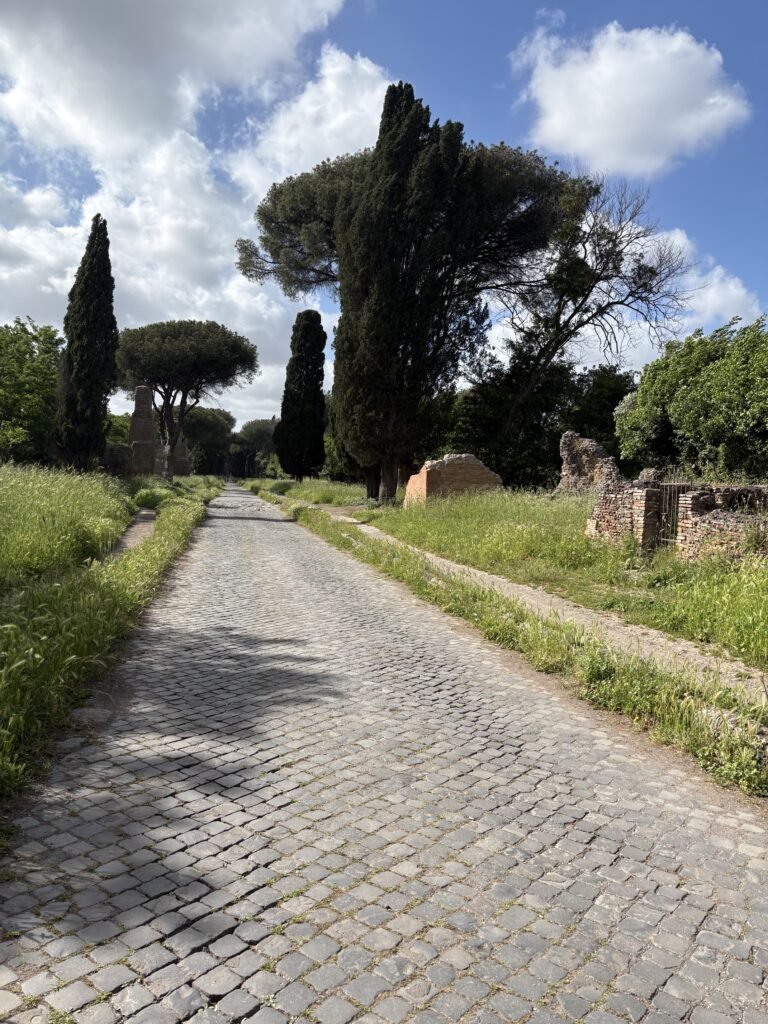
It was not technically difficult, but it required attention. It was also one of the most memorable parts of the tour.
There is something strange about travelling along a road laid down thousands of years ago and thinking about the number of people who have passed over the same ground.
I remember having a similar feeling in the Roman Forum on my first trip: that sense of being only one very small moment in a history stretching far behind and ahead of you.
Standing on the Appian Way brought that feeling back.
The aqueducts were the part of Rome I had never seen
Eventually we left the ancient road and continued through parkland on shared cycling and walking paths toward the aqueducts.
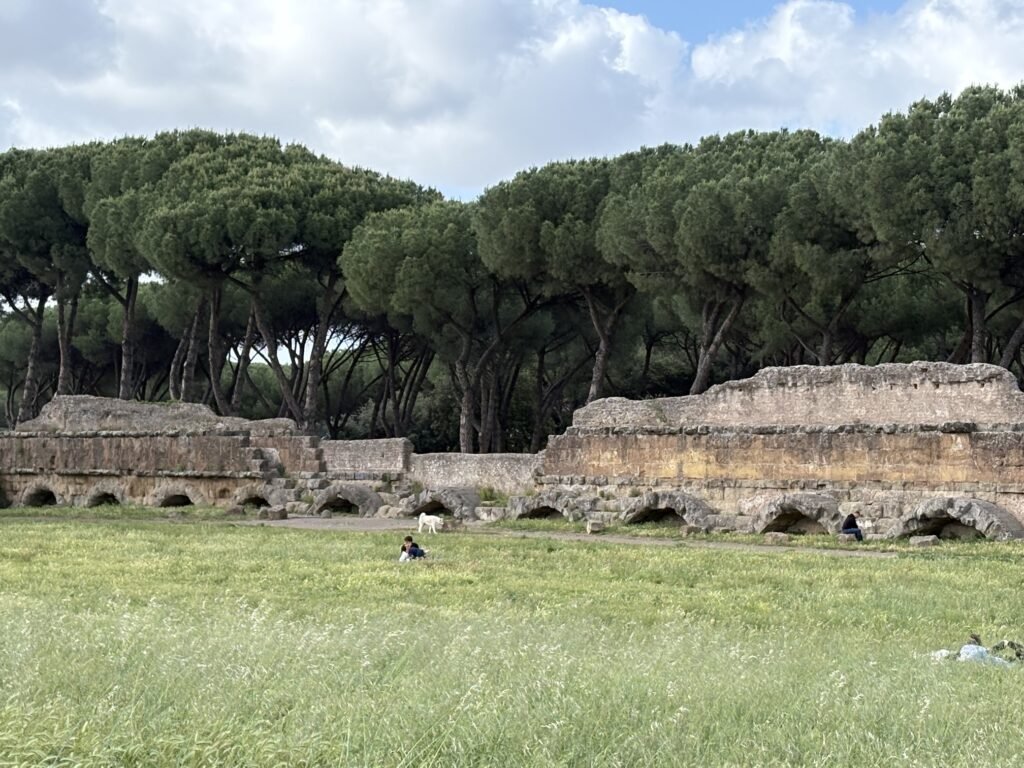
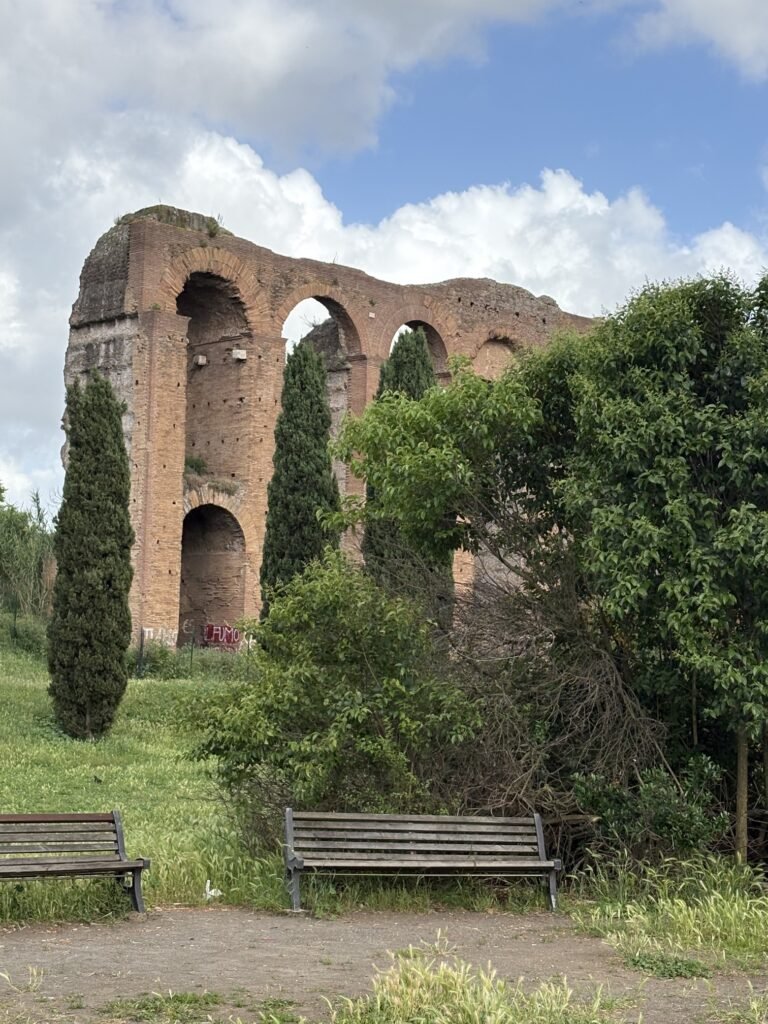
This was the landscape I had been hoping to find when I started looking for something beyond central Rome.
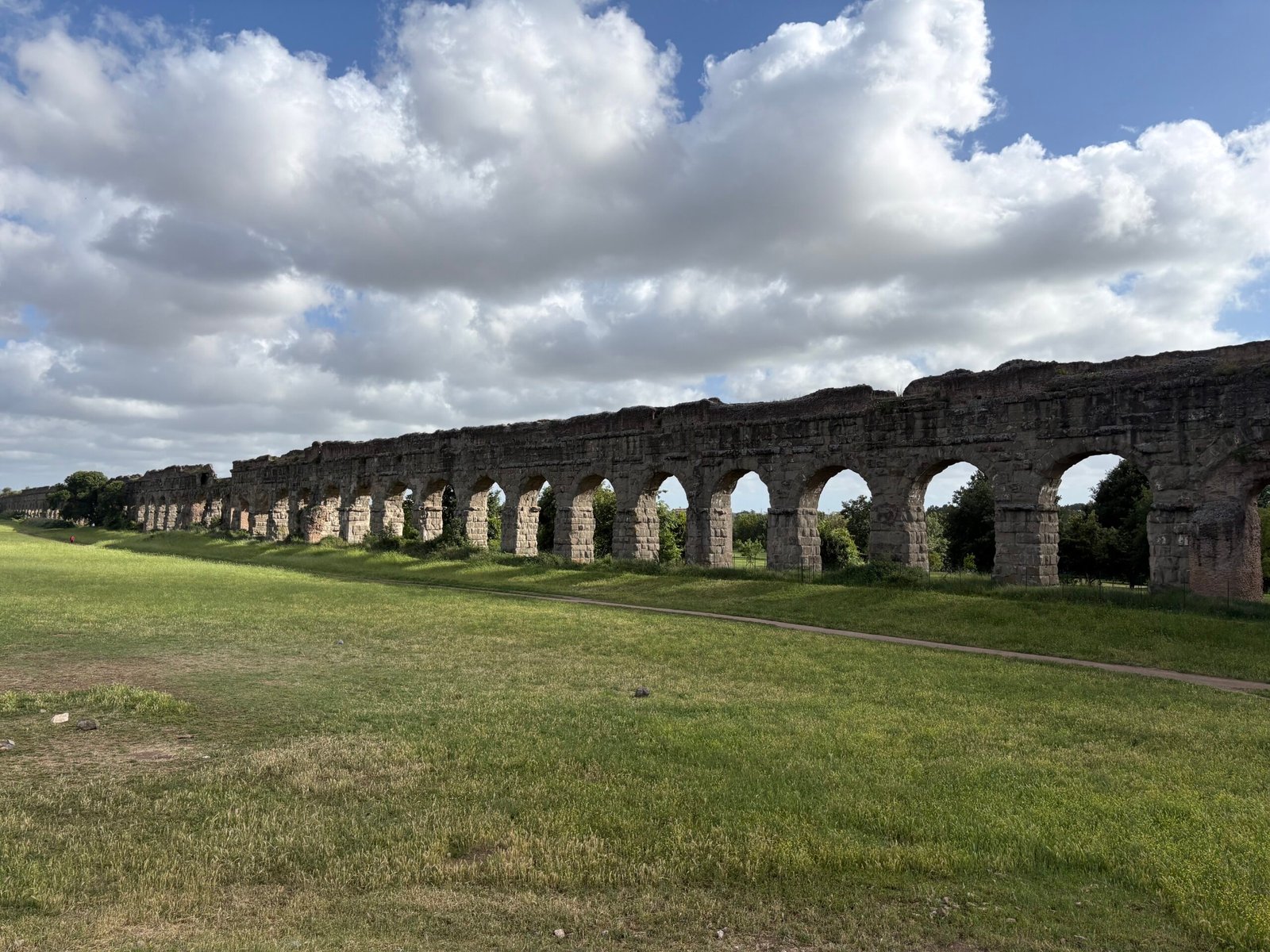
Long stretches of aqueduct crossed the open landscape, and our guide explained how the Romans used carefully engineered gradients to carry water over enormous distances into the city. The structures were impressive on their own, but understanding that they formed part of a functioning water system made them more interesting than simply looking at another ancient ruin.
It was also striking how different the surroundings felt from central Rome: grass, open sky, paths and long views rather than traffic and tightly packed buildings.
For someone who needs some nature mixed into a city trip, this was probably the strongest part of the day.
Was the bike tour difficult?
Overall, I would call it easy to moderate.
What mattered more than fitness
Being comfortable on a bicycle, handling uneven ancient paving and riding briefly in city traffic mattered more than climbing ability.
The route was not particularly hilly, and the e-bike made the few climbs very manageable. The main challenges were the uneven ancient stones on the Appian Way and a couple of steeper downhill sections around the aqueduct area, where slowing down and staying controlled mattered more than fitness.
The tour itself lists a minimum age of 12, so this is not something I would recommend for young children.
For adults or older teenagers who are reasonably comfortable on a bicycle, the physical demands were not the issue. Being comfortable riding briefly in city traffic and navigating uneven surfaces matters more.
The aperitivo was better than I expected
Toward the end of the ride, we stopped at a small café in the park for the food included with the tour.
I had expected a token snack and drink. Instead, it was a substantial aperitivo with a drink of choice — I had prosecco — and several trays of food shared among the group.
The unexpected part was how social the stop became. With only six people and the guide, we had spent several hours riding and talking together by then. Sitting down over food turned into a much longer conversation about travel, work and eventually artificial intelligence.
That particular group dynamic was probably luck rather than something anyone could promise when booking the tour, but it became part of what made the day memorable. I am still in touch with one of the women I met on the ride and have even seen her again since when work brought her to my home city.
Sometimes the best part of a guided experience is something that was never listed in the itinerary.
Who this kind of Rome day suits
I would particularly recommend this combination to someone on a second or later visit to Rome, especially if you have already seen the Colosseum, Forum, Pantheon and Vatican and want to experience a different side of the city.
It is also a good fit for travellers who like ancient history but do not want to spend an entire day moving between museums and crowded monuments. The Baths of Caracalla still provide substantial ruins, while the bike tour adds movement, parkland, religious history, Roman engineering and long stretches away from central traffic.
That same principle — deciding what deserves your limited time rather than trying to include everything — shaped how I planned the rest of this Italy trip as well.
For someone who needs nature to balance a city stay, that combination worked especially well.
A different Rome, not a lesser one
Nothing I did that day replaced the major Rome sights from my first visit.
I would still tell a first-time visitor to see the Roman Forum, Colosseum, Pantheon and Vatican if those places interest them. They are famous for good reason.
But returning to Rome gave me the luxury of not having to repeat them.
Instead, I spent part of the morning sitting quietly beside ancient baths, cycled along a Roman road, walked through early Christian catacombs and ended the afternoon beneath aqueducts stretching across open parkland.
It felt like a very different Rome from the one I remembered.
That was exactly the point.
More from this trip
- How I Planned Four Nights Across Capri, the Amalfi Coast and Naples
- Is Staying Overnight in Capri Worth It?
- How to Hike the Path of the Gods from Amalfi: Bus, Trail and Return Logistics
- Italy by Train and Ferry: Strikes, Connections and How Much Buffer to Leave
- Why I Chose Amalfi Town as My Base
Plan your own trip
Know How You Travel
Understand how pace, comfort and the number of hotel changes fit the way you travel.
Plan Your Trip
Build a route around the time, priorities and logistics that actually matter.
Explore more of Italy
Planning more of Italy? Explore our firsthand articles and practical advice from Rome, Capri, the Amalfi Coast and Naples.
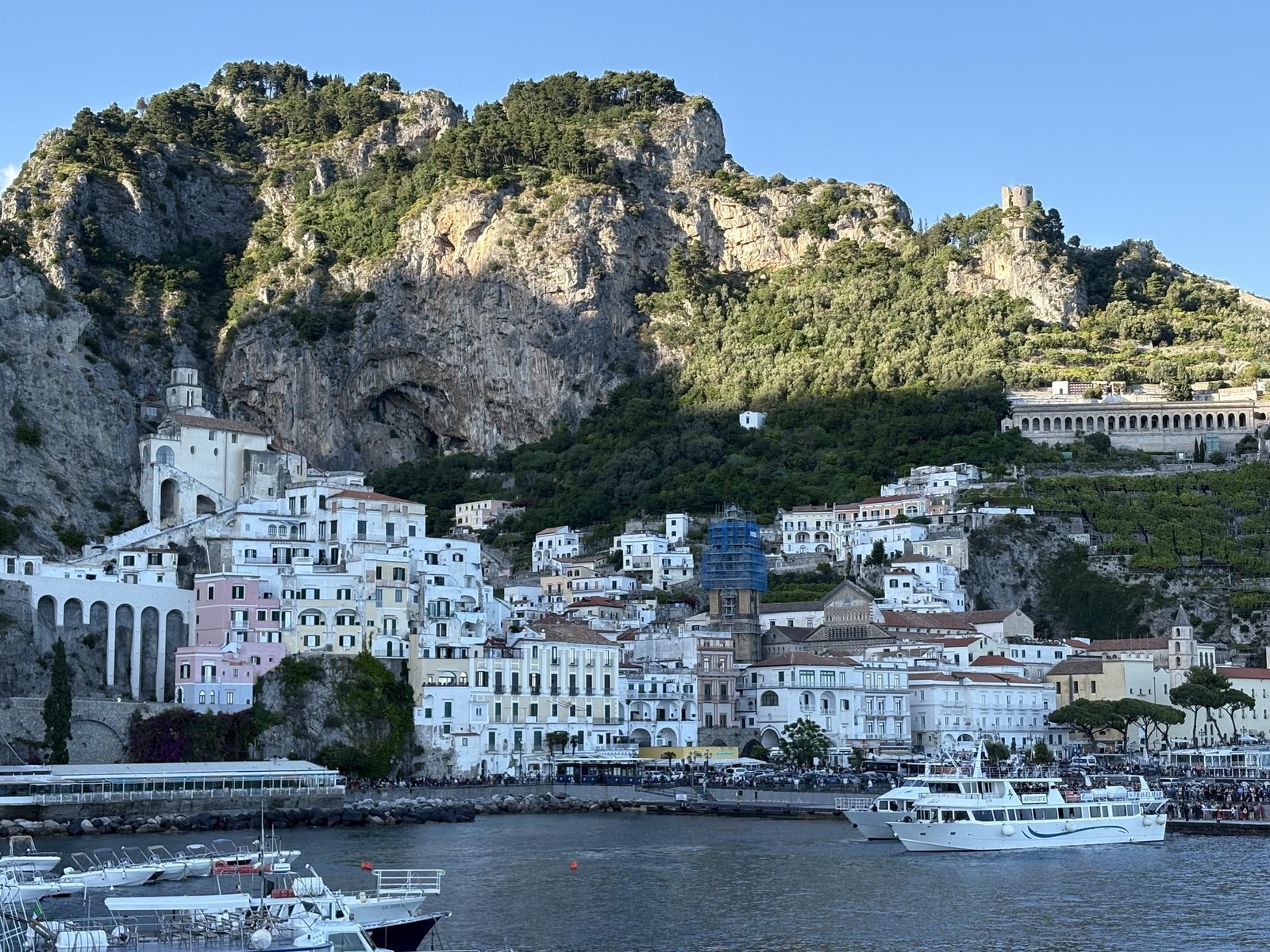
Amalfi Town was not the most glamorous base I considered, but for a short trip involving Capri, the Path of the Gods, ferries and light luggage, it made the logistics much easier. Here is why I chose it over Positano, Ravello, Sorrento and Atrani.
When I was planning a short stay on the Amalfi Coast, I kept coming back to one practical question: where should I sleep?
Positano had the postcard views. Ravello had the hilltop setting. Sorrento was easier to reach from Naples. But for the route I was taking — arriving from Capri, hiking the Path of the Gods, moving around by ferry and eventually returning to Naples — Amalfi Town made the most sense.
That decision turned out to be one of the easiest parts of the trip to validate in practice. Amalfi was busy and touristy, but it was also compact, well connected, easy to manage with luggage and far more convenient than some of the more photogenic alternatives.
The quick decision
Best for…
Travellers who want easy ferry access, straightforward Path of the Gods logistics, manageable luggage and a central base for exploring several parts of the coast.
Choose somewhere else if…
You care more about postcard glamour, quiet hilltop views or staying somewhere removed from the busiest tourist centre.
Amalfi worked especially well for this trip because…
The ferry port, buses, town centre and accommodation were all within an easily manageable area.
Why Amalfi Town worked for this trip
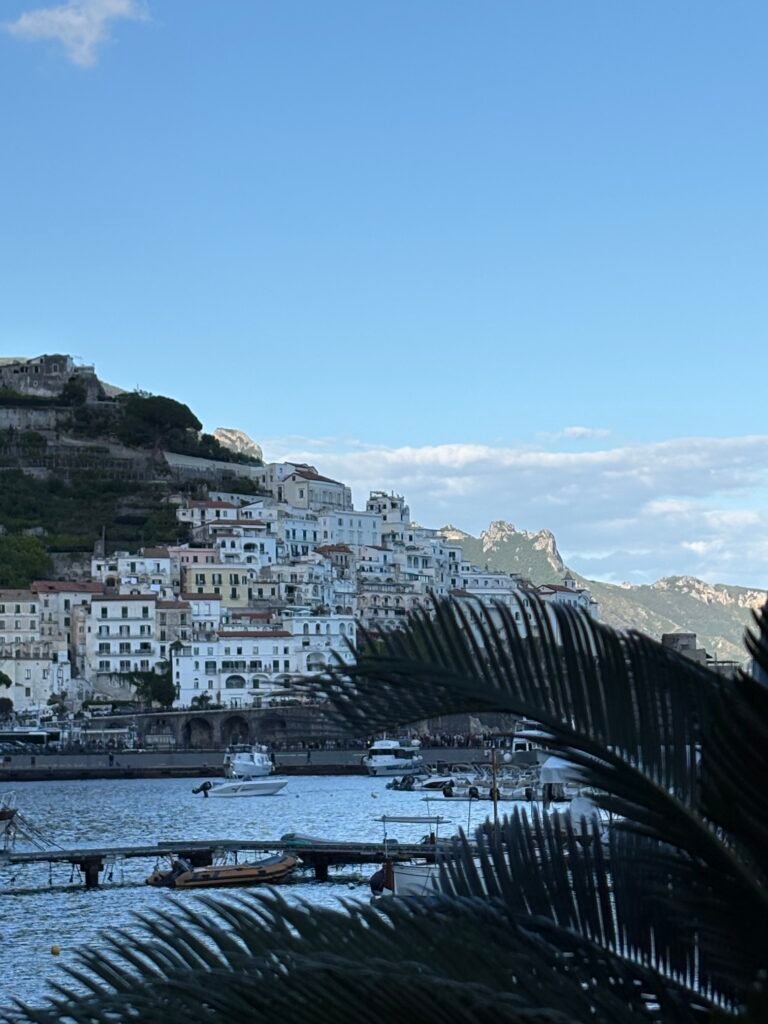
The biggest factor was ferry access.
I was arriving from Capri and wanted a base that gave me multiple options for moving around the coast and getting back toward Naples. Amalfi is a major ferry stop, with several operators and departures linking it to other coastal towns. If I changed my mind about how to spend a day, it was easy to imagine hopping on a ferry rather than building the whole trip around buses or taxis.
That flexibility mattered on such a short itinerary. It also worked particularly well for the Path of the Gods because the bus toward Bomerano left from the centre of Amalfi, close to the port, so I did not have to add another transfer before even reaching the trailhead.
For a trip that already involved moving between several places, I wanted the base itself to remove friction rather than add more. That was also part of the broader reasoning in How I Planned Four Nights Across Capri, the Amalfi Coast and Naples.
Why Amalfi beat Positano for me
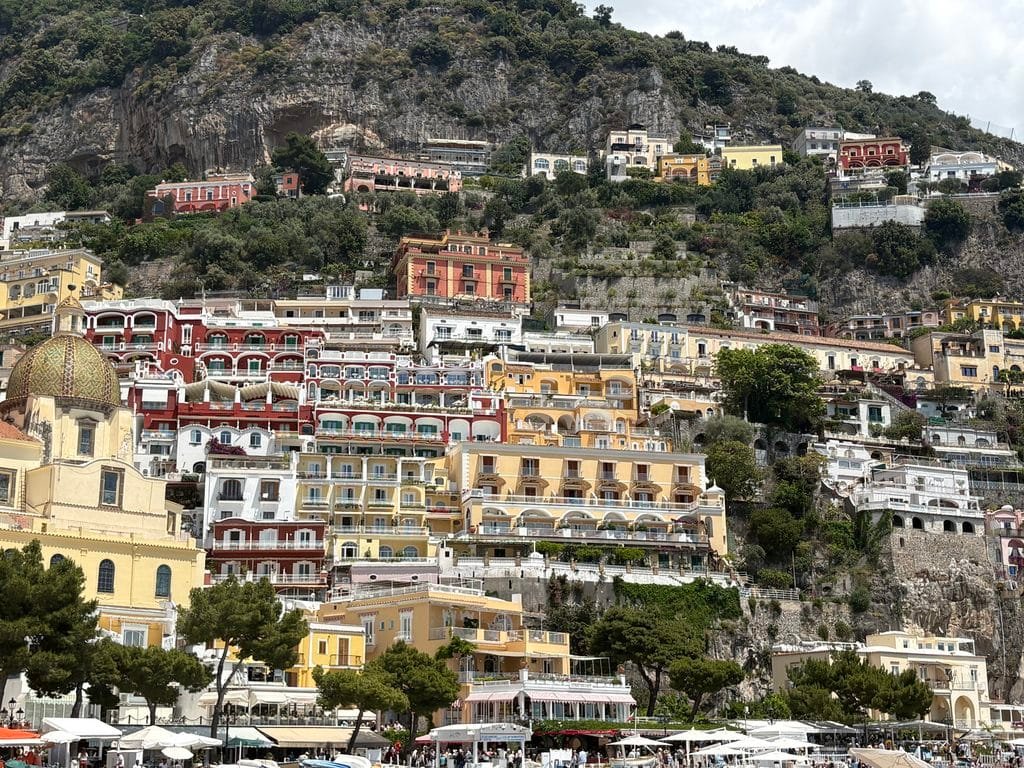
Positano was the obvious alternative, but I was worried about two things before I arrived: stairs and crowds. Both concerns turned out to be justified.
Positano is spectacular to look at, but it is built vertically. With luggage, that can mean stairs, steep streets, taxis or porter services depending on where you are staying. For a solo traveller moving with a roller suitcase and daypack, Amalfi was much easier.
When I reached Positano after hiking the Path of the Gods, the narrow streets were also extremely busy. It was beautiful, but I was glad I was not trying to drag luggage through the crowds or use it as the practical hub for the rest of my trip. Amalfi was busy too, especially during the day, but the basic logistics were easier and much more central to the route I had planned.
Why I ruled out Ravello
Ravello appealed to me for almost the opposite reason: it looked quieter, more elevated and removed from the busiest coastal traffic.
The problem was that it was also removed from the ferry network. Because Ravello sits up in the hills, staying there would have added another layer of bus or taxi logistics every time I wanted to move along the coast.
For a slower stay where I planned to spend more time in one place, that could be a reasonable trade-off. For this trip, it felt like unnecessary friction.
Ravello is high on my list for a future visit, but I am more likely to give it day-trip status than use it as a base if I still want easy access to the rest of the coast.
Why not Sorrento?
Sorrento was easier for me to eliminate.
It is well connected to Naples and can be a very practical base for the wider region, but it sits outside the stretch of coast I most wanted to experience. Staying there would have meant joining the day-trippers travelling toward Amalfi rather than actually being there in the evenings once many of those visitors had left.
It also felt larger and less aligned with the kind of stay I wanted. For a trip focused on Pompeii, Naples, Capri and the Amalfi Coast together, Sorrento could make a lot of sense. For my route, it would have put me one step farther away from the places I had prioritized.
Atrani was a nice surprise, but I would still choose Amalfi
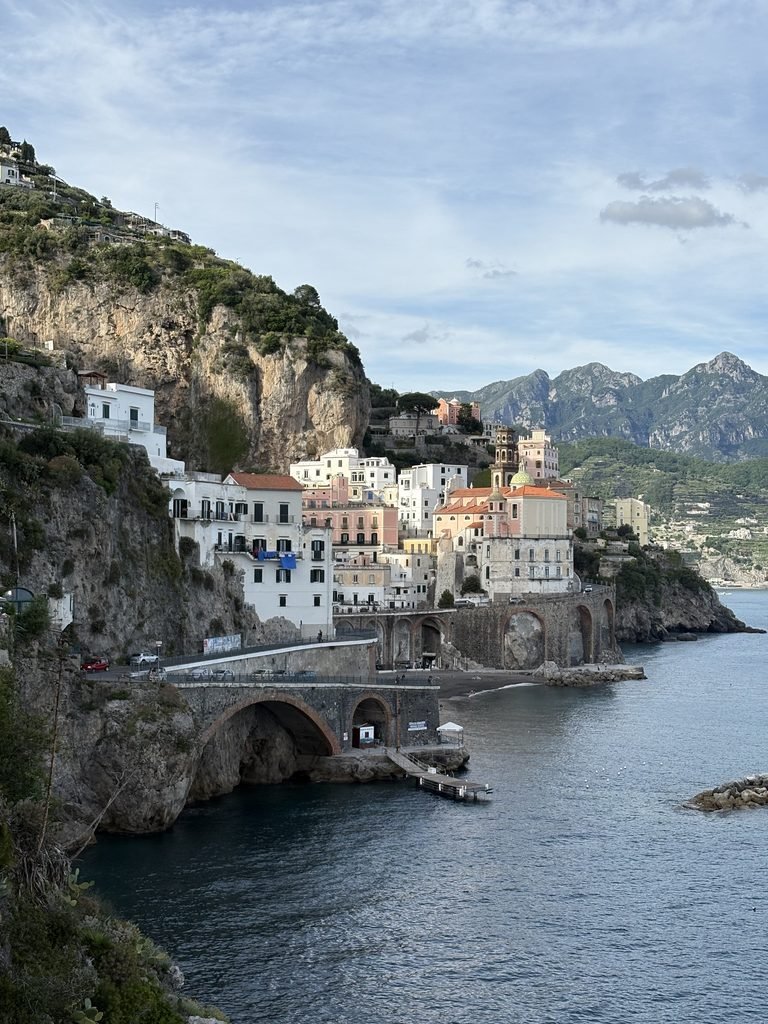
I did not seriously consider Atrani as a base before the trip, even though it sits directly beside Amalfi.
Once I was there, I understood the appeal. Atrani felt much quieter and less commercial, and being able to walk there from Amalfi was a bonus I had not fully appreciated during planning.
I would still choose Amalfi for this particular trip. Atrani has fewer restaurants and services, and it does not have Amalfi’s ferry connections. Arriving with luggage would mean either walking everything over from Amalfi or arranging a taxi, which removes some of the convenience that made Amalfi work so well.
The better discovery was that staying in Amalfi gave me easy access to both: a lively transport hub when I needed it and a quieter neighbouring town within walking distance.
How the bases compared for this trip
None of these towns is inherently the “best” base. The question is which trade-off matches the trip you are actually taking.
| Base | Strongest reason to choose it | Main trade-offs for this trip |
|---|---|---|
| Amalfi | Ferries, buses, Path of the Gods logistics and manageable luggage | Busy and touristy |
| Positano | Dramatic setting | Stairs, crowds and more difficult luggage logistics |
| Ravello | Quiet hilltop atmosphere | Another transfer whenever you want to reach the coast |
| Sorrento | Excellent Naples and regional connections | Farther from the stretch of coast this trip prioritized |
| Atrani | Quieter atmosphere immediately beside Amalfi | Fewer services and no equivalent ferry hub |
Why Amalfi worked so well in practice
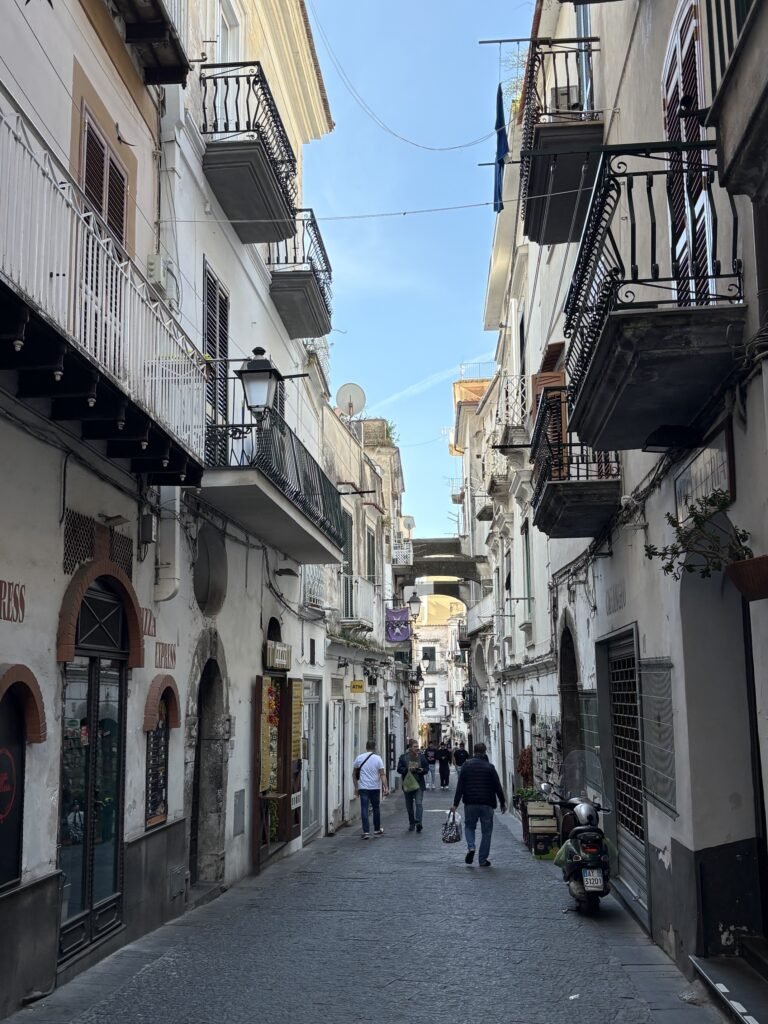
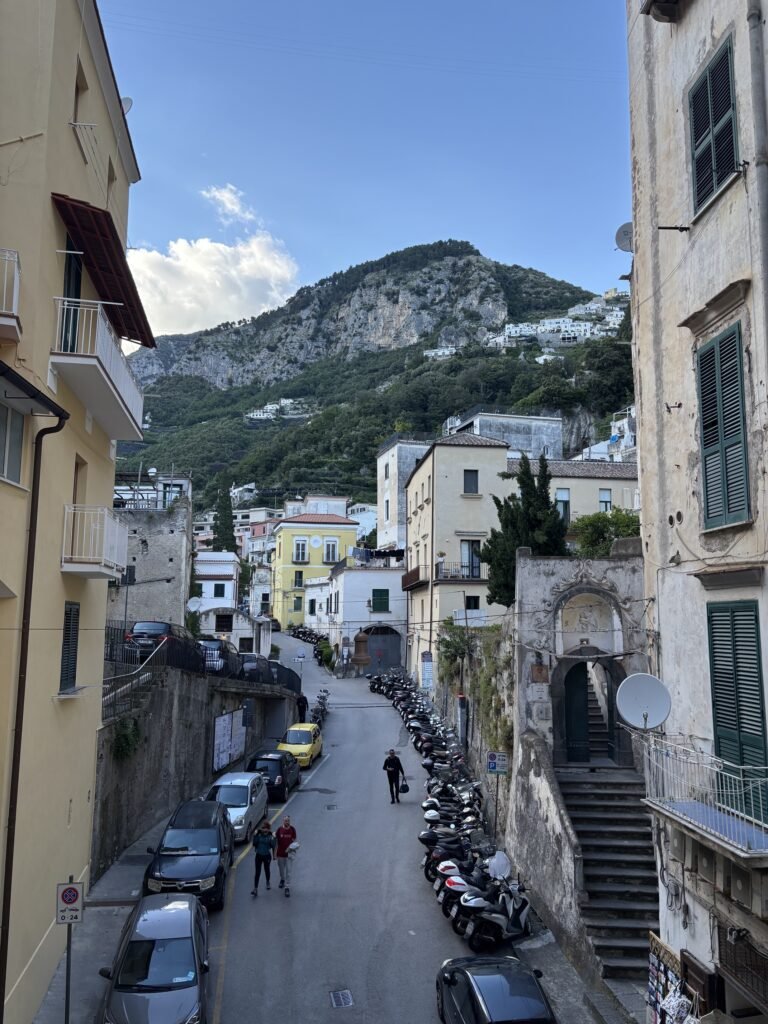
The town itself was even more compact than I expected.
The ferry and bus areas sit directly beside the centre, and the main square begins almost immediately behind them. The Duomo dominates the square, restaurants are everywhere, and the main pedestrian street runs gradually uphill through shops, cafés and food stands.
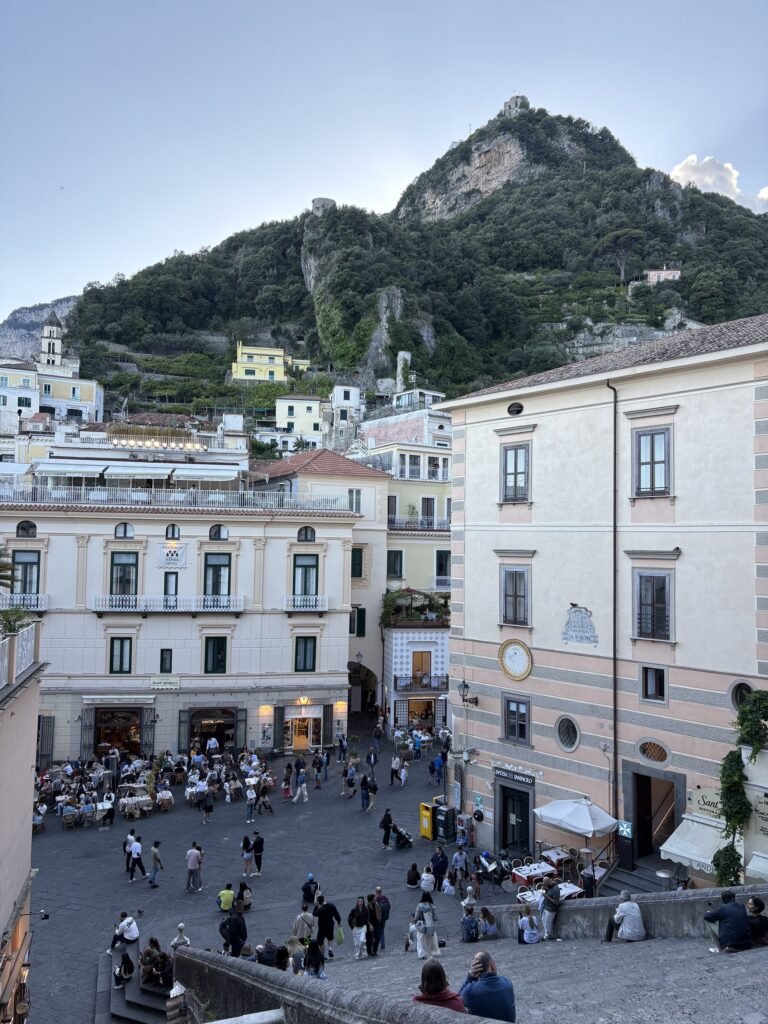
It was very difficult to get lost in the central part of town, and that simplicity mattered with luggage. My Airbnb was on the main road a little beyond the busiest tourist area, so I could roll my suitcase uphill without dealing with major stairs while still staying within an easy walk of the port, bus stops, restaurants and sights.
The location also made the Path of the Gods logistics much easier, something I cover in detail in How to Hike the Path of the Gods from Amalfi: Bus, Trail and Return Logistics.
Why Amalfi won this trade-off
- direct arrival from Capri;
- ferry options along the coast;
- bus access towards Bomerano;
- manageable with a roller suitcase;
- restaurants and services close at hand;
- Atrani within walking distance;
- comparatively good accommodation value.
The accommodation was good value
Price was not the only reason I chose Amalfi, but it definitely helped.
I paid C$453.54 for two nights in a full Airbnb apartment on the main road, just beyond the busiest part of town. It was a lot cheaper than most of the other accommodation options I saw on the Amalfi Coast and gave me more space than I needed as a solo traveller.
That value reinforced the decision, but the transport and hiking logistics had already been pointing me toward Amalfi before I found the apartment.
What I liked less about Amalfi
Amalfi is not a hidden gem.
During the day, it was extremely busy. The main street could become packed enough that getting anywhere quickly was unrealistic, and prices reflected the fact that it is one of the most visited places on the coast. The famous Amalfi lemon gelato I tried cost €20.
If your goal is to stay somewhere that feels removed from tourism, Amalfi is probably not the answer.
But it was still beautiful, and once I moved away from the busiest stretches, the experience changed. The alleys behind the main street were quieter, evenings felt calmer, and walking toward Atrani made it easy to escape the centre without changing bases.
It also worked well as a destination in its own right rather than just a transport hub. The Duomo, the waterfront, the restaurants and the compact layout made it easy to enjoy between excursions.
Would I stay in Amalfi again?
For another short trip focused on moving around the coast, yes.
It was central, well connected and easy to manage with luggage, and almost every practical reason I had for choosing it proved correct once I arrived. On a longer return trip, I might split my stay and try one of the smaller towns such as Maiori or Minori, especially if travelling with family and looking for more space, while keeping Ravello high on the list for a day trip.
Amalfi Town may not be the most dramatic answer to “where should I stay on the Amalfi Coast?”, but for the trip I was actually taking, it was the right one: practical without feeling purely functional, beautiful without requiring me to sacrifice the logistics that mattered most.
More from this trip
- How I Planned Four Nights Across Capri, the Amalfi Coast and Naples
- How to Hike the Path of the Gods from Amalfi: Bus, Trail and Return Logistics
- Italy by Train and Ferry: Strikes, Connections and How Much Buffer to Leave
- Is Staying Overnight in Capri Worth It?
Plan your own trip
Know How You Travel
Understand how pace, comfort and the number of hotel changes fit the way you travel.
Plan Your Trip
Build a route around the time, priorities and logistics that actually matter.
Explore more of Italy
Planning more of Italy? Explore our firsthand articles and practical advice from Rome, Capri, the Amalfi Coast and Naples.
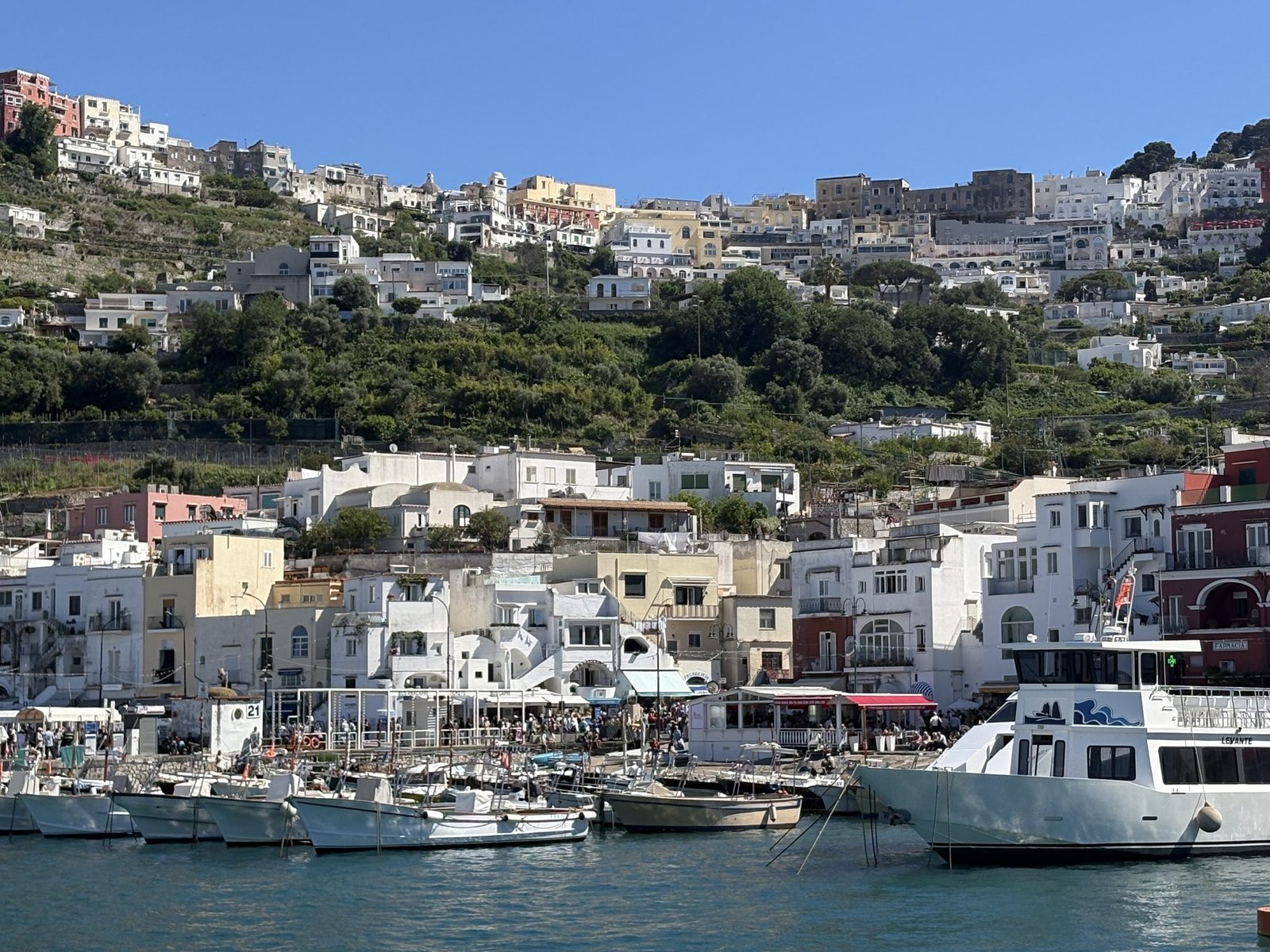
Travelling Italy by train and ferry was mostly straightforward; the uncertainty came from strikes, transfer time, rough seas and changing ferry operations. Here is how much buffer I would leave and what I would check before travelling.
Italy by Train and Ferry: Strikes, Connections and How Much Buffer to Leave
Travelling around Italy by train and ferry can look very simple when you build the route online. A high-speed train gets you into Naples, the metro connects to the port, and ferries link Capri and the Amalfi Coast.
In practice, the individual pieces were easy. The uncertainty came from what happened between them: a rail strike that remained unresolved until I was already in Italy, a rough ferry crossing that ran late, a cancelled port stop, and the fact that ferry schedules depend on conditions in a way train timetables do not.
On a four-night trip from Rome through Capri, Amalfi and Naples, I used Italo, the Naples metro and three ferry journeys. Everything ultimately worked, but the experience changed how I think about building transport connections in Italy. The main lesson was not to plan for perfection. It was to book the important pieces, check the most reliable sources, understand what could go wrong and leave enough room that one disruption does not derail the whole day.
The route I travelled
My transport sequence was:
EXPERIENCED IN MAY 2026
Train: Rome → Napoli Centrale — Italo
Metro: Napoli Centrale → Municipio
Walk: Municipio → Molo Beverello
Ferry: Naples → Capri — NLG
Ferry: Capri → Amalfi — NLG
Ferry: Amalfi → Naples — Positano Jet
I travelled with a small roller suitcase and a daypack, which made the transfers much easier. Larger luggage would not make this route impossible, but it would add friction every time you switch between train, metro, walking and ferry.
The sequencing itself was deliberate. I explain the broader reasoning in How I Planned Four Nights Across Capri, the Amalfi Coast and Naples, but one important consideration was getting off Capri and back onto the mainland well before my flight home.
Booking the Rome-to-Naples train
I travelled from Rome to Naples on Italo and booked directly with the company on March 21 for a May trip. My Prima Business ticket cost €38.90 for a scheduled 9:41 a.m. departure from Rome and 10:53 a.m. arrival at Napoli Centrale.
Booking early gave me a reasonable fare and allowed me to travel in business class. At the time, there was no indication that my travel date would become complicated. Then, while researching the trip, I started seeing posts about a national transport strike planned for May 16.
That was when a straightforward train booking became something I had to keep monitoring.
Check the official Italian strike database
For transport strikes in Italy, the source I would bookmark is the official Italian Ministry of Infrastructure and Transport strike database:
Check current Italian transport strikes
The database lists scheduled strikes by date and transport sector and proved much more useful than relying on forum discussions or summaries generated from older information.
Check before you travel
Strike status, guaranteed train lists, ferry schedules and departure points can change. This trip was taken in May 2026; verify current information with the relevant official operator or government source.
In my case, the strike was still a live possibility when I was already in Italy. I was coming up with contingencies almost until the last moment because the guaranteed-train information would only become useful very close to the travel date.
Rather than immediately cancelling or rebooking, I looked at my exact Italo train number and found an older guaranteed-service list from a previous strike. My train had appeared on that list before, partly because its journey originated farther north and began during an earlier protected period. That did not guarantee it would run this time, but it gave me enough reason not to panic and start dismantling an itinerary in which I had very little flexibility anyway.
The strike was eventually called off while I was in Italy and moved to another date. I was very glad I had waited. Travellers who had completely rearranged their plans in response to the original strike risked finding themselves dealing with the rescheduled disruption instead.
It was a useful challenge to my planner instinct: sometimes the better planning decision is to wait for reliable information rather than solving a problem that has not actually happened yet.
Planner lesson
Once you know which official source to monitor, more speculation does not necessarily create better information.
For anyone prone to travel anxiety, I would also be selective about how much forum reading you do once you already know a potential strike exists. Repeated speculative posts — and AI-generated answers relying on information that may no longer be current — can create far more stress than useful information. Once I knew what to monitor, the official source mattered more than another twenty opinions about what might happen.
A strike notice does not automatically tell you whether your train will run
Italian rail operators may publish lists of specific guaranteed trains that operate during a strike. Those lists generally identify services by train number, origin and destination, which means the train number matters more than simply looking at the portion of the route you are travelling.
If you are boarding in Rome, for example, your train may actually have started somewhere much farther north. Looking only for information about “Rome to Naples” could therefore miss something relevant to the full service.
My previous guaranteed-list research gave me some reassurance, but I would never treat an old list as proof that a train will run during a future strike. It was simply one useful clue while I waited for the current information.
Getting from Napoli Centrale to Molo Beverello
Once I reached Napoli Centrale, the transfer to the port was straightforward. I followed the M signs for the metro and travelled to Municipio, which took about five minutes and cost €1.50. I tapped my Wise card directly to enter, one of several everyday uses I cover in Using Wise for Travel: How It Works and How I Actually Use It.
From Municipio, I followed signs toward the port and used Google Maps as a second check. The walk to Molo Beverello took roughly ten minutes, was flat and was easy with a roller suitcase.
One useful visual clue is what not to follow: the giant cruise ships. I walked past that area toward the ferry terminal shown around Naples Beverello/Molo Beverello on Google Maps. Always check the departure point listed on your own ticket, because Naples has multiple port areas.
What Molo Beverello was actually like
Inside the terminal were ticket counters, bathrooms, a small café, benches and electronic departure signs. The boarding process itself was a little less polished.
Passengers were gathering near the doors and forming lines as ferry departures approached. An attendant checked my e-ticket and luggage and handed me a small paper boarding slip. My booked ferry was the 11:55 a.m. departure, but the paper I was handed showed 11:35. A couple of other passengers had papers with the same time, while most appeared to have 11:55 slips.
I briefly considered leaving the line to ask for a replacement, but passengers were already gathering for the 11:55 ferry and I could not see a separate 11:35 boarding process underway. I also still had my original e-ticket on my phone if I needed to prove what I had booked, so I stayed where I was.
That was the right decision. The crew collected the small paper slip when I boarded, and that was what actually got me onto the boat. In this case, my e-ticket mattered because it was what I had shown to obtain that boarding slip.
Why I would leave about an hour between train and ferry
My Italo train was scheduled to arrive at 10:53 a.m. and my NLG ferry to Capri departed at 11:55 a.m., giving me just over an hour.
For this particular connection, that felt right. There had been an earlier ferry at about 11:35 a.m., and before travelling I had wondered whether I could make it. Once I actually arrived, took the metro, walked to the port, used the bathroom and figured out the boarding process, I remember thinking very clearly that I would not have made the earlier departure comfortably. By the time I reached Molo Beverello, passengers were already gathering for my 11:55 ferry.
I would not recommend trying to move faster simply because the timetable technically makes a tighter connection possible. The purpose of a buffer is to absorb the normal friction of travel, not to prove that a transfer can be done at maximum speed.
My starting point
Napoli Centrale → Molo Beverello → ferry
About 1 hour minimum between scheduled train arrival and ferry departure.
Add more time if:
- the ferry is especially important;
- you have larger luggage;
- you are travelling with children or anyone who needs more transfer time;
- disruption is already likely;
- missing the ferry would have major consequences.
For Napoli Centrale to Molo Beverello, I would personally use about an hour as a reasonable starting point and add more if the ferry were particularly important, if I had substantial luggage, or if I were travelling with people who needed more time to make the transfer.
Ferries introduce a different kind of uncertainty
My Naples-to-Capri ferry was scheduled to take about an hour, but the sea conditions were extremely rough.
As we boarded, staff were handing passengers seasickness bags and actively encouraging everyone to take one. At first I assumed this was standard procedure. It quickly became obvious that it was not.
A large number of passengers became sick during the crossing — possibly close to half the boat — and staff spent much of the journey helping people and trying to keep everyone updated. A few passengers had to be taken outside, and the crossing took longer than scheduled because of the waves.
If the crew is proactively handing out seasickness bags and telling you to take one, I would take it.
I was fortunate not to get sick. I sat by a window and kept my eyes on the horizon, something I knew from previous boating experience could help when the boat is moving unpredictably. I would also avoid staring at a phone or at the onboard screen showing the view from the front of the boat during a rough crossing.
This was very clearly the exception rather than my normal ferry experience. On my later Capri-to-Amalfi and Amalfi-to-Naples trips, I did not notice anyone becoming seasick, and both crossings felt dramatically calmer.
I had also intentionally left my first afternoon in Capri relatively open, so arriving later did not create another problem. That flexibility is one reason the overnight stay worked well for me, which I discuss more fully in Is Staying Overnight in Capri Worth It?
Think about how your luggage is stored
Luggage arrangements varied between the ferries I used. On the larger Naples-to-Capri boat, anything larger than a daypack was left toward the rear of the vessel rather than beside your seat, so I could not see my roller suitcase during the crossing.
Because of the rough conditions, the outside of my suitcase was wet with seawater when I collected it. Everything inside was fine, but it made me think differently about ferry packing. A hard-shell or more water-resistant suitcase could be useful, and anything particularly vulnerable to water should be protected inside your luggage.
On my later ferries, bags were stored inside toward the rear of the cabin, so do not assume every boat will handle luggage in exactly the same way.
Boarding in Capri worked differently
At the Capri port, electronic screens showed which numbered area passengers should use for each ferry. I arrived early enough to find the right section and watch the boarding process before my boat arrived.
This time, I did not need to exchange my electronic ticket for a paper boarding slip. Staff simply scanned the QR code on my phone. Other passengers had paper tickets they had apparently bought locally.
That reinforced a practical lesson from the trip: do not assume the process will be identical at every port. Give yourself enough time to check the screens, find the correct queue and ask if something is unclear.
Capri to Amalfi: your route can change after departure
My ferry from Capri to Amalfi was supposed to stop in Positano first. Passengers only learned after we were underway that the Positano stop had been cancelled.
Some travellers onboard had tickets specifically for Positano, and they were understandably upset. There did not appear to be an immediate replacement arranged onboard, and there was discussion about whether they would need to find another boat or continue by bus after reaching Amalfi.
When we eventually reached Amalfi, the captain’s decision made considerably more sense. Even in Amalfi’s more protected harbour, it took three or four attempts to dock because of the wind. Positano’s ferry landing is much more exposed.
The important planning lesson is that a ferry ticket cannot guarantee the exact route in the same way a timetable makes it appear. Weather can affect not only the journey time but whether a scheduled port stop is possible at all.
Amalfi to Naples: same-day booking worked for me
For my final ferry from Amalfi back to Naples, I had considered booking Positano Jet in advance. A woman at the Amalfi ticket booth advised me that buying it that morning should be fine, so I followed her advice and purchased the ticket shortly before departure.
It worked smoothly. The boarding area used signs and separate queues for different ferries, although it still felt somewhat chaotic when several boats were arriving and boarding at once. There were moments of wondering why another line was moving while mine was not, or whether the approaching ferry was the right one, but getting into the correct line a little early meant I could see the boats and hear what staff were saying.
That crossing back to Naples was much calmer than my first ferry. The luggage was stored inside, nobody around me appeared seasick, and I could close my eyes and listen to a podcast rather than concentrating on the horizon.
Ferry strikes are worth checking too
Rail was not the only possible strike I encountered. There was also a maritime strike listed around the time I was travelling on the Amalfi Coast, which was not especially reassuring after already dealing with the uncertainty around the train.
I contacted my hotel in Capri and asked whether they had any local information. Their response was essentially that ferry service would continue and that I should book with one of the major operators. I decided to trust that advice and keep the itinerary while continuing to monitor the official Ministry strike database.
Because that same database includes maritime transport, I would use it for both rail and ferry disruption checks. As with the train strike, dates and status can change while older forum discussions and search results continue circulating as though nothing has happened.
How much buffer would I leave?
I would not turn one trip into a universal rule, but the experience gave me a useful starting point.
For a high-speed train arriving at Napoli Centrale followed by a ferry from Molo Beverello, I would personally allow around an hour at minimum. For a ferry arriving in Naples followed by a train, I would use at least a similar margin and would be inclined to add more because ferry arrival times can be affected by weather.
A ferry followed by an international flight deserves more caution, but I would not prescribe a universal number of hours. The answer depends on the port, airport, season, weather and what alternatives exist if the boat is delayed or cancelled. The more useful question is: what happens if this ferry does not run?
Why Capri came first in my route
That question was one reason I deliberately put Capri near the beginning of my four-night route rather than immediately before my flight home.
If severe weather stopped ferries from leaving Capri, I could potentially be stuck on the island temporarily. By travelling Capri → Amalfi → Naples, I moved back onto the mainland well before my flight.
Once in Amalfi, a cancelled ferry would still have been inconvenient, but there were potential overland alternatives through places such as Salerno or Sorrento. That is very different from relying on a ferry off Capri as your only connection before an important international flight.
This sequencing was part of the broader logic behind the trip, which I explain in How I Planned Four Nights Across Capri, the Amalfi Coast and Naples.
Plan the route, then leave room for reality
The biggest lesson from these few days was not that Italian transport is unreliable. Most of my journeys ultimately worked close enough to plan.
What changed was my understanding of how much uncertainty can sit around a carefully researched itinerary. A strike can remain unresolved until almost the last moment. A ferry can run late because of waves. A captain can skip a port. An online discussion can keep telling you there is a crisis after the official situation has already changed.
My instinct as a planner is to solve problems early. In this case, staying calm and waiting for reliable information was the better decision. I am glad I did not start rebuilding the Rome-to-Naples connection around a strike that was eventually called off and moved, and I am equally glad I did not try to squeeze myself onto the earlier Capri ferry simply because the timetable suggested it might be possible.
For future train-and-ferry travel in Italy, I would use the same approach: research the route carefully, check official disruption sources, leave realistic margins and understand what the backup options are.
Then stop trying to control every possibility and let the trip happen.
More from this trip
- How I Planned Four Nights Across Capri, the Amalfi Coast and Naples
- Is Staying Overnight in Capri Worth It?
- How to Hike the Path of the Gods from Amalfi
- Why I Chose Amalfi Town as My Base
Plan your own trip
Know How You Travel
Understand how pace, comfort and the number of hotel changes fit the way you travel.
Plan Your Trip
Build a route around the time, priorities and logistics that actually matter.
Explore more of Italy
Planning more of Italy? Explore our firsthand articles and practical advice from Rome, Capri, the Amalfi Coast and Naples.
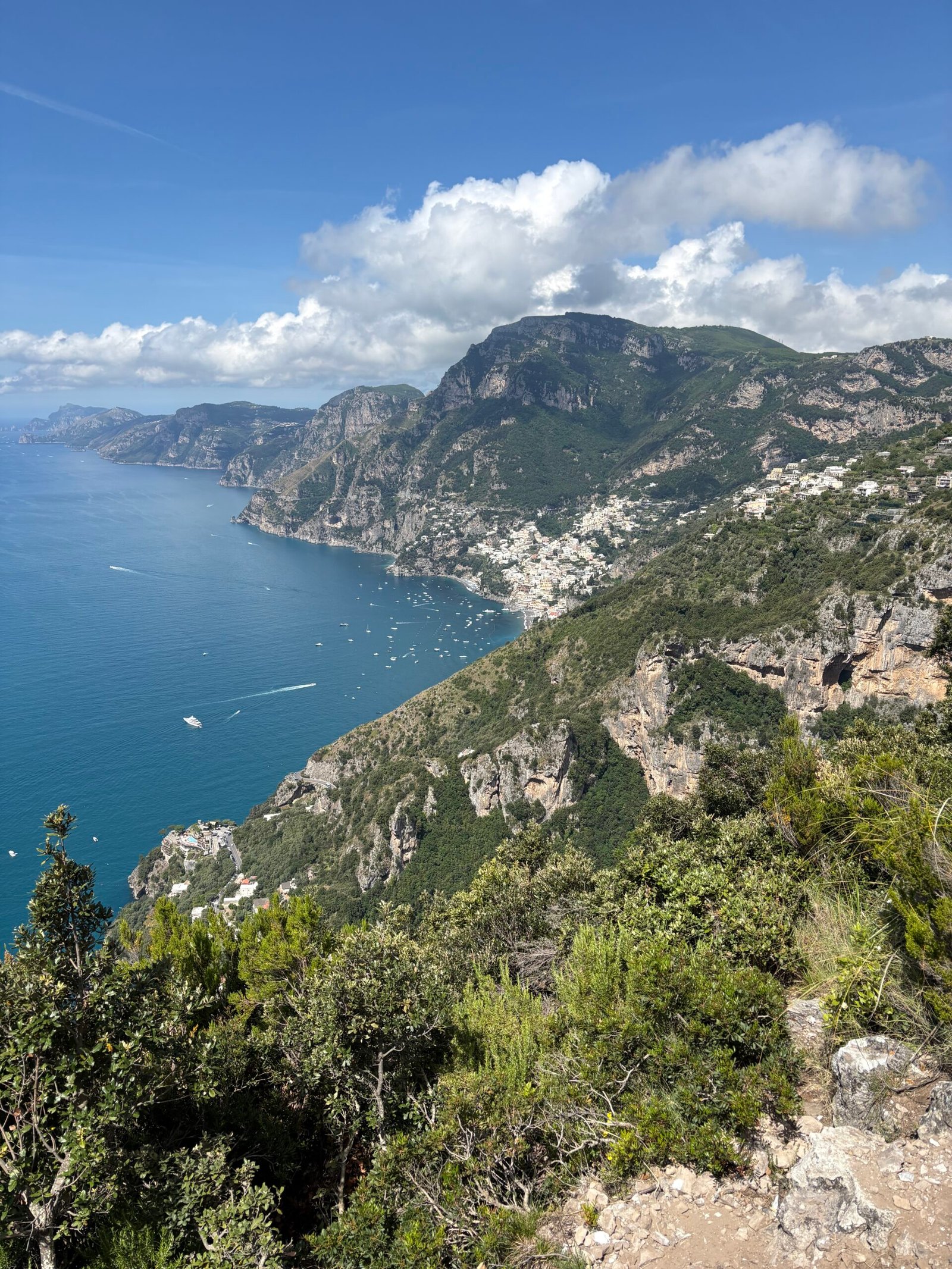
Hiking the Path of the Gods independently from Amalfi is straightforward once you know how the day fits together. Here is the firsthand route from Amalfi to Bomerano, across the trail to Nocelle, down to Positano and back by ferry.
How to Hike the Path of the Gods from Amalfi: Bus, Trail and Return Logistics
If you are staying in Amalfi Town, hiking the Path of the Gods is very doable without a tour or private transportation. The hike itself was straightforward; getting to the trailhead and figuring out what to do at the other end required considerably more research.
I hiked from Bomerano to Nocelle in May, then took a local bus down toward Positano and a ferry back to Amalfi. I would absolutely do it again. The trail had extraordinary views, enough challenge to make it satisfying and far fewer people than the coastal towns below.
The part I wish had been clearer before I went was the logistics.
Affiliate disclosure: This article contains affiliate links. If you book or buy through one of them, I may earn a commission at no additional cost to you. This does not affect the recommendations or comparisons in the article.
The route at a glance
Experienced in May 2026
Start: Amalfi Town
Bus: SITA bus from Amalfi → Bomerano
Trail: Bomerano → Nocelle
Distance: About 5.7km
Hiking time: Around 2 hours at a steady pace, including photo and short rest stops
Difficulty: Moderate
After the hike: Local bus from Nocelle towards Positano
Return: Ferry from Positano → Amalfi Town
I took a 10 a.m. bus from Amalfi, completed the hike without rushing and was back in Amalfi by mid-afternoon.
SITA operates the public buses along the Amalfi Coast, including the Amalfi–Agerola route used to reach Bomerano. Timetables change seasonally, so check the current schedule on the official SITA Sud Campania timetable page before your hike rather than relying on an old blog timetable. Check current SITA Sud schedules
Check before you go
Transport schedules, fares and ticketing arrangements can change. I completed this route in May 2026; check the linked official transport sources for current information before your hike.
Is the Path of the Gods worth doing?
Absolutely!
For me, this was one of the highlights of the Amalfi Coast. The scenery is spectacular, with long views over the coastline, but the experience also feels very different from walking through crowded Amalfi or Positano.
It is not exactly undiscovered. There were other hikers around throughout the route, and several groups from my bus ended up moving along the trail at roughly the same time. But people spread out quickly according to their pace, so it never felt crowded. Travelling alone, I actually appreciated seeing other hikers periodically because I never felt isolated.
It also has just enough difficulty to feel like you have done something more substantial than sightseeing.
Why I hiked from Bomerano to Nocelle
I chose the Bomerano-to-Nocelle direction because it was the direction I saw recommended most often while researching the hike. It is generally described as the more downhill option, which is broadly true, but I would not interpret that to mean the trail is all downhill. There were still plenty of uphill sections, along with rocky and fairly steep stretches.
The other advantage became obvious once I started walking: travelling in this direction puts many of the best views of the Amalfi Coast in front of you. Bomerano sits up in the hills above the coast, while Nocelle is a small hill town above Positano. Walking between them means those coastal vistas open up ahead of you rather than repeatedly requiring you to turn around to see them.
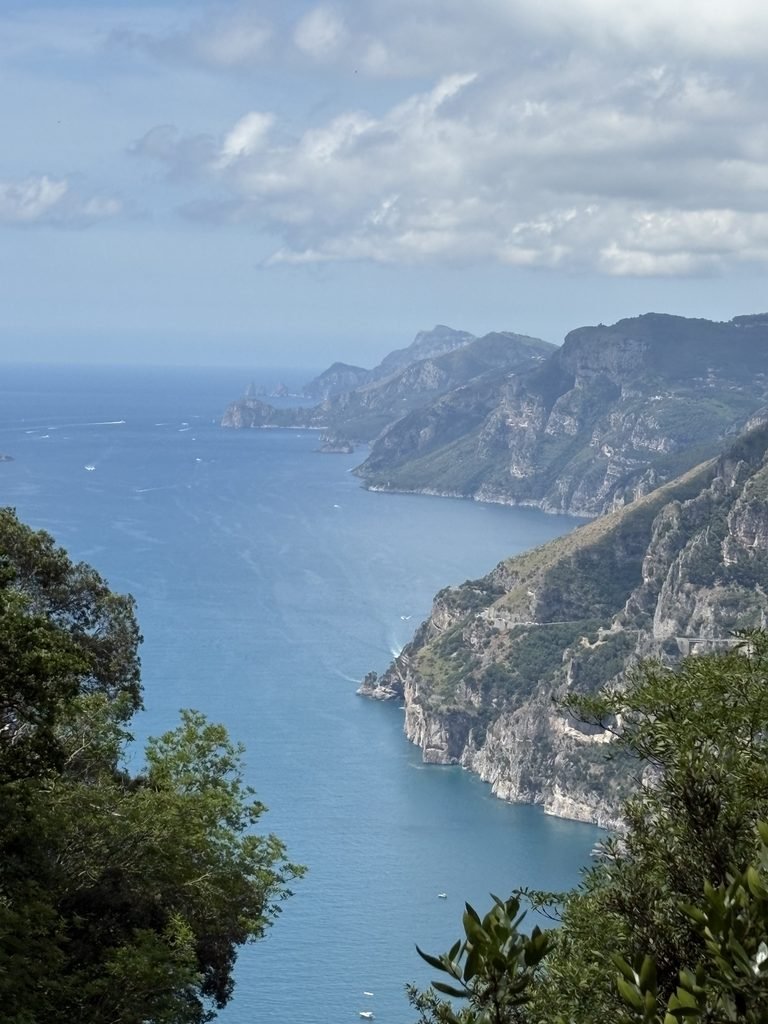
How difficult is the Path of the Gods?
I would rate the hike as moderate. There were flat sections, forested stretches that provided a welcome break from the sun, rocky sections and some steeper climbs and descents. I did not encounter anywhere that made me feel extremely exposed; in several places where the trail approached a drop or viewpoint, there were railings that also made useful places to stop and take in the scenery.
You should still have a reasonable level of fitness, and good knees will help. On a few steeper descents I slowed down considerably and occasionally used the railings for extra support. Some hikers carried trekking poles. I did not need them, but I could see them being useful if you have knee issues or want more stability on the downhill sections.
The weather made a difference too. I walked on a warm, dry day, which made the trail much easier to manage.
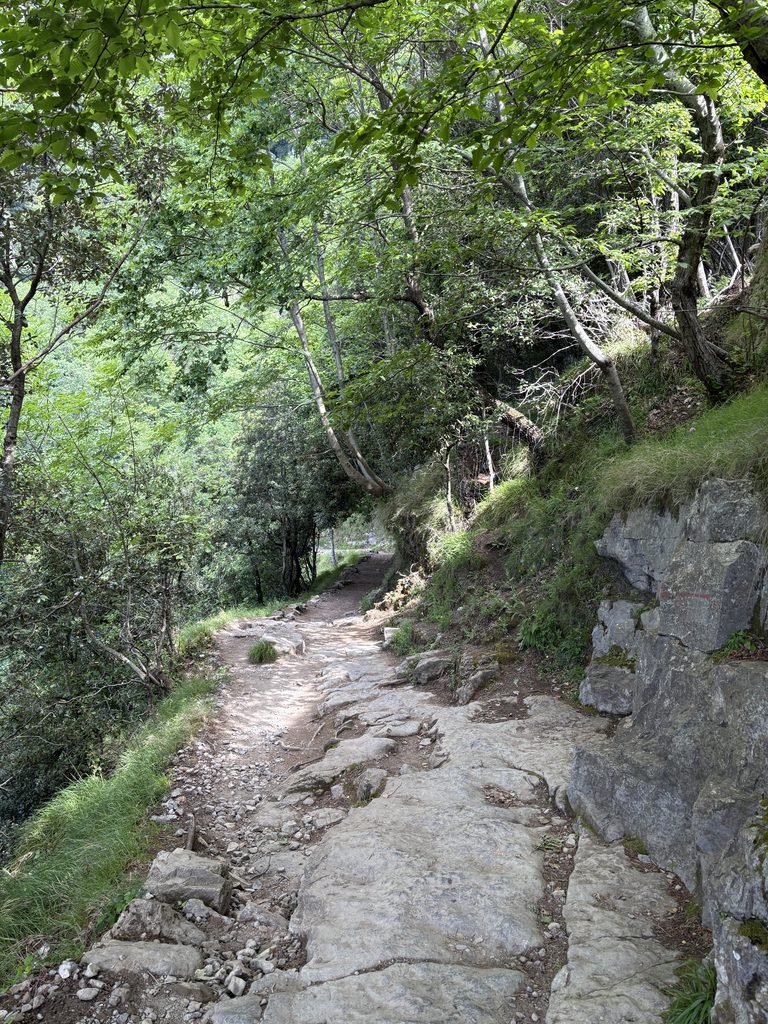
What shoes do you need?
I wore Skechers Go Walks. For the dry conditions I had, they were comfortable and handled the trail perfectly well, although they were extremely dusty by the end and needed a thorough cleaning.
I would feel differently if the trail had recently been wet. There are rocky and uneven areas where better grip would become much more important. In warm, dry weather, I could also see a good-quality hiking sandal working well for someone accustomed to hiking in them.
This is not a hike where I personally felt I needed heavy hiking boots, but footwear should match the trail conditions rather than simply the distance.
Bring water with you
I carried water, a couple of granola bars and an apple. I never actually needed the food during the hike, but the water was essential. It was warm and there are substantial stretches exposed to the sun.
I did not see anywhere to refill water once I was on the trail. Bomerano has shops where you can buy water and snacks before walking to the trailhead, and several people from my bus stopped there before starting. If you arrive without enough water, this is the time to stock up.
Getting from Amalfi to Bomerano by SITA bus
This was the part that was much less obvious than the hike itself.
I took the 10 a.m. SITA bus from Amalfi toward Bomerano. It was line 5080 on the Amalfi–Agerola–Naples route, and the journey took about 40 minutes with traffic.
The road climbs into the hills and the views along the way are excellent. I arrived early enough to get into the queue, and although the bus was full, it was not overloaded. I had a seat for the trip.
That was in mid-May. In peak summer, I would allow more time and be more cautious about assuming the same experience.
Where to buy the bus ticket in Amalfi
This was surprisingly confusing.
Before going, I found multiple sources saying that bus tickets were available from local shops. I tried several shops around Amalfi — including places that were specifically listed online as ticket sellers — and none sold them. Several had signs explicitly saying they did not sell bus tickets.
After asking around, I eventually learned that a man wearing a yellow vest near the bus area by the docks was selling them. I bought a one-way ticket from him in cash.
The bus area appears on Google Maps as Amalfi Terminal, but do not expect anything resembling a formal bus terminal. The location and ticket process were not particularly well signposted, so I would arrive with some extra time rather than assuming you will immediately know where to go.
Getting off in Bomerano
The driver was helpful and told those of us heading for the Path of the Gods where to get off. Bomerano itself is a small town in the hills, with a central area and shops where you can buy water or snacks before starting.
From the bus stop, I did not find the route to the trailhead particularly well marked. I used Google Maps to navigate through town until I reached the start. Once you arrive at the trailhead, however, there is a large sign and it is obvious that you are in the right place.
From that point, the navigation becomes much easier.
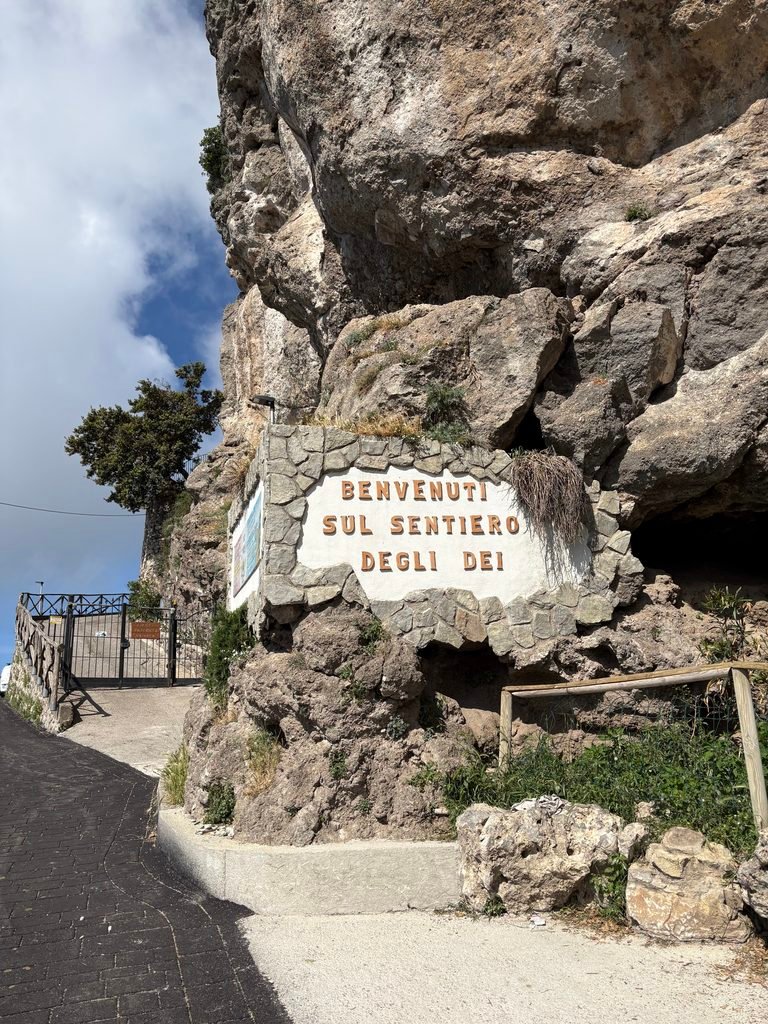
Is the trail easy to follow?
Mostly, yes.
There was not a huge amount of signage along the route, but most of the time there was only one obvious trail to follow. At one point, I encountered a branch where I could either descend a set of stairs or stay on a higher route to the right. I took the stairs, and the two routes eventually met again.
That was the exception rather than the rule. I did not spend the hike repeatedly wondering whether I was still on the Path of the Gods.
The scenery also makes it very tempting to stop frequently, so allow some extra time beyond whatever pace you would normally expect to walk 5.7 kilometres.
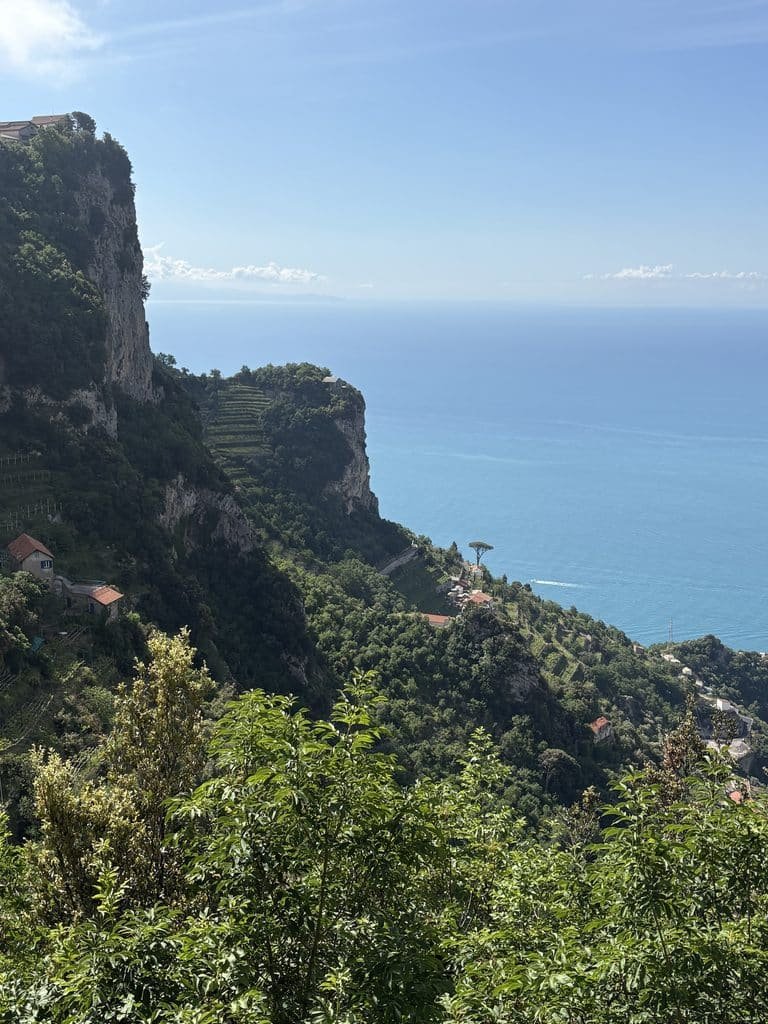
What the hike itself was like
The trail changes character throughout the walk. Some sections are rocky and require more concentration, others are relatively flat, and there are stretches through forest that provide welcome shade before the trail opens again to views over the coast.
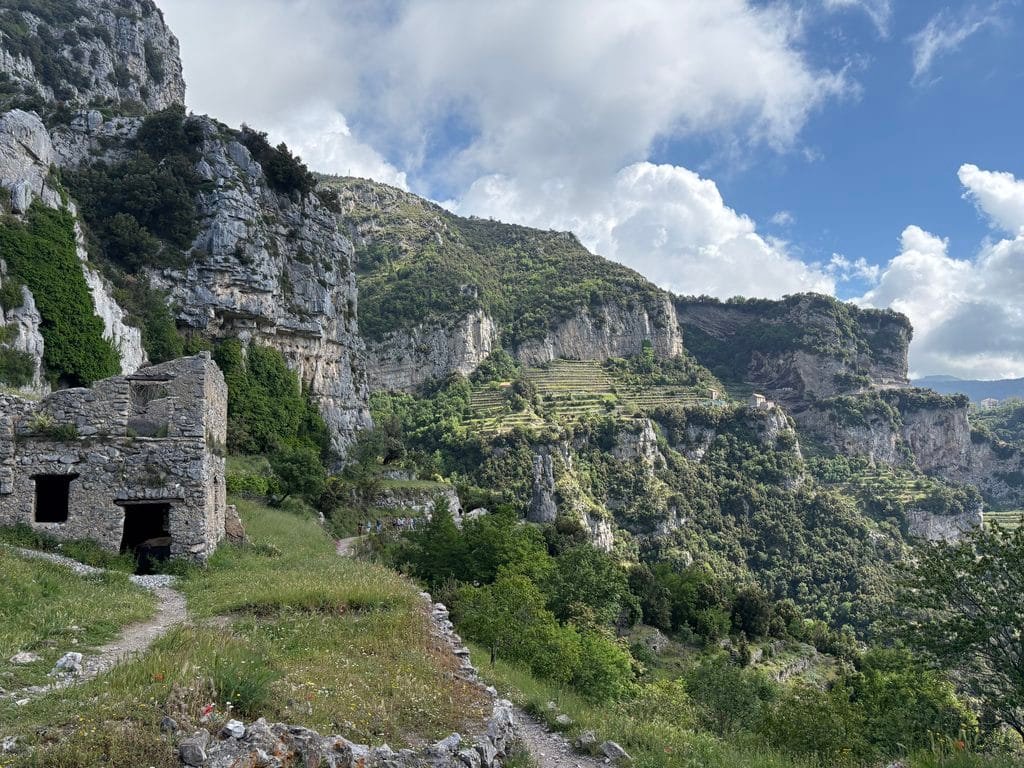
Those views are the main reason I would recommend the Bomerano-to-Nocelle direction. Much of the scenery unfolds ahead of you as you walk.
I kept a steady pace but stopped regularly for photographs and a few short rests. My total walking time was around two hours, possibly a little under rather than over.
I had read beforehand that the Path of the Gods could be very crowded and that starting extremely early was important. I deliberately chose not to do that because I wanted a relaxed morning and did not want to structure the day around another very early start.
In mid-May, the 10 a.m. bus worked well for me. The first part of the trail was naturally busier because several people had arrived together, but everyone soon spread out according to pace. In hotter weather or peak summer, an earlier start could make much more sense.
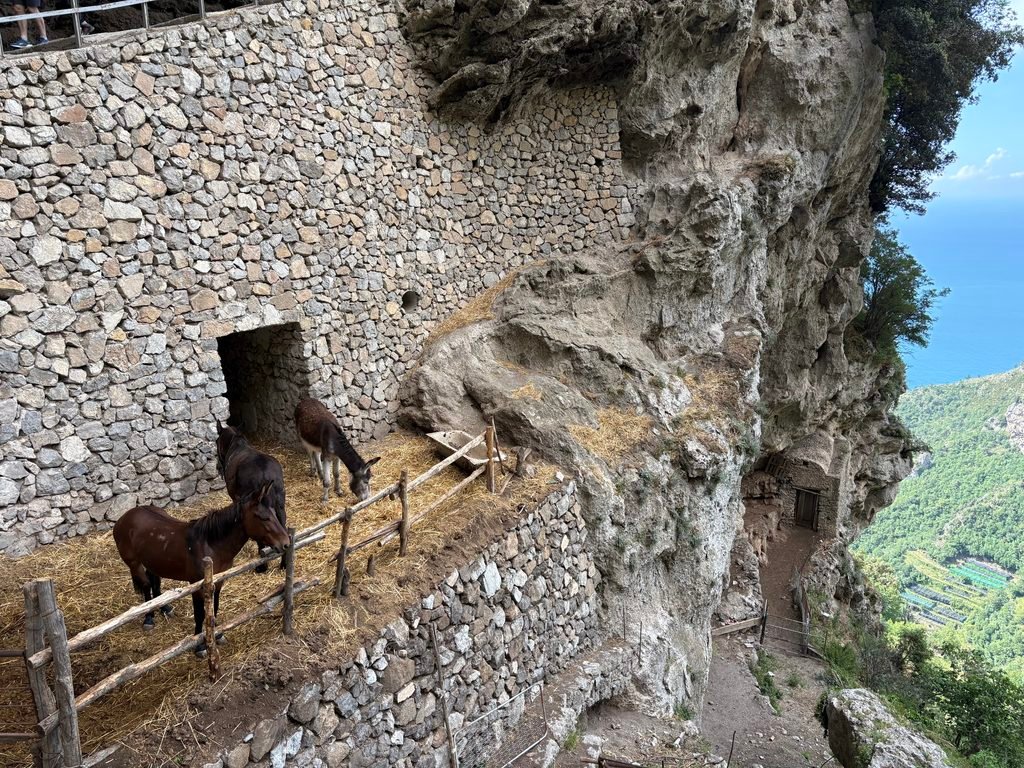
Arriving in Nocelle
The trail finishes in Nocelle, a quiet little settlement in the hills above Positano. There was a café near where I entered town, although I did not stop, and the lanes were narrow, pedestrian and remarkably quiet after the busier towns along the coast.
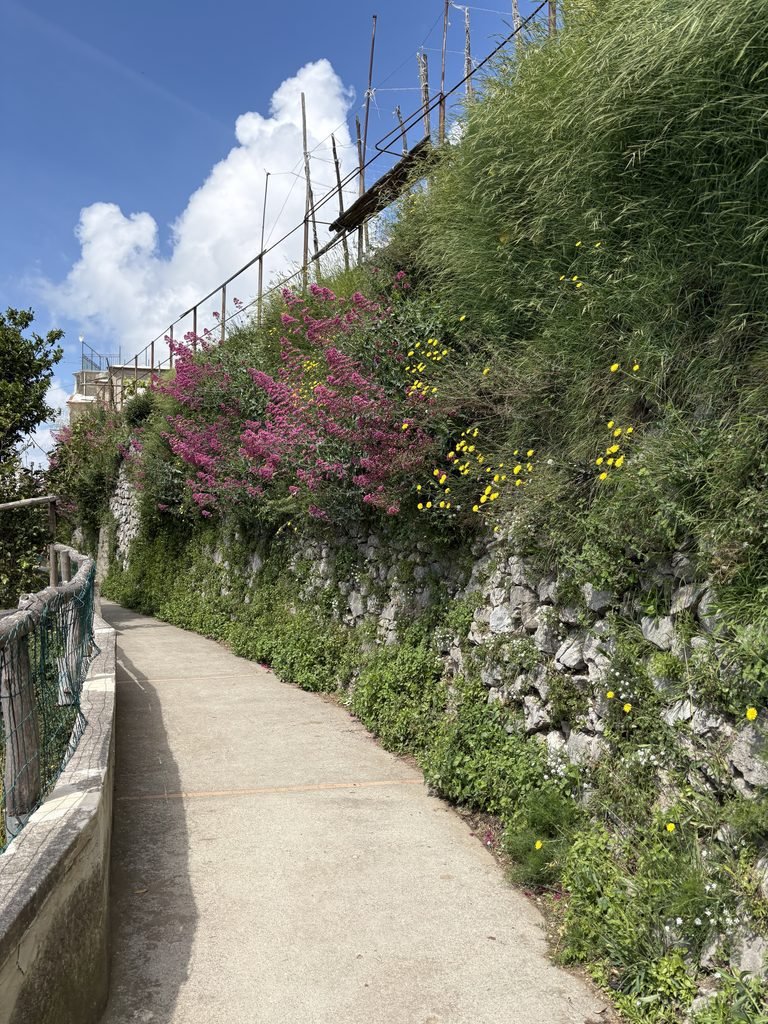
This was also where my carefully researched plan became less useful.
I knew there was a very long staircase that could eventually take me downhill toward Positano. At one point I came to stairs heading down from the route through Nocelle and started descending them, then stopped. I was not sure whether these were actually the stairs I had read about and did not want to commit to hundreds of steps before knowing where I was going.
I chose to continue exploring at the upper level instead. In doing that, I suspect I missed the church and some of the lower part of Nocelle, although I cannot say with certainty where those particular stairs would have taken me.
Finding the bus from Nocelle
Eventually I saw a handwritten sign pointing toward a bus. I followed it up a small set of stairs and found one of the least obvious bus stops I have ever used: essentially a spot beside a winding mountain road with no shelter and very little signage.
For several minutes, I wondered whether I had actually found the right place. A few other travellers eventually appeared and waited with me, which was reassuring. There may be a more obvious stop elsewhere in Nocelle; this is simply the one I managed to find.
The local bus eventually arrived and I paid the driver onboard. The fare was around €1.80, but I did not have exact change. That did not make the driver particularly happy, and I ended up paying about €2. Based on that experience, I would carry small coins.
The bus to Positano took longer than expected
I had seen estimates suggesting that the trip down toward Positano takes only 10 or 15 minutes. Mine was considerably longer.
The bus was tiny, and many passengers were standing. As we approached Positano, traffic became very heavy and the journey stretched to roughly 40 minutes.
This was in mid-May, which made me wonder how much worse the road becomes at the height of summer. It is another reason I would avoid planning the end of the hike around a tight ferry connection: the walking time is reasonably predictable; traffic down the mountain is not.
Getting back to Amalfi by ferry
Once I reached Positano, I walked through part of town but found the narrow streets extremely busy. Rather than trying to add more sightseeing, I headed toward the beach and ferry docks, where there was much more open space.
I bought a Travelmar ticket directly from one of the booths for the next ferry to Amalfi for about €10. There was no complicated process: I was told to wait nearby, and as ferries were ready to board, staff held up signs showing the destinations so passengers knew where to queue.
The ferry back to Amalfi took only about 15 minutes. After buses, mountain roads and hiking, finishing the loop on the water was a particularly pleasant way to return.
Could children hike the Path of the Gods?
Yes — if they are comfortable walking roughly 5.7 kilometres on uneven terrain.
I would not describe this as a hike for very small children walking independently. There are rocky stretches, climbs and descents, and it requires sustained walking. For an older or reasonably fit child who enjoys hiking, I think it is very achievable.
A small child in an appropriate hiking carrier is a different question, but the trail is absolutely not stroller-friendly.
Parents should also think about the entire outing rather than only the 5.7-kilometre hike. The day includes the bus up to Bomerano, the trail, figuring out Nocelle, another bus down the mountain and transportation back to wherever you are staying. The walking may not be the part that tests everyone’s patience.
What I would do differently
Not much. The 10 a.m. departure worked well in the weather I had, and I appreciated not forcing myself into an early start simply because that was what some advice recommended. I would still bring plenty of water and light snacks, and I was comfortable with my footwear in dry conditions.
The main thing I would change is Nocelle. Next time, I would spend a little more time exploring the town and perhaps be less suspicious of every staircase. If my knees were feeling cooperative, I might even try the full descent toward Positano.
I would also bring smaller change for the bus driver.
A note for planners like me
I like knowing how a trip is going to work before I set out. Where does the bus leave? Where do I buy the ticket? Which direction do I walk? What happens when the trail ends?
That is partly why I wanted to put all of these details in one place. If having the logistics worked out makes you more comfortable, hopefully this gives you a much clearer starting point than I had.
But one of the things I liked about this day was that not everything was completely clear.
I had to ask someone where to buy a bus ticket. I used Google Maps to find the trailhead. I stood beside a mountain road wondering whether a bus was actually going to appear. In the end, it all worked.
Giving yourself enough time to figure something out can be part of the satisfaction of travelling independently. The useful distinction is between leaving room for uncertainty and building an itinerary so tightly that every uncertainty becomes a problem.
Prefer to have the logistics handled for you? Compare current guided Path of the Gods options below.
The practical takeaway
The Path of the Gods was easier to hike than it was to research.
Once I was on the trail, the route was mostly obvious and the experience was exactly what I had hoped for: spectacular scenery, a manageable physical challenge and a quieter way to experience the Amalfi Coast.
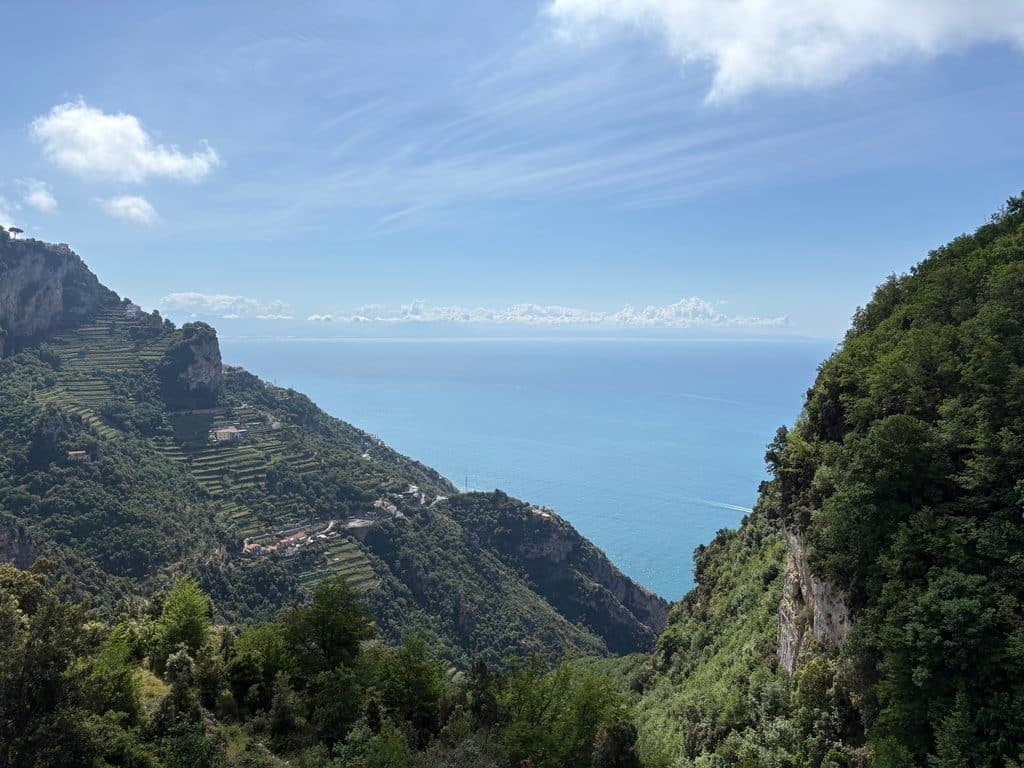
The confusing pieces were around it — buying the bus ticket in Amalfi, finding the trailhead in Bomerano and working out how to leave Nocelle afterward.
If you are starting in Amalfi Town, I would do essentially the same route again:
SITA bus to Bomerano → hike to Nocelle → local bus toward Positano → ferry back to Amalfi.
Give yourself enough time that a full bus, traffic jam or unclear sign does not become a crisis, carry your own water, and do not plan the day so tightly that you have to race through the reason you came.
The logistics require a little patience. The hike is worth it.
More from this trip
- How I Planned Four Nights Across Capri, the Amalfi Coast and Naples
- Is Staying Overnight in Capri Worth It?
- Why I Chose Amalfi Town as My Base
- Italy by Train and Ferry: Strikes, Connections and How Much Buffer to Leave
Plan your own trip
Know How You Travel
Understand how pace, comfort and the number of hotel changes fit the way you travel.
Plan Your Trip
Build a route around the time, priorities and logistics that actually matter.
Explore more of Italy
Planning more of Italy? Explore our firsthand articles and practical advice from Rome, Capri, the Amalfi Coast and Naples.
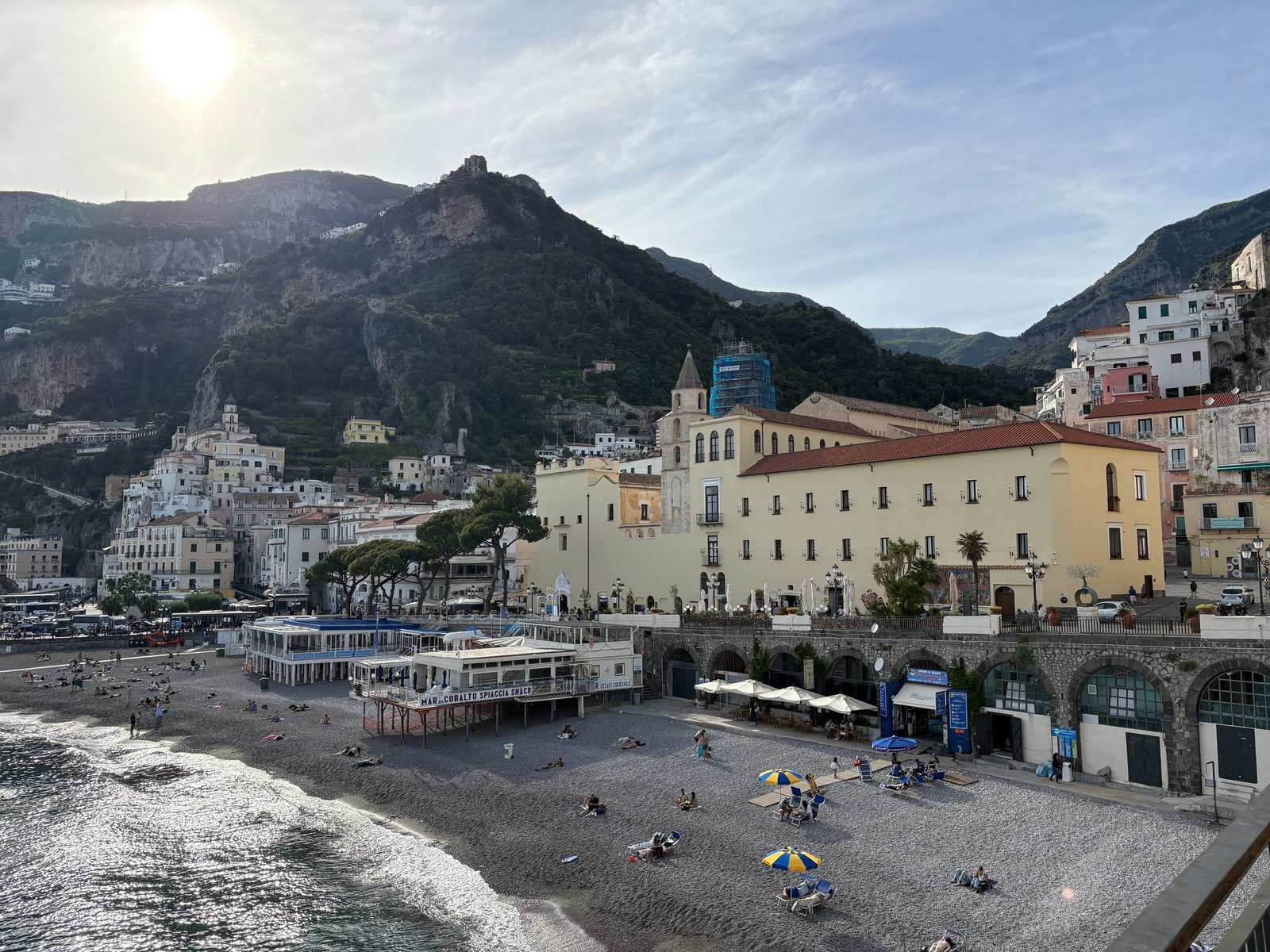
Four nights was not enough to see Capri, the Amalfi Coast and Naples properly, but it was enough to build a satisfying route around a few clear priorities. Here is how I divided the time, what I left out and why the itinerary worked for this particular trip.
How I Planned Four Nights Across Capri, the Amalfi Coast and Naples
Four nights is not enough time to see Capri, the Amalfi Coast and Naples properly, but it was enough to get a taste of the region — and to make me want to come back one day.
My time was limited by a work schedule, and I already knew I would fly home from Naples. That gave me a fixed endpoint and only a few days to decide what to do between Rome and that final flight. After several days in the city, the sea, open spaces and nature were particularly appealing, so I settled on:
Getting there required some hard choices. Pompeii, Ravello and several other places were tempting, but four nights could not support all of them without turning the trip into a race. The itinerary I ended up with was short, but very satisfying.
Affiliate disclosure: This article contains affiliate links. If you book or buy through one of them, I may earn a commission at no additional cost to you. This does not affect the recommendations or comparisons in the article.
The quick decision
This is an assessment of this specific four-night route, not a recommendation for how long the Amalfi Coast deserves overall.
Best for…
Travellers with limited time who want a taste of Capri and the Amalfi Coast, are comfortable changing bases and do not expect to explore any one place deeply.
Add more time if…
You want Ravello, Pompeii, more hiking or nature, additional time on Capri, beach days or a slower experience of the coast.
Choose fewer bases if…
Hotel changes drain you, you are travelling with substantial luggage or you would rather settle into one place than use several short stays.
Why I chose four nights
Four nights was driven primarily by the time I had available. There was very little room to extend the trip, so the real question was how to use those days well.
I had been to Italy several times but never travelled south of Rome. Since I could fly home from Naples rather than returning to Rome, this seemed like a good opportunity to get a first look at a part of the country I had not experienced before.
Research quickly revealed the problem: there was far more within reach than I could realistically fit in. Capri, the Amalfi Coast, Pompeii, Ischia and Naples itself all looked appealing. I knew I did not want to spend the entire extension in another city, though. After Rome, I was much more interested in getting toward the coast, spending time outside and building at least one substantial hike into the trip.
The fourth night became particularly important once I decided the Path of the Gods was a priority. Trying to do the hike while checking out, managing luggage and moving to another base would have created exactly the kind of day I wanted to avoid.
Travelling solo made the resulting pace much more manageable. I had only my own luggage, energy and timing to manage, and I was travelling with a small carry-on roller and a daypack. I would plan the same four nights differently with a family.
Why Capri came first
I left Rome on a 9:41 a.m. train, which arrived in Naples at 10:53 a.m. I deliberately avoided the earliest possible departure because I did not want the personal part of the trip to begin with an unnecessarily rushed morning.
From Napoli Centrale, I took the metro toward the port. Public transportation was easy and well connected, and I could simply tap my Wise card rather than stopping to work out a separate ticket.
I had intentionally left a generous buffer before my 11:55 a.m. NLG ferry to Capri. There was an earlier ferry that looked possible on paper, but I worried the connection would be too tight. I was right: even with a straightforward metro trip from the station, I would not have made that earlier boat comfortably.
That extra buffer looked inefficient when I was planning, but it meant I did not need to race across Naples or start worrying the moment the train lost a few minutes. The details of trains, ferries and the strike uncertainty around this trip deserve their own practical article; the important lesson for this itinerary was that I preferred protecting the connection to maximizing every available minute.
Capri also kept the route moving logically toward the coast rather than spending the first night back in Naples. The final night in Naples was already spoken for because my flight home departed at 9 a.m., and I was not willing to depend on an early ferry from the coast before an international itinerary.
My actual ferry experience reinforced that decision. The Naples-to-Capri crossing arrived about 30 minutes late because of very rough seas, and the following day the Capri-to-Amalfi ferry skipped Positano entirely because the conditions prevented it from entering the port. Ferries are useful, but I would not build a flight connection around the assumption that they will always operate exactly as planned.
For the full breakdown of that part of the trip, see Is Staying Overnight in Capri Worth It?
One night in Capri was enough for this route
I wanted more from Capri than a rushed day trip, but I also did not want the island to take up most of my limited time.
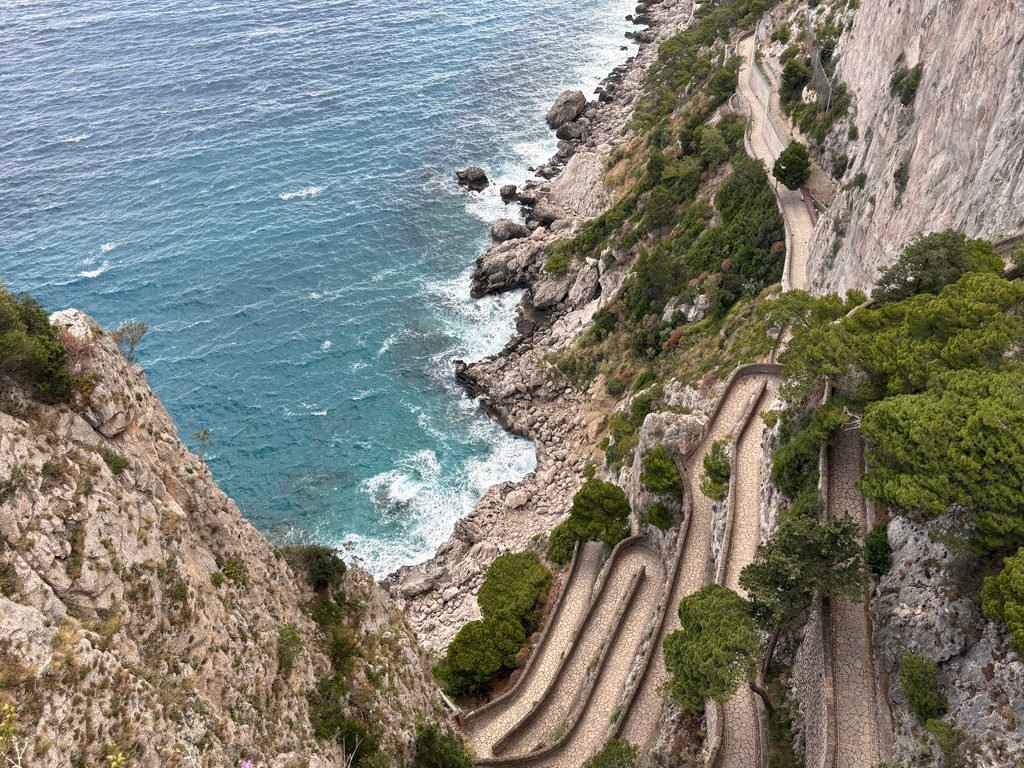
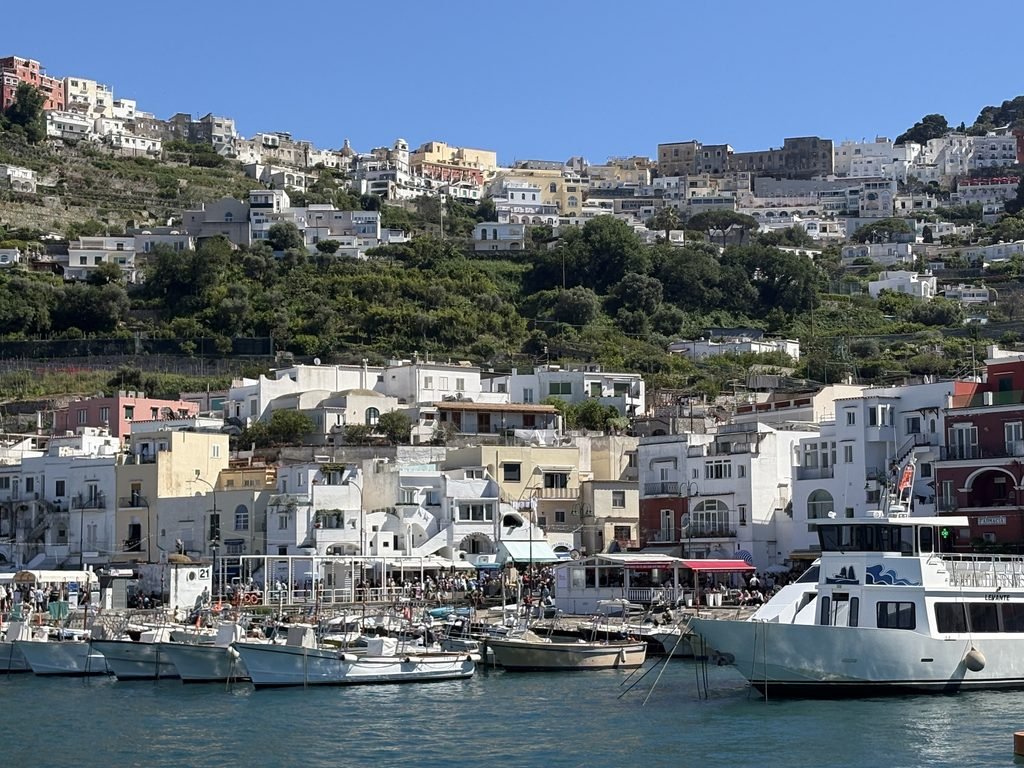
One night at Hotel Syrene let me explore Anacapri and Capri Town after arriving, experience the quieter streets once the day-trip crowds had left, and take a boat trip around the island the following morning before continuing to Amalfi.
For this itinerary, that was the right allocation. With more time, I could easily have stayed another night to explore more of Capri’s coastal paths and quieter areas, but one night was enough to make the island feel like somewhere I had stayed rather than somewhere I had simply passed through.
Why I chose Amalfi Town as the main base
The biggest accommodation decision was where to put the two central nights.
I considered Positano, Ravello, Sorrento and Amalfi Town. Amalfi won because it aligned best with the actual trip: it is a major ferry stop, has useful connections to Capri and Naples, and looked easier to manage with luggage than Positano, where stairs are a much bigger part of getting around.
Sorrento is well connected, but for this trip it felt too far outside the stretch of coast I wanted to experience. Ravello appealed to me, but I would not choose it as a base for this kind of trip. Its location higher in the hills adds another transfer whenever you arrive or leave. For a slower stay where frequent movement and coastal sightseeing were not priorities, that could be much less of a drawback.
Most importantly, Amalfi Town was a practical base for the Path of the Gods. Two nights meant I could arrive, settle in, spend the next day hiking and leave for Naples the following day without combining the hike with a hotel change.
Looking for a base in Amalfi Town? Compare current hotel options and prices below.
Giving the Path of the Gods its own day
The Path of the Gods became the anchor of my Amalfi stay.
I took the 10 a.m. bus from Amalfi toward Bomerano, a small town in the hills above the coast and the starting point I had chosen for the hike. It was bus 5080, Amalfi–Agerola–Naples, and the journey took about 40 minutes with traffic.
The ride itself was enjoyable. The road climbed into the hills with beautiful views, and I had a seat for the journey. Buying the ticket was considerably less straightforward.
Before the trip, I had found several references saying that local shops around Amalfi sold bus tickets. I tried multiple shops — including some specifically listed online — and none sold them. Several had signs stating that they did not sell bus tickets at all.
Eventually, after asking around, I discovered that a man in a yellow vest near the bus area by the docks was selling them. I paid cash for a one-way ticket and waited near what Google Maps calls Amalfi Terminal, which sounds much more formal than it looks in person.
The bus driver was helpful and told those of us heading to the Path of the Gods where to get off in Bomerano. From the bus stop, the trailhead was not particularly obvious, so I used Google Maps until I reached the marked route.
The hike itself was one of the highlights of the trip. The views along the coast were extraordinary, and the trail felt much quieter than the towns below while still having enough other hikers around that I never felt isolated travelling alone. I took a little over two hours to reach Nocelle, another small town in the hills above Positano, with plenty of stops for photos.
There is enough to say about the hike — the route, transportation, difficulty and what I would do differently — that it deserves its own article. For this itinerary, the key point is that giving it a full day meant I could actually enjoy it rather than treating it as something to squeeze between transfers.
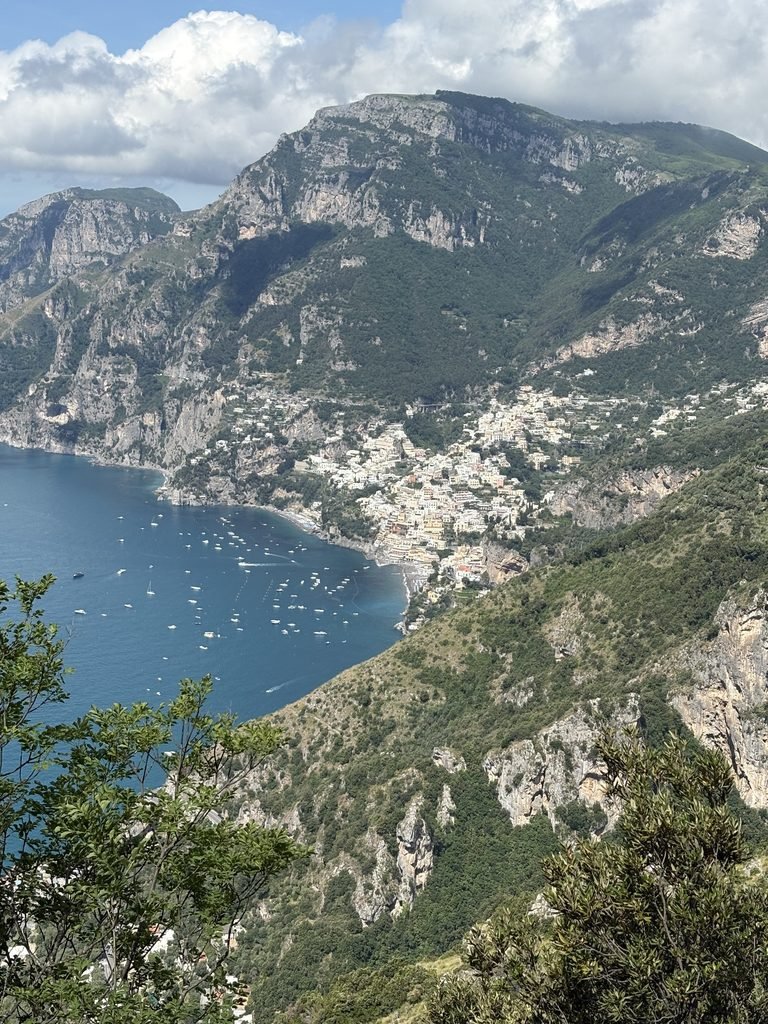
Getting from Nocelle to Positano was less obvious than expected
From Nocelle, it is possible to walk roughly 1,000 steps downhill toward Positano. After the hike, I had no desire to add that simply because it was an option, so I looked for the bus instead.
Finding it was not particularly intuitive. I continued through Nocelle until I eventually saw a sign pointing up a set of stairs toward a bus stop. The stop itself was tiny: no shelter, very little signage and not much reassurance that I was standing in the right place.
For a while, I wondered whether I had misunderstood where to wait. A few other travellers eventually appeared, which made me feel considerably better about my choice of roadside location. There may be a more obvious place to catch the bus, but I could not find it.
The bus was small and became increasingly crowded as it wound down the mountain roads toward Positano. I paid cash to the driver, and the ride took roughly 30 minutes.
Once there, I walked through part of Positano and visited the church, but the narrow streets were extremely crowded in the middle of the day. I made my way toward the beach and docks fairly quickly, bought a ticket for the next ferry back to Amalfi and enjoyed the coastal views while I waited.
Positano is undeniably beautiful. For this trip, that short visit was enough.
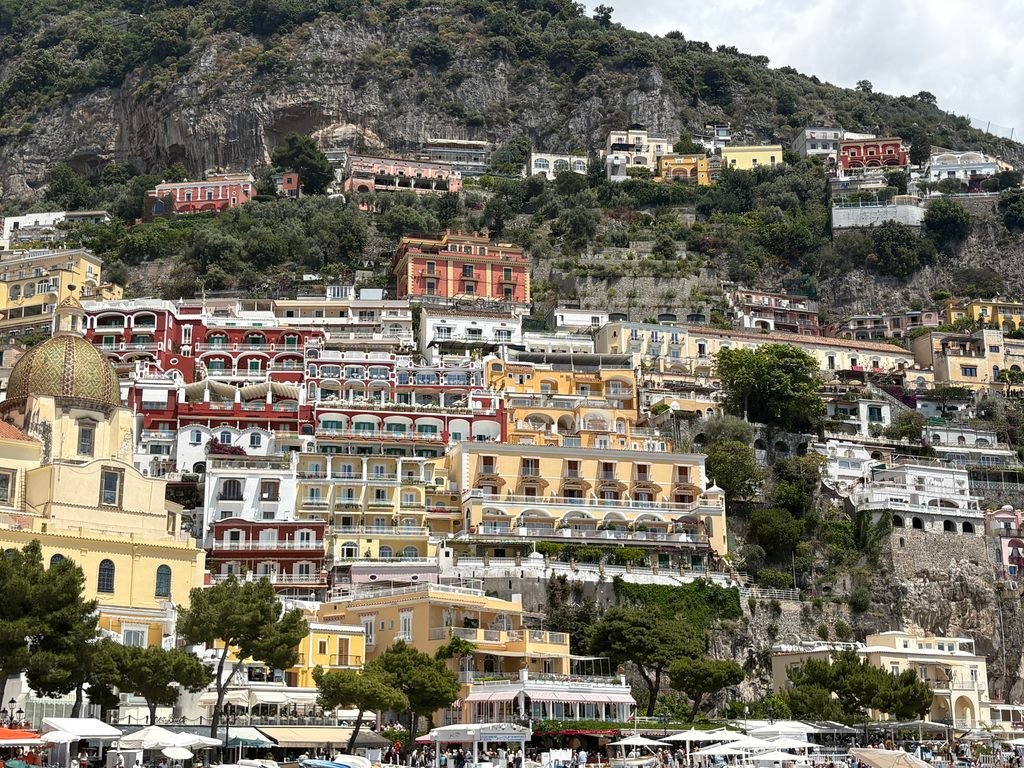
Amalfi still had plenty to offer after the hike
Back in Amalfi, I had an enormous lemon gelato, visited the Duomo in the main square and did some shopping before returning to the Airbnb for a rest.
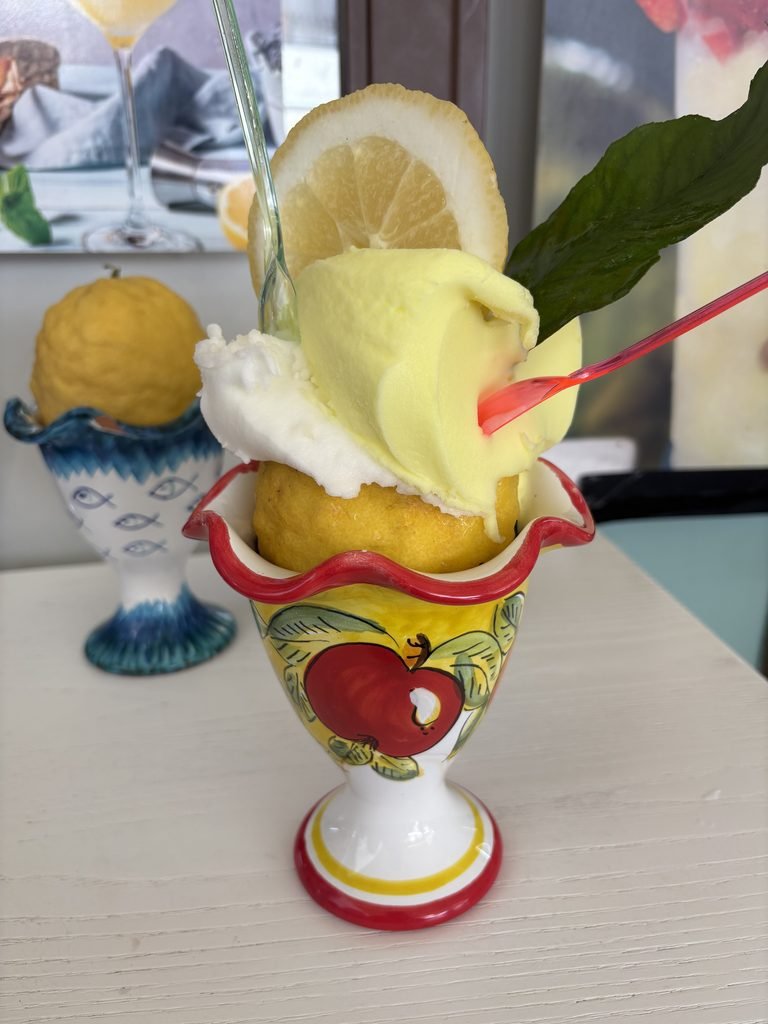
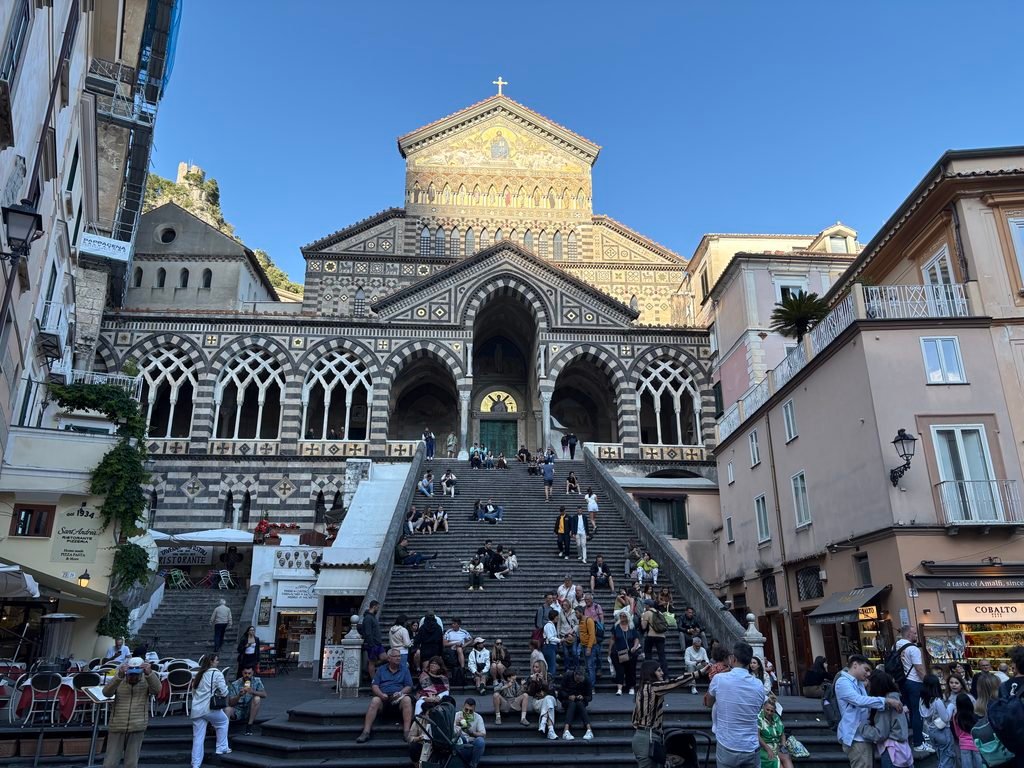
Later, I walked to Atrani. It is an easy and beautiful walk along the shoreline, just around the corner from Amalfi, and was exactly the kind of low-effort exploring I wanted after the hike. I wandered briefly through the town, took some photos and returned to Amalfi through the pedestrian tunnel.
For dinner, I ordered a €16 pizza from Pizzeria Donna Stella. The restaurant has a lovely outdoor seating area beneath lemon trees, and if I had been travelling with someone else I probably would have waited the 45 minutes or more for a table. Travelling solo, taking the pizza back to the Airbnb with a drink sounded better.
My first evening in Amalfi had been similarly simple. After arriving from Capri and checking in, I wandered the town, shops and beach area, then had dinner and drinks at Bar Della Valle for €26.50.
Those two nights were right for what I wanted to do. The hike was the anchor, but there was still enough room around it to enjoy Amalfi, Positano and Atrani without turning every hour into a scheduled activity.
Was Amalfi Town the right base?
For this trip, yes. It was central, well connected by ferry and bus, manageable with luggage and convenient for the activities I had chosen.
I could easily stay in Amalfi again on a future trip if those same logistics mattered. I might also choose somewhere quieter simply because I have already experienced the town itself. The decision would depend on what I wanted the next trip to be.
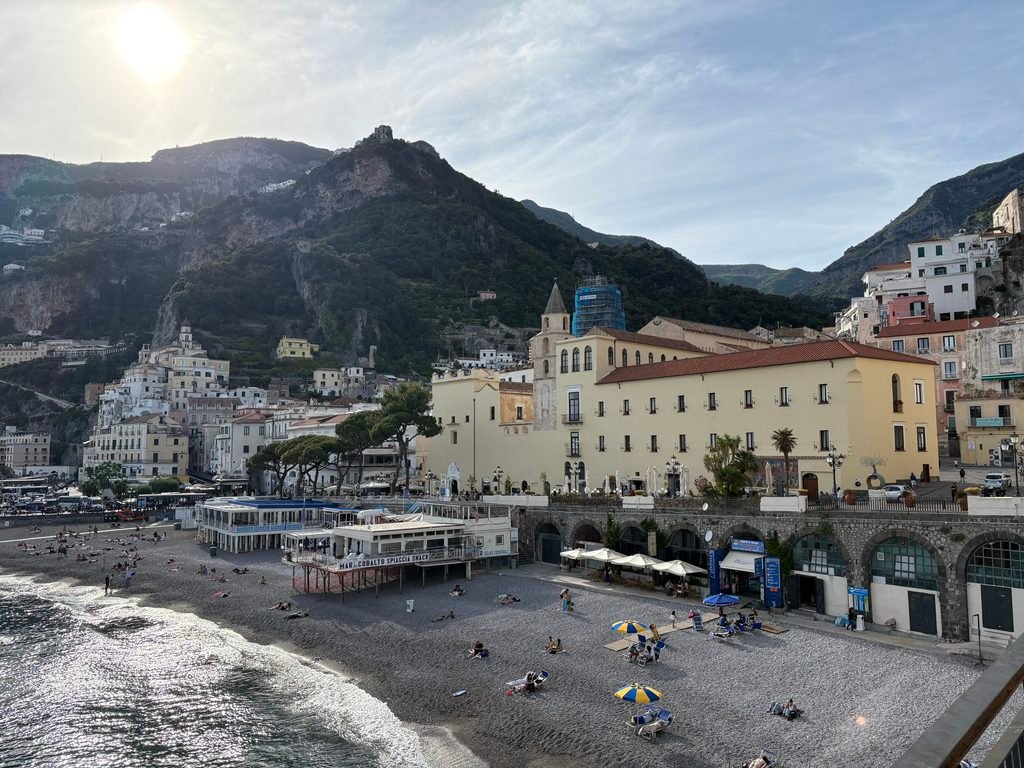
I would probably not choose Positano for myself. It was beautiful, but the crowds and narrow streets did not suit what I wanted from the coast. Ravello, however, is somewhere I would deliberately add to a future itinerary — as somewhere to visit, not somewhere I would personally use as the base for this kind of trip. I would also be interested in hiking one way if the route and timing made sense.
With one more day, Ravello and another hike from Amalfi would be high on my list.
Why Naples got the final night
The final night in Naples had a practical purpose: protecting my 9 a.m. flight home.
I took the noon Positano Jet ferry from Amalfi to Naples for €32, including my bag, and though I had considered buying the ticket in advance, when I asked at the ticket booth in Amalfi, the woman there advised that buying it that same morning would be fine. I followed that advice and bought the ticket shortly before departure.
The crossing took roughly an hour and a half and was much calmer than my earlier ferry to Capri.
My accommodation was near Piazza del Plebiscito, close enough that I could walk there from the ferry terminal. Like many of the mid-range options I found in Naples, it was not a traditional large hotel but a private room within a residential-style building, with check-in handled partly by phone.
The location worked extremely well for such a short stay, and because I had no must-do list or real expectations for Naples — beyond eating pizza — I could simply walk and see where the afternoon took me.
I wandered through the historic centre, visited several churches and eventually headed toward the port and promenade, where the atmosphere felt much more open and modern. I ate at Gino e Toto Sorbillo in the centro storico and, appropriately, finished the Italy portion of the trip with gelato.
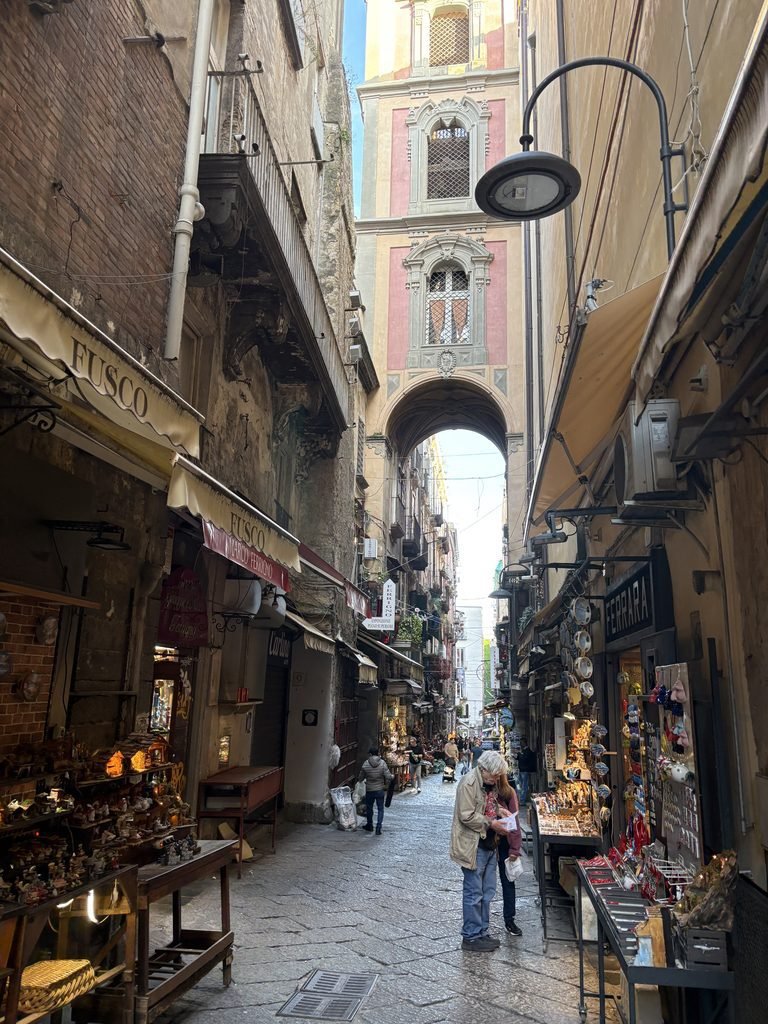
Naples felt grittier than some of the other Italian cities I had visited, but lively and interesting. I would return, particularly because it makes such a useful base for trains, flights and other places in the region. Personally, I would not necessarily allocate a large part of a future trip to Naples itself, but I only scratched the surface on this visit.
For these four nights, it did exactly what I needed: provided a safe buffer before the flight while still giving me an enjoyable afternoon and evening in the city.
Why I cut Pompeii
Pompeii was the biggest thing I seriously considered and ultimately removed.
The history appealed to me, as did the possibility of combining the archaeological site with hiking around Vesuvius. The problem was not whether those experiences were worthwhile; it was whether they fit this trip without making everything else rushed.
To include Pompeii comfortably, I think I would have needed either more nights in Naples — allowing me to take the train out with only a small daypack — or to stay closer to the archaeological sites themselves.
There is luggage storage available for travellers who want to stop at Pompeii while moving between destinations, and someone who prefers a faster itinerary could absolutely build the day that way. I did not want to spend this trip managing bags, storage and another fixed timeline simply to add one more important place to the list.
Saving Pompeii for a future trip felt much more satisfying than forcing it into this one.
What I would do with one more night
With the same four nights, I would keep the allocation exactly as it was:
Capri — 1 night
Amalfi — 2 nights
Naples — 1 night
If I had one additional night, it would most likely go to Amalfi. That would give me time for Ravello, another hike or simply a slower day on the coast without taking anything away from what already worked.
Capri would be the other possibility if hiking, nature and slower island exploration were the priority. Pompeii would make me reconsider the structure more substantially rather than simply adding it as another quick stop.
Would I recommend this route to everyone?
No. Four nights across three bases worked because I was travelling solo, fairly light and comfortable moving frequently for a short period. Whether that pace works for you depends a lot on how you travel.
With a family, I would make a different choice. On the same timeline, I would probably select either Capri or the Amalfi Coast as the main base for three nights, followed by the necessary Naples night before the flight.
Every hotel change has a cost: packing, checking out, reaching the ferry, managing luggage, finding the next accommodation and settling in again. When you are managing only yourself, that cost can be relatively small. With several people, it multiplies quickly.
Four nights gave me a taste, not a complete trip
I did not visit Pompeii or Ravello. I left walking routes unfinished on Capri, skipped other hikes around Amalfi and barely scratched the surface of Naples.
That was okay.
The four nights gave me an overnight on Capri, an extraordinary day hiking above the Amalfi Coast, enough time to enjoy Amalfi rather than simply pass through it, and an unhurried buffer in Naples before the flight home.
More importantly, they showed me what I would want to come back for.
If I had more days, I would add them gladly. If I had fewer, I would cut a base rather than try to move faster.
The goal was never to see the region properly in four nights. It was to use the time I had well enough to experience something meaningful — and leave with a good reason to return.
More from this trip
- Is Staying Overnight in Capri Worth It?
- How to Hike the Path of the Gods from Amalfi: Bus, Trail and Return Logistics
- Italy by Train and Ferry: Strikes, Connections and How Much Buffer to Leave
- Why I Chose Amalfi Town as My Base
Plan your own trip
Know How You Travel
Understand how pace, comfort and the number of hotel changes fit the way you travel.
Plan Your Trip
Build a route around the time, priorities and logistics that actually matter.
Explore more of Italy
Planning more of Italy? Explore our firsthand articles and practical advice from Rome, Capri, the Amalfi Coast and Naples.
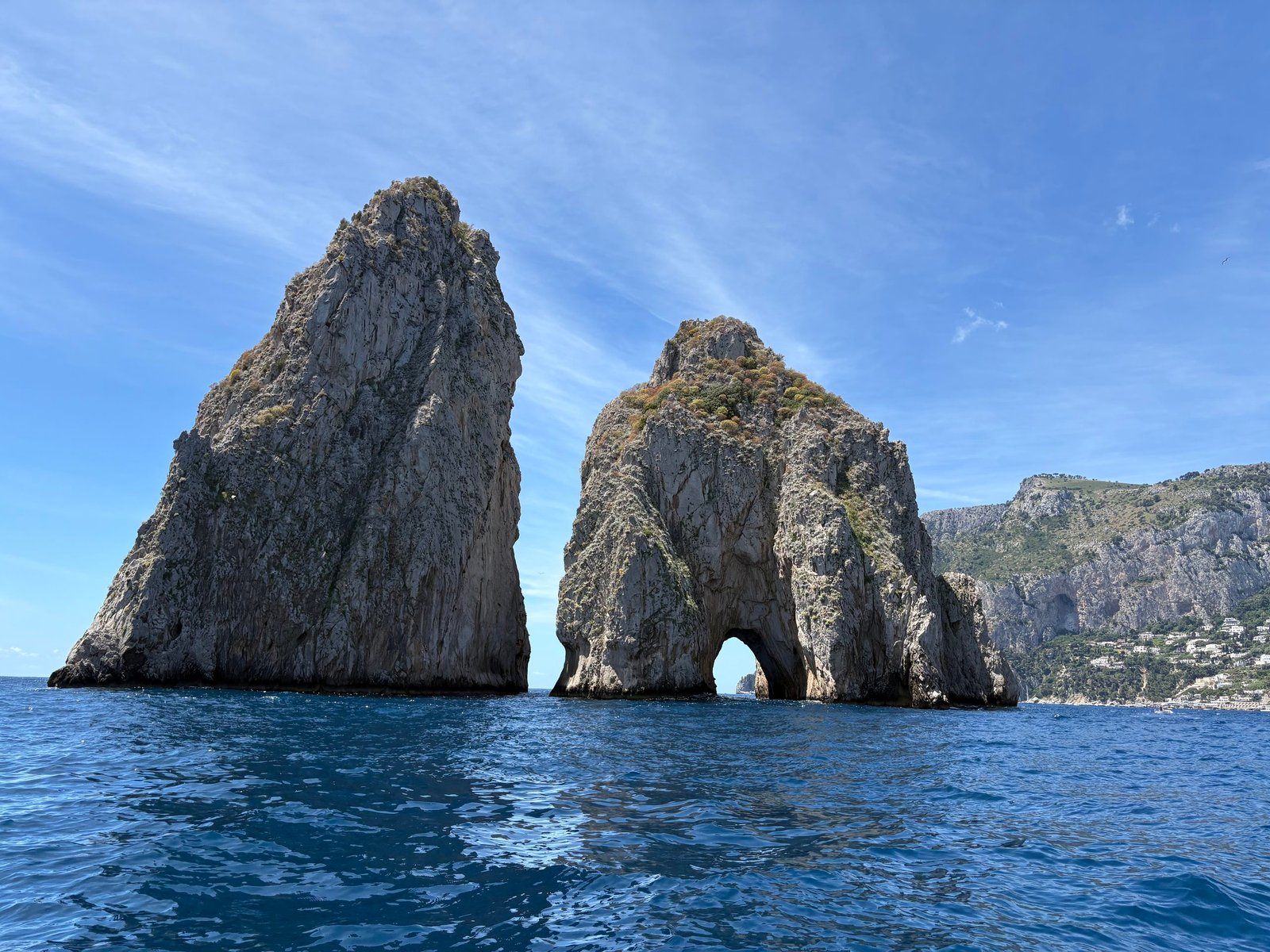
Is staying overnight in Capri worth it? For my trip, one night made the island noticeably less rushed and created time to experience Capri after many day-trippers had left.
Yes — for my trip, spending one night on Capri was worth it because it changed the pace of the visit.
Instead of trying to fit ferry schedules, Capri Town, Anacapri and a boat trip into one tightly managed day, I could absorb delays, leave my luggage at the hotel, wander without constantly checking the time and experience Capri after most of the day-trippers had left. That last part surprised me most. During the day, the busiest parts of Capri were exactly as crowded as I expected. By early evening, many of those same streets were quiet, peaceful and almost completely different.
If you are deciding between staying overnight on Capri and visiting as a day trip, that difference is worth considering.
The quick decision
Best for…
Travellers who want to get beyond Capri’s busiest areas, explore on foot, spend time in Anacapri or on the water, and enjoy the island at a less hurried pace.
Stay overnight if…
You have several things you genuinely want to do and don’t want the entire visit structured around ferry departure times. It also makes sense if experiencing Capri after the daytime crowds leave is part of the appeal.
Stay longer if…
Hiking, nature or slower exploration are priorities. Capri has plenty of coastal paths and quieter corners that are easy to miss on a short stay.
Choose a day trip if…
You’re staying elsewhere on the Amalfi Coast, can leave your main luggage behind and are happy to focus on one or two priorities rather than trying to see everything.
Affiliate disclosure: This article contains affiliate links. If you book or buy through one of them, I may earn a commission at no additional cost to you. This does not affect the recommendations or comparisons in the article.
Why I chose to stay overnight
Capri was the first stop on a four-night trip through Capri, the Amalfi Coast and Naples. I was arriving from Rome and already knew I would eventually fly home from Naples, so I wanted to get out toward the coast rather than spend additional time in the city at the beginning of the trip.
Getting there was already going to consume part of the day. I took an NLG ferry from Naples at 11:55 a.m. for €34.50, including a €5 luggage fee for my small roller bag. The crossing was scheduled to take roughly an hour, but the sea was extremely rough and we arrived about 30 minutes late. There had also been uncertainty around Italian transport strikes while I was planning the trip, so I didn’t want one delayed train or ferry to wipe out half of a carefully scheduled day on Capri.
I was travelling with a small carry-on roller and a daypack. That was light enough to manage without much difficulty, but still more than I wanted to drag around while sightseeing. Staying overnight gave me somewhere to put everything down and removed a surprisingly large amount of logistical pressure.
Why Capri Town worked as a base
I initially considered staying in Marina Grande because it seemed simpler from a luggage perspective. In the end, I chose Hotel Syrene in Capri Town and was glad I did.
The funicular from Marina Grande was straightforward with my small roller and daypack. It cost €2.40 each way, and I simply tapped my Wise card at the gate. Luggage is allowed, but there are limits on what you are supposed to bring. I didn’t see anyone closely policing that when I travelled, although I would not assume the same would be true at a much busier time. With substantially more luggage than I had, a taxi or paid luggage-delivery service to your hotel would probably be the more practical option — at a much higher price.
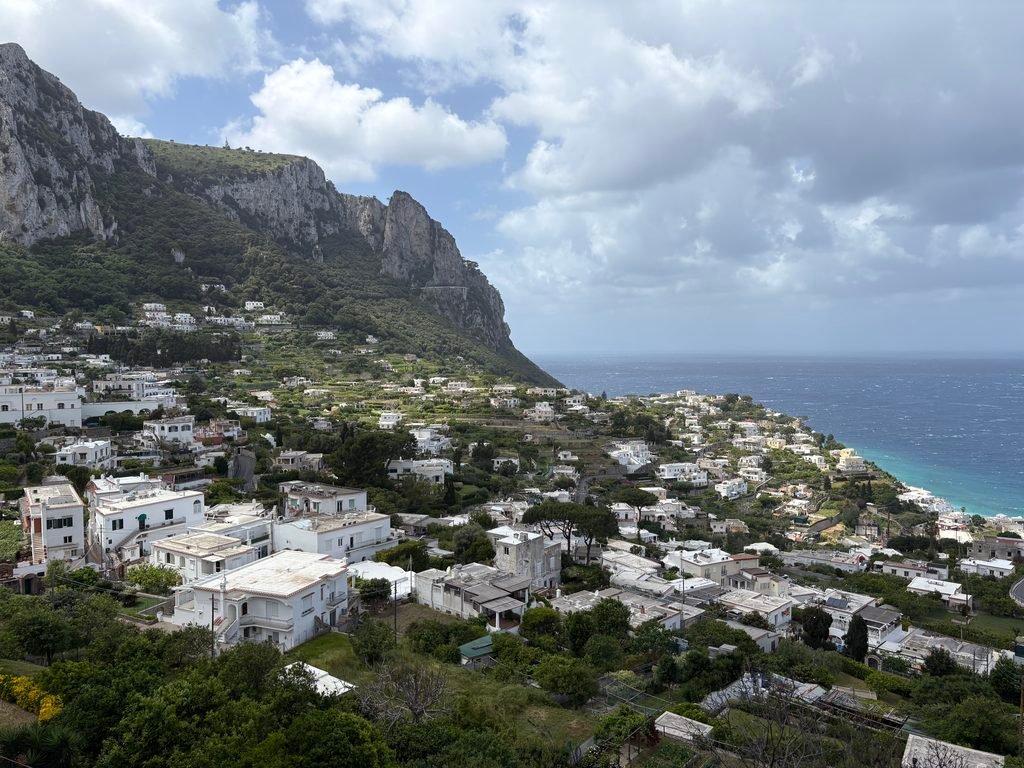
Another useful detail if you are staying in Capri Town: hotel guests and residents can use a preferred line for the funicular rather than joining the main visitor queue.
Hotel check-in was officially at 4 p.m., but my room was already ready when I arrived, so I could drop everything immediately and head back out carrying only a small purse. Had it not been ready, the hotel had a comfortable lobby and a beautiful shaded terrace where waiting would have been easy.
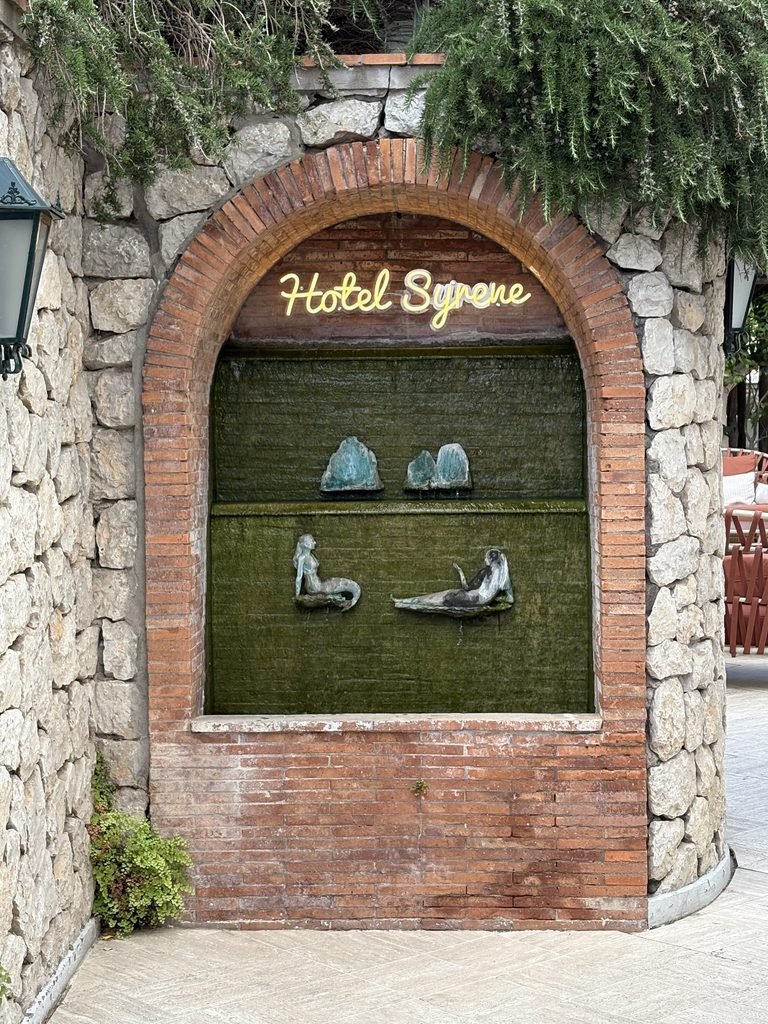
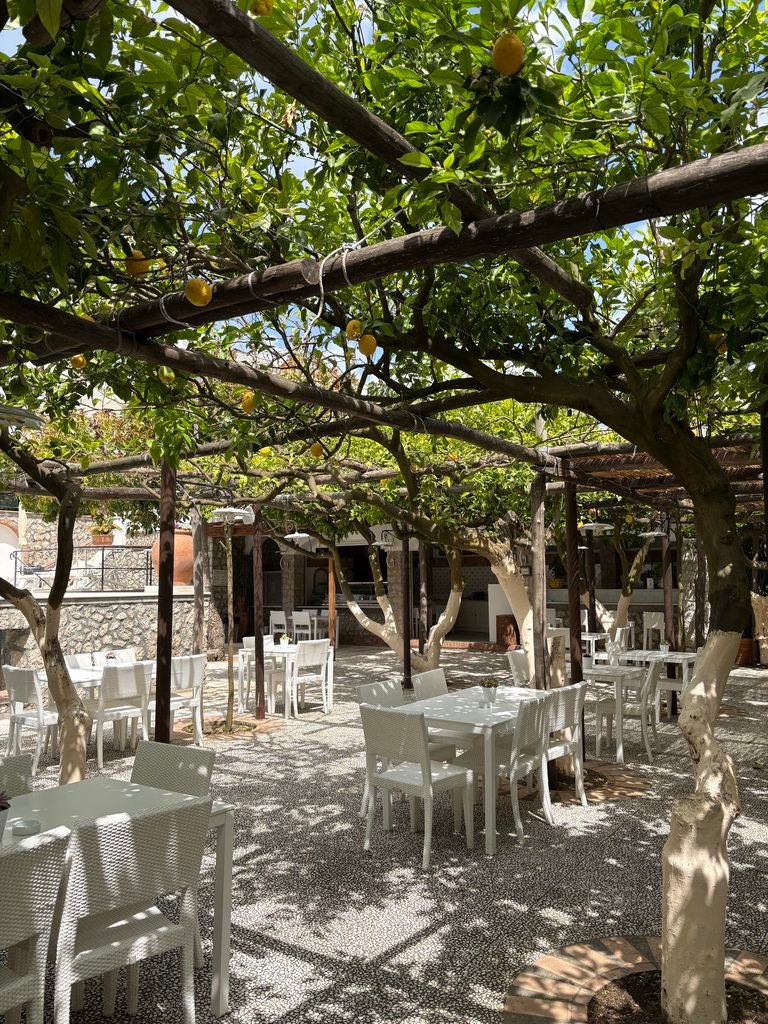
For someone travelling reasonably light, I would not choose Marina Grande solely because of concern about getting luggage up to Capri Town.
Looking for a different hotel in Capri Town? Compare current options and prices below.
What I could do without rushing
Once I had dropped my bags, I headed to Anacapri. I had hoped to take the Monte Solaro chairlift, but it wasn’t running that day, presumably because of the strong winds. Instead, I visited Villa San Michele for €12. The gardens were peaceful, the views over the island and sea were beautiful, and the small museum was an easy place to wander without feeling rushed.
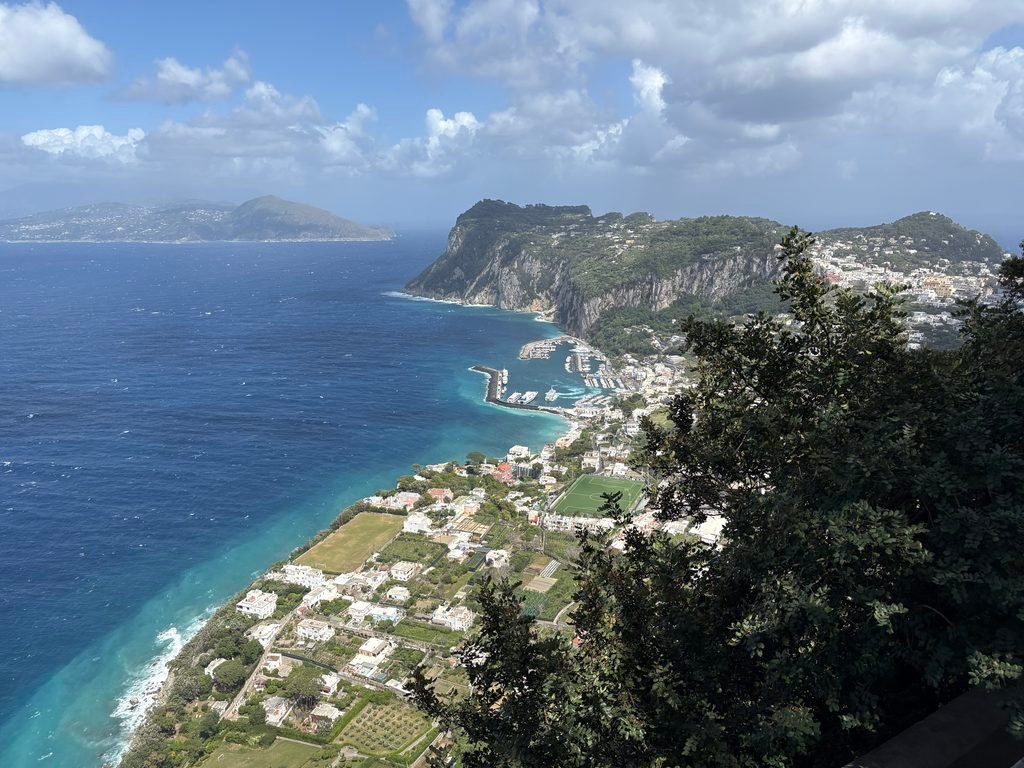
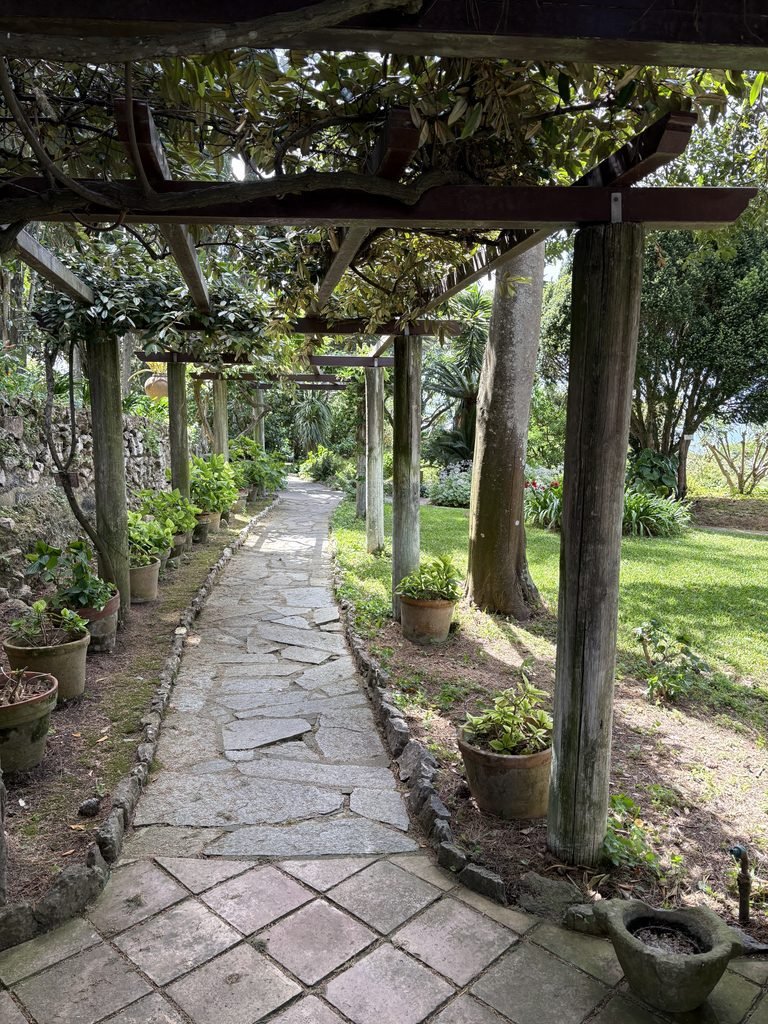
From there I stopped at the Church of San Michele Arcangelo. From the outside, it is surprisingly unassuming. Inside is an extraordinary tiled floor depicting the expulsion of Adam and Eve from the Garden of Eden. Admission was €2, cash only when I visited, and I had the church completely to myself. You walk around the floor on raised wooden planks to protect the tiles, and it is worth going up the spiral staircase afterward for the view from the balcony above.
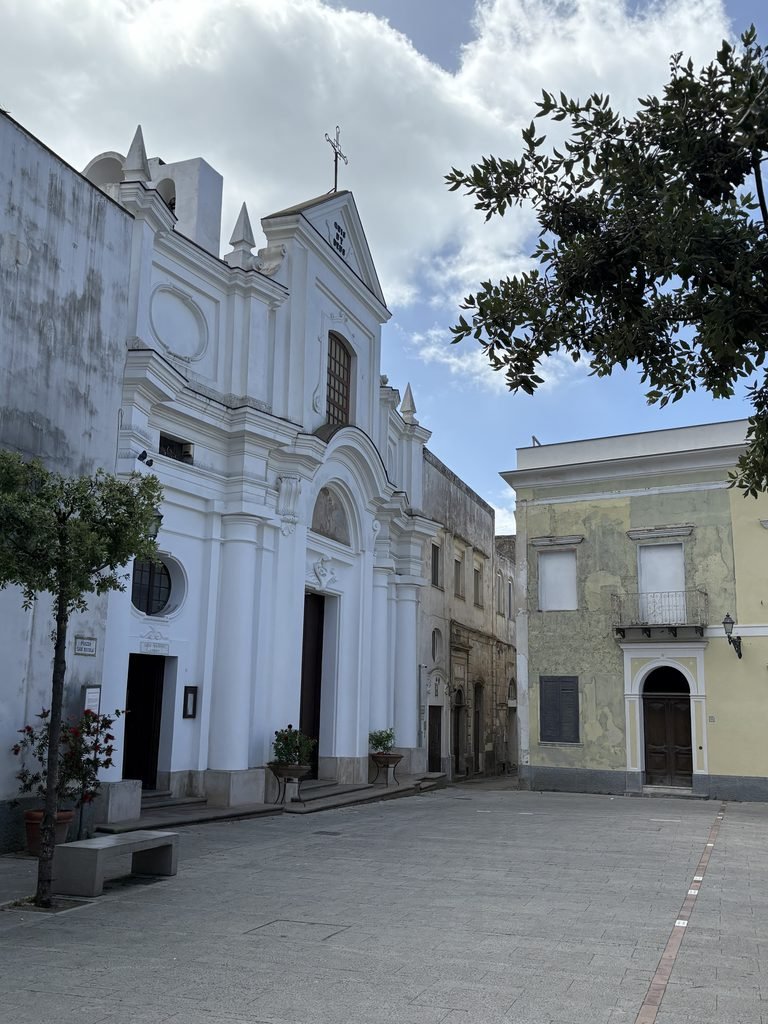
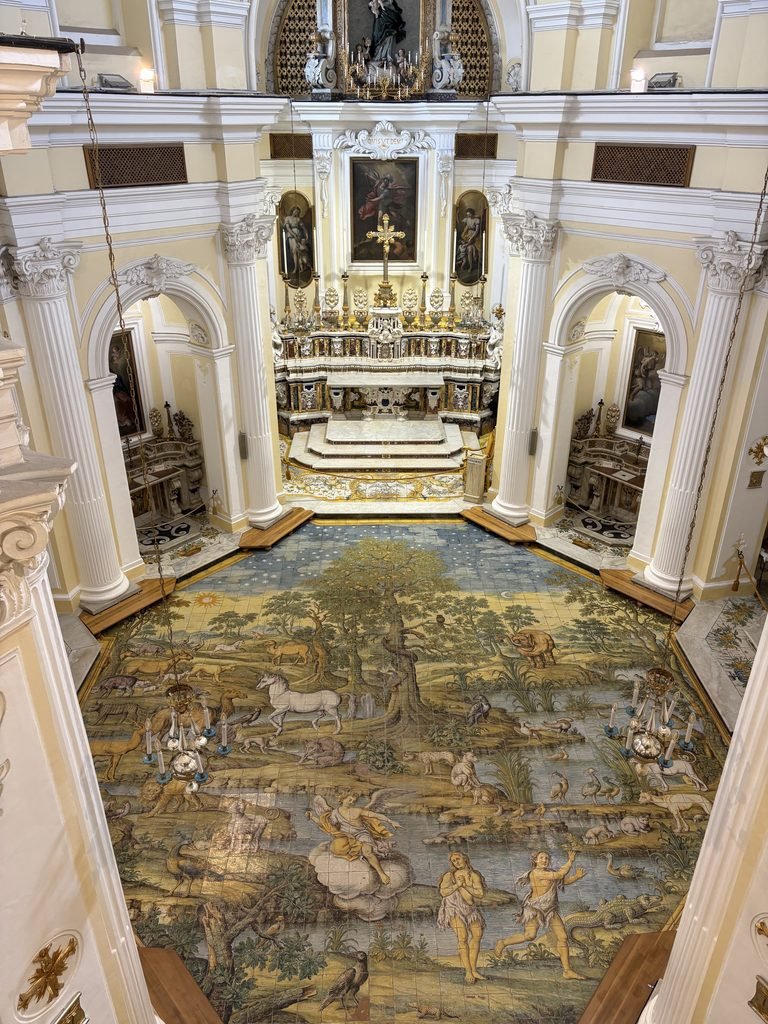
Getting back to Capri Town was a useful reminder of why extra time matters. The buses between Capri and Anacapri are inexpensive — €2.50 each way — but very small. I bought a return ticket in cash at the Capri Town bus terminal. On the way back, several buses arrived already too full to take everyone waiting, and I ended up standing there for roughly 30 to 45 minutes before I could get on one. Some people eventually gave up and took taxis instead.
Travelling alone and without a strict deadline, I was fine waiting. On a tightly timed day trip, the same delay would have felt very different. Capri offers plenty of ways to pay for convenience; I preferred to wait and keep the €2.50 bus ride.
Back in Capri Town, I hurried to the Gardens of Augustus because I wanted to make it before closing. Entry was €2.50, and I tapped my Wise card at the small booth at the entrance. In reality, the gardens are compact and easy to see in about 20 minutes unless you want to sit and linger. The main payoff is the excellent view of the Faraglioni.
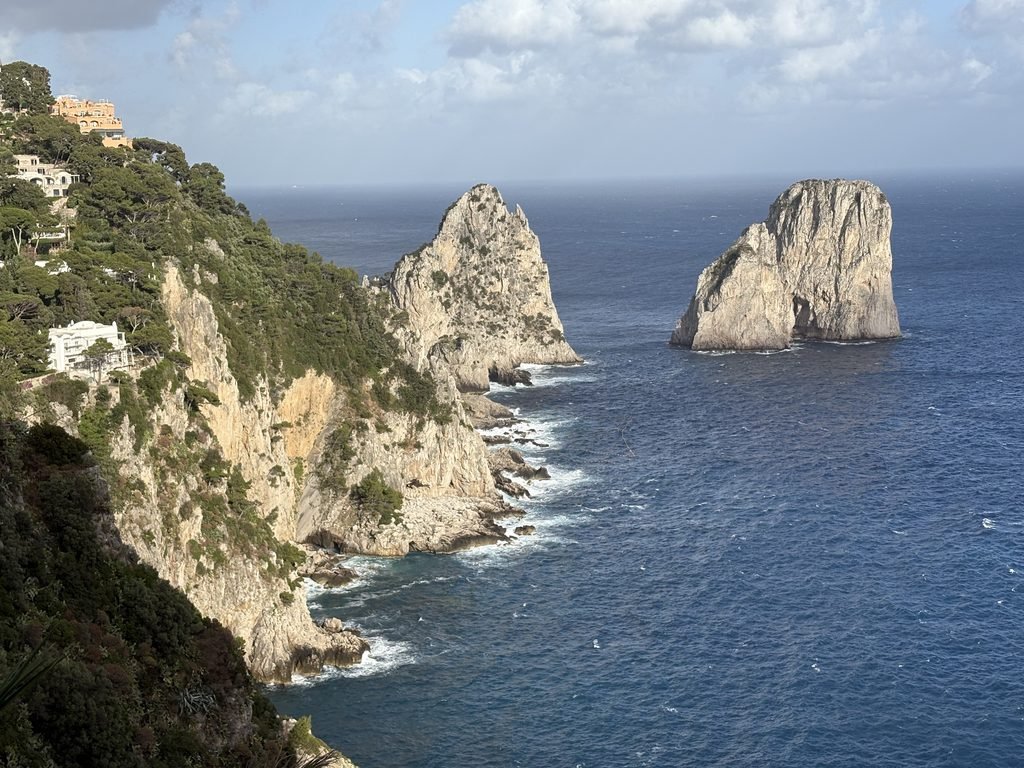
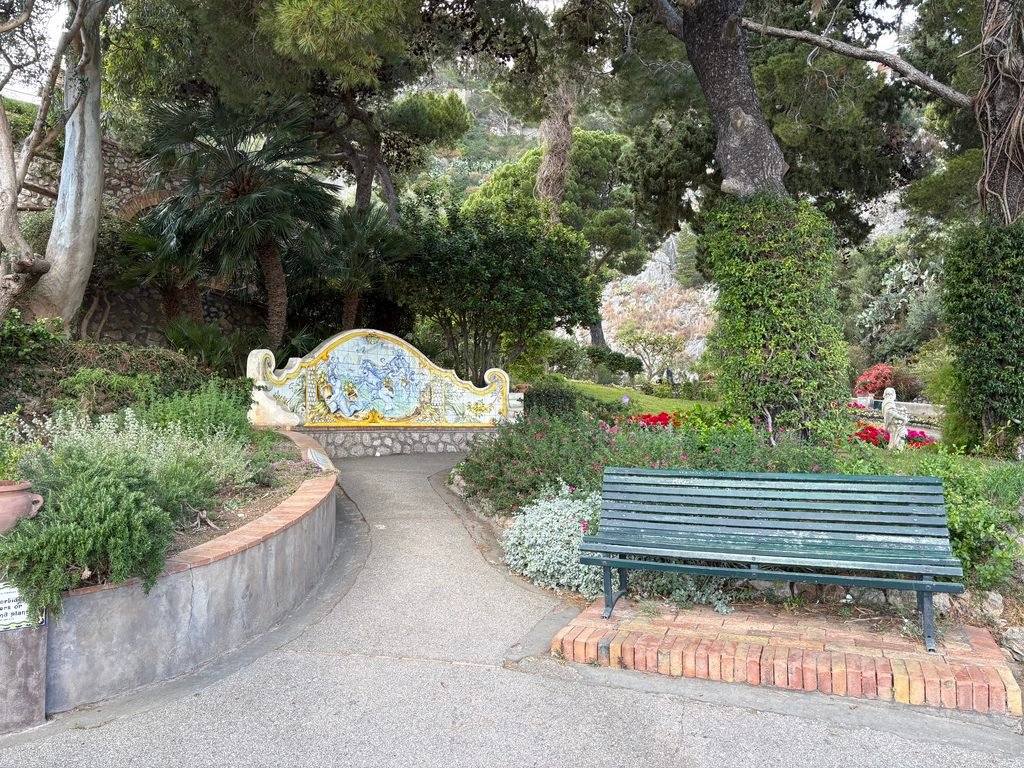
That was a good reminder that not every attraction needs a large block of itinerary time just because it appears on every list.
The real advantage: Capri after the day-trippers leave
During the day, the area around the top of the funicular, the main shopping streets and Marina Grande had been busy with visitors. By around 5 p.m., things began to change noticeably. I walked away from the commercial centre and through quiet streets and pedestrian lanes where I sometimes encountered no one other than local residents.
That evening I ate at Lo Sfizio, away from the busiest tourist streets. Dinner cost €42. It required an uphill walk and wasn’t somewhere I would have stumbled across immediately after getting off the funicular, but the payoff was excellent food, friendly service and a restaurant that felt removed from the busiest part of Capri.
After dinner, I kept walking along quiet roads toward the Natural Arch. I stopped before continuing onto the longer coastal circuit because darkness was approaching and I was travelling alone. I never felt unsafe, but the streets had become deserted enough that going farther away from town no longer seemed sensible. The walk also made me realize how much more there was to explore; with more time, the coastal paths and quieter parts of the island would have been where I spent it.
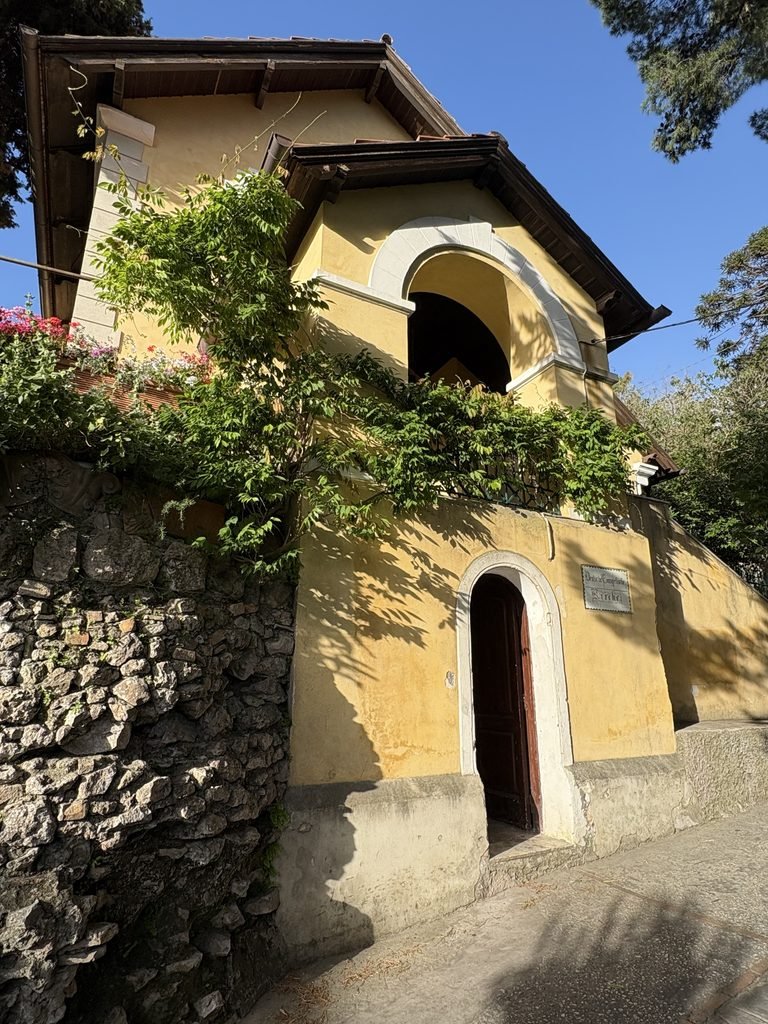
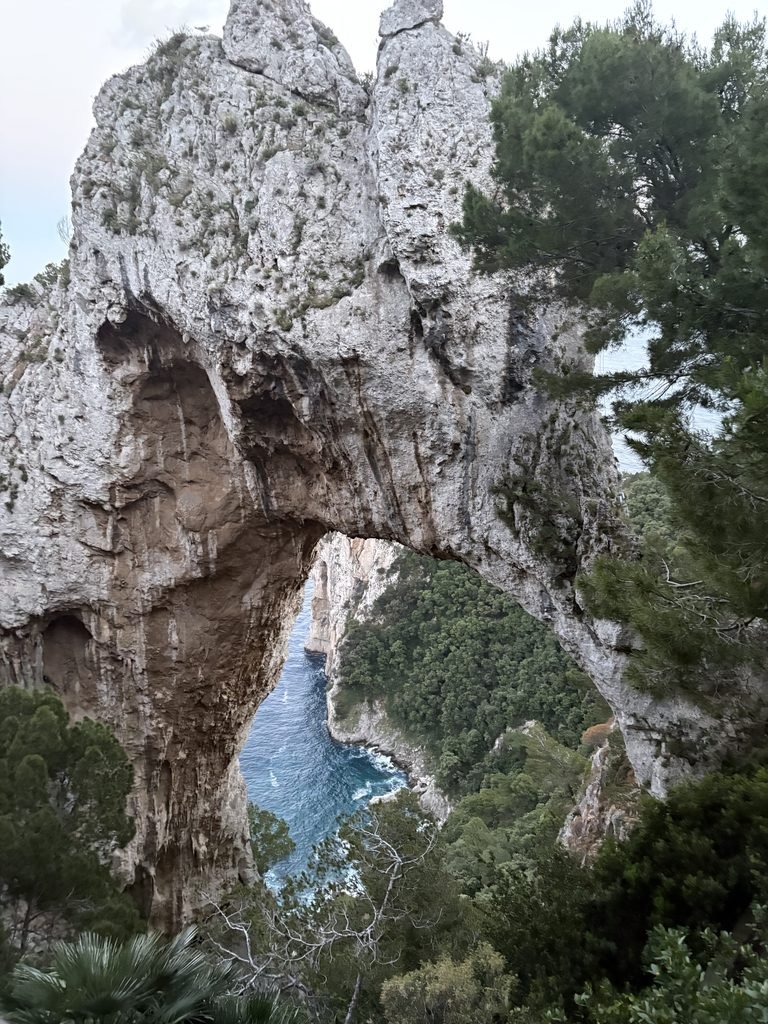
The second day was relaxed rather than rushed
The next morning, I didn’t need to start early. Breakfast was included in my C$269.12 room rate at Hotel Syrene, and it was excellent, served on a beautiful terrace. I took my time, did some planning for the next stage of the trip and checked out close to the 11 a.m. deadline.
That timing was deliberate. I had booked a 12:15 p.m. two-hour boat trip around Capri, giving me enough time to check out and get back down to Marina Grande without rushing.
Luggage could have complicated the plan. Before the tour operator contacted me, I thought I might need to leave everything at Hotel Syrene, return to Capri Town after the boat trip, collect the bags and go back down to Marina Grande for my 3:45 p.m. ferry to Amalfi. Instead, the operator privately arranged free luggage storage at an affiliated restaurant near the meeting point.
That was a major convenience. The tour itself did not allow oversized luggage, so I would not assume every operator provides storage, but in my case it removed an unnecessary extra trip and let me take only a small purse onto the boat.
I skipped the Blue Grotto on purpose.
I booked a two-hour Capri Boat Experience: Faraglioni, Caves, Swim, Limoncello through GetYourGuide for C$94.86. It did not include entry to the Blue Grotto, and that was intentional.
The Blue Grotto is one of Capri’s most recommended attractions, but visiting involves an additional fee and can mean spending part of the tour waiting for access. I didn’t feel I needed to do it simply because it appears on so many must-see lists. What I wanted was to be out on the water, see Capri and the rock formations from the sea, and swim.
The conditions were much calmer than during my ferry crossing the previous day, although one person on the boat still felt seasick. When we stopped for a swim, I was the first person into the water. Maybe that was the Canadian tolerance for cold water talking, but it felt refreshing rather than particularly cold. Several others joined in once they saw me enjoying it.
Swimming off Capri ended up being one of the best moments of the trip. I did not regret skipping the Blue Grotto.
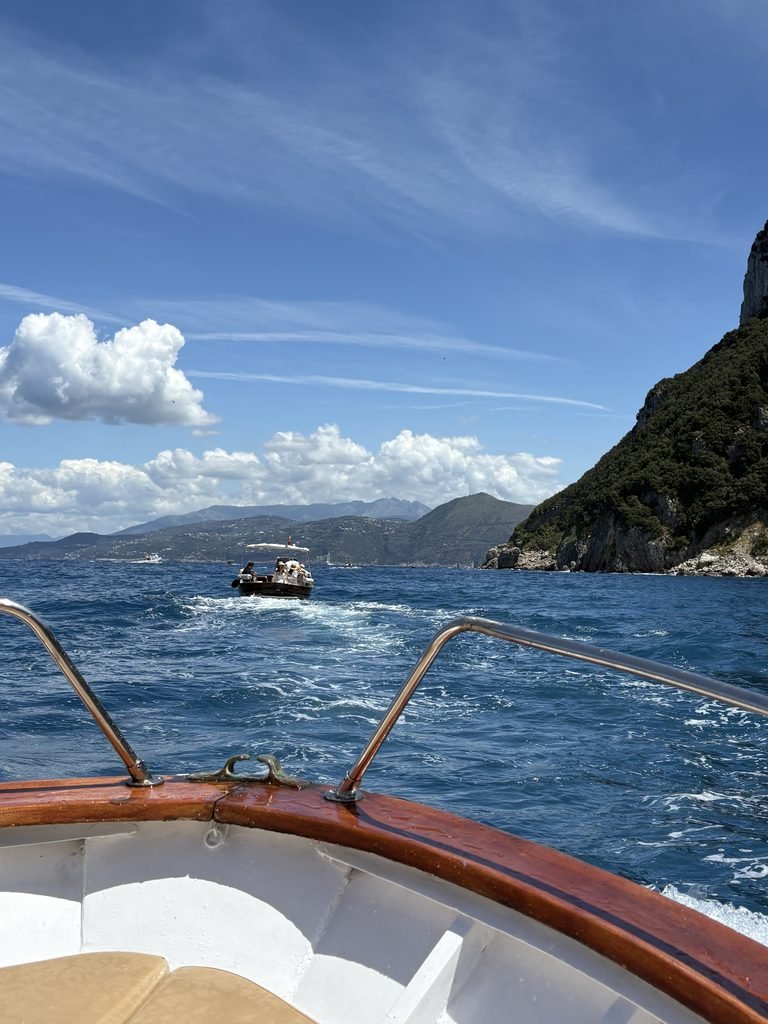
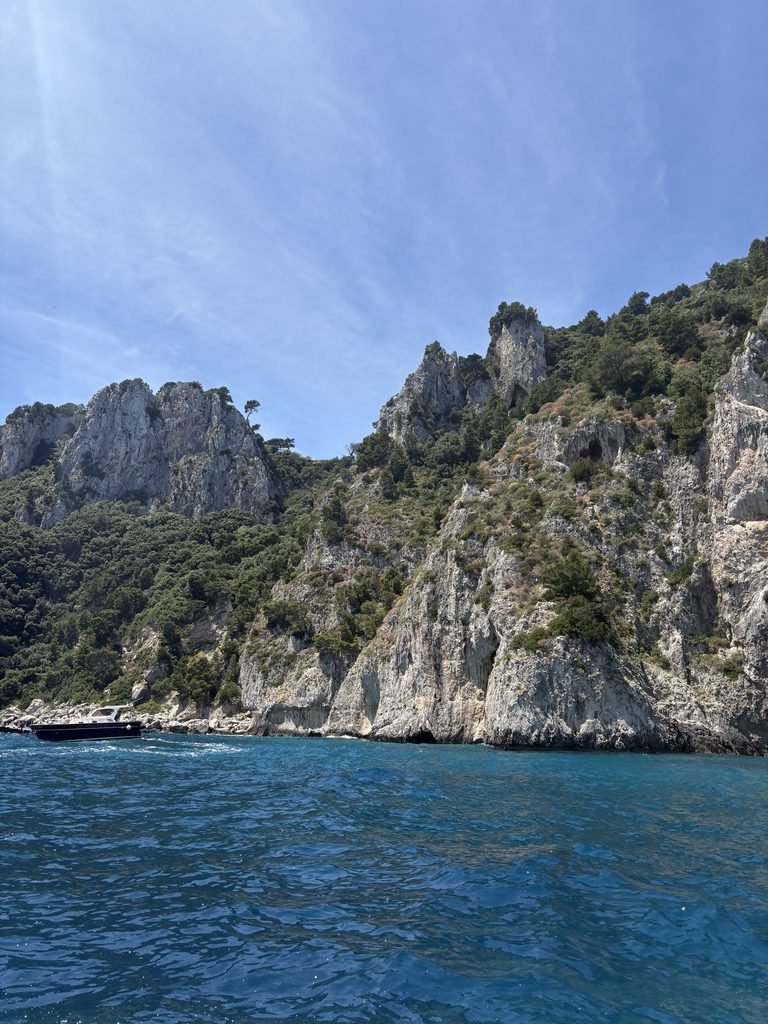
Looking for a different Capri experience? Compare current tours and activities below.
Day trip or overnight: which should you choose?
Capri can absolutely work as a day trip, particularly if you are already staying elsewhere on the Amalfi Coast, can leave your main luggage behind and arrive with only a daypack or purse.
The important thing is to be realistic about what you want to do. Capri Town, Anacapri and a boat trip are three substantial pieces of a visit. Add ferry schedules, waiting for buses, lunch and unexpected delays, and trying to fit all three comfortably into one day becomes difficult.
A day-tripper could choose a boat tour and spend some time around Marina Grande, head straight up to Capri Town and Anacapri, or make walking and coastal scenery the priority. Trying to do everything is where the island can start feeling more like a logistical exercise than a place you are actually experiencing.
I would be particularly reluctant to treat Capri as a sightseeing stop while moving between hotels with all your luggage, especially if you have an onward train, flight or other fixed connection later that day.
Ferries are another reason to leave some breathing room. My Naples–Capri crossing arrived roughly 30 minutes late because of the sea conditions. The following day, my NLG ferry from Capri to Amalfi was supposed to stop in Positano first, but the weather prevented it from entering that port. Passengers heading to Positano unexpectedly had to get off in Amalfi and work out another way there.
You can’t plan away weather, but you can avoid building an itinerary where one late ferry causes everything else to collapse.
What did the overnight cost?
These are the prices I actually paid in May 2026. I have kept them in the currencies I was charged rather than converting them afterward.
Paid in euros
- Naples to Capri ferry, including €5 luggage fee: €34.50
- Funicular: €2.40 each way
- Capri-Anacapri bus: €2.50 each way
- Villa San Michele: €12
- San Michele Arcangelo: €2
- Gardens of Augustus: €2.50
- Dinner at Lo Sfizio: €42
- Capri to Amalfi ferry, including €5 luggage fee: €29
Bookings charged in Canadian dollars
- Hotel Syrene, one night in a single room with breakfast: C$269.12
- Two-hour Capri boat tour booked through GetYourGuide: C$94.86
Not all of those expenses were created by staying overnight. I would have paid for ferries, attractions and food on a day trip too. The main additional cost was the hotel.
For me, the C$269.12 room bought more than a bed. It gave me somewhere to leave my luggage, a relaxed evening, an unhurried morning and enough flexibility that a 45-minute bus wait or delayed ferry did not become a crisis.
Was one night enough?
For a four-night trip, yes. Capri wasn’t the whole trip, and I still wanted time in Amalfi and Naples. One night gave me enough space to experience more than the busiest daytime version of the island without taking over the itinerary.
With more time, though, I would happily have stayed longer. The part I left unfinished was not another boutique or famous attraction; it was the network of quieter walking routes and coastal paths that I had only started to explore.
For me, that is the clearest answer to whether staying overnight was worth it. A day trip would have shown me Capri. Staying overnight gave me enough time to see that the crowded, commercial version of Capri was only part of the story.
More from this trip
- How I Planned Four Nights Across Capri, the Amalfi Coast and Naples
- How to Hike the Path of the Gods from Amalfi: Bus, Trail and Return Logistics
- Italy by Train and Ferry: Strikes, Connections and How Much Buffer to Leave
- Why I Chose Amalfi Town as My Base
Plan your own trip
Know How You Travel
Understand how pace, comfort and the number of hotel changes fit the way you travel.
Plan Your Trip
Build a route around the time, priorities and logistics that actually matter.
Explore more of Italy
Planning more of Italy? Explore our firsthand articles and practical advice from Rome, Capri, the Amalfi Coast and Naples.