

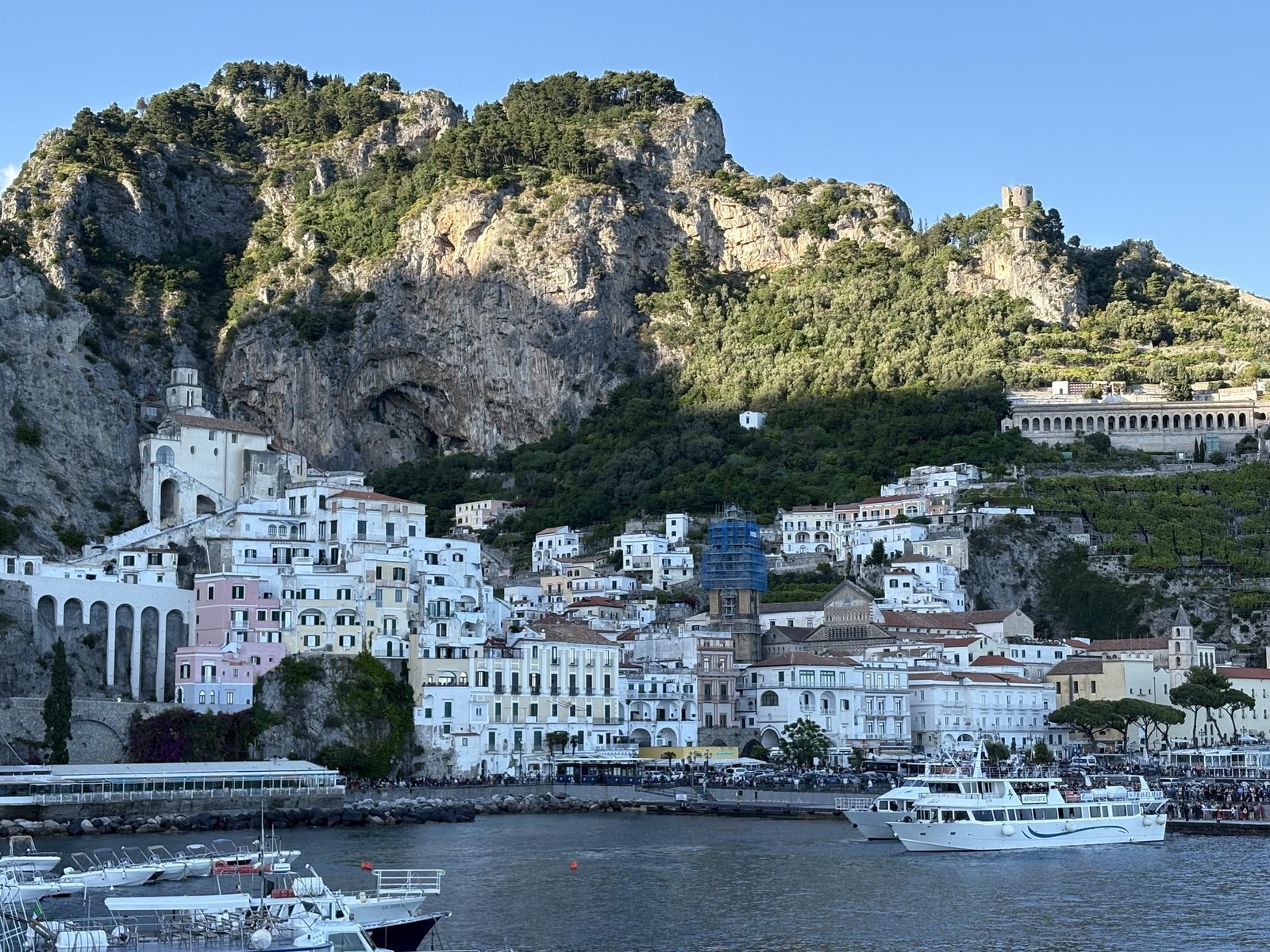
When I was planning a short stay on the Amalfi Coast, I kept coming back to one practical question: where should I sleep?
Positano had the postcard views. Ravello had the hilltop setting. Sorrento was easier to reach from Naples. But for the route I was taking — arriving from Capri, hiking the Path of the Gods, moving around by ferry and eventually returning to Naples — Amalfi Town made the most sense.
That decision turned out to be one of the easiest parts of the trip to validate in practice. Amalfi was busy and touristy, but it was also compact, well connected, easy to manage with luggage and far more convenient than some of the more photogenic alternatives.
The quick decision
Best for...
Travellers who want easy ferry access, straightforward Path of the Gods logistics, manageable luggage and a central base for exploring several parts of the coast.
Choose somewhere else if...
You care more about postcard glamour, quiet hilltop views or staying somewhere removed from the busiest tourist centre.
Amalfi worked especially well for this trip because...
The ferry port, buses, town centre and accommodation were all within an easily manageable area.
Why Amalfi Town worked for this trip
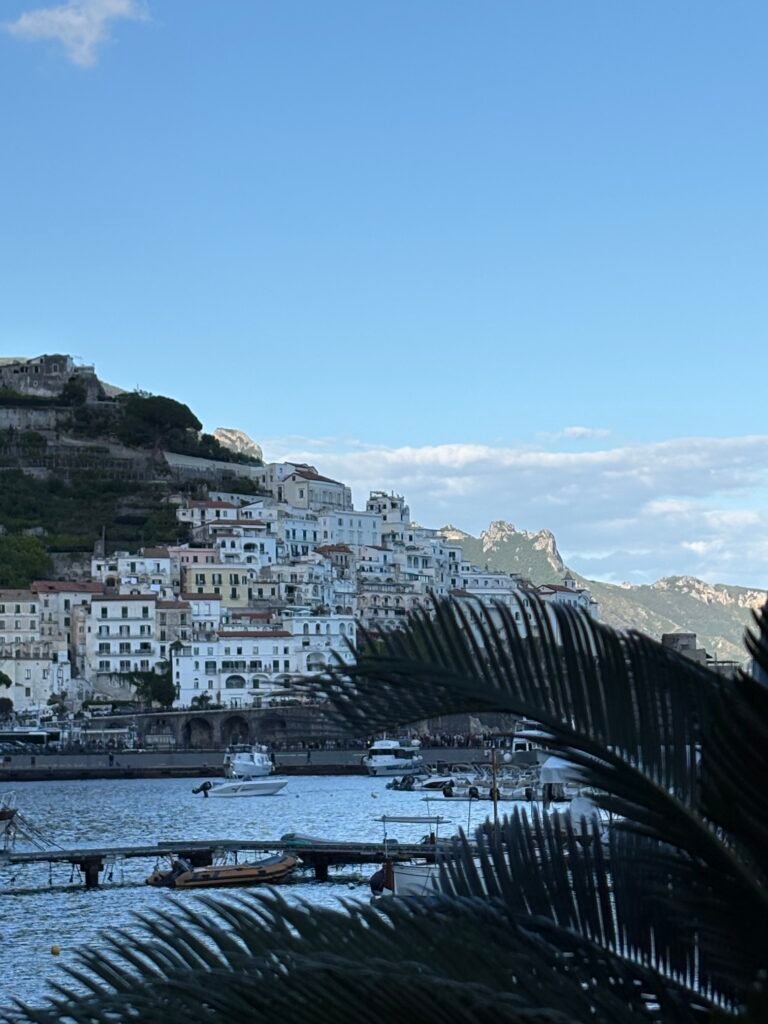
The biggest factor was ferry access.
I was arriving from Capri and wanted a base that gave me multiple options for moving around the coast and getting back toward Naples. Amalfi is a major ferry stop, with several operators and departures linking it to other coastal towns. If I changed my mind about how to spend a day, it was easy to imagine hopping on a ferry rather than building the whole trip around buses or taxis.
That flexibility mattered on such a short itinerary. It also worked particularly well for the Path of the Gods because the bus toward Bomerano left from the centre of Amalfi, close to the port, so I did not have to add another transfer before even reaching the trailhead.
For a trip that already involved moving between several places, I wanted the base itself to remove friction rather than add more. That was also part of the broader reasoning in How I Planned Four Nights Across Capri, the Amalfi Coast and Naples.
Why Amalfi beat Positano for me
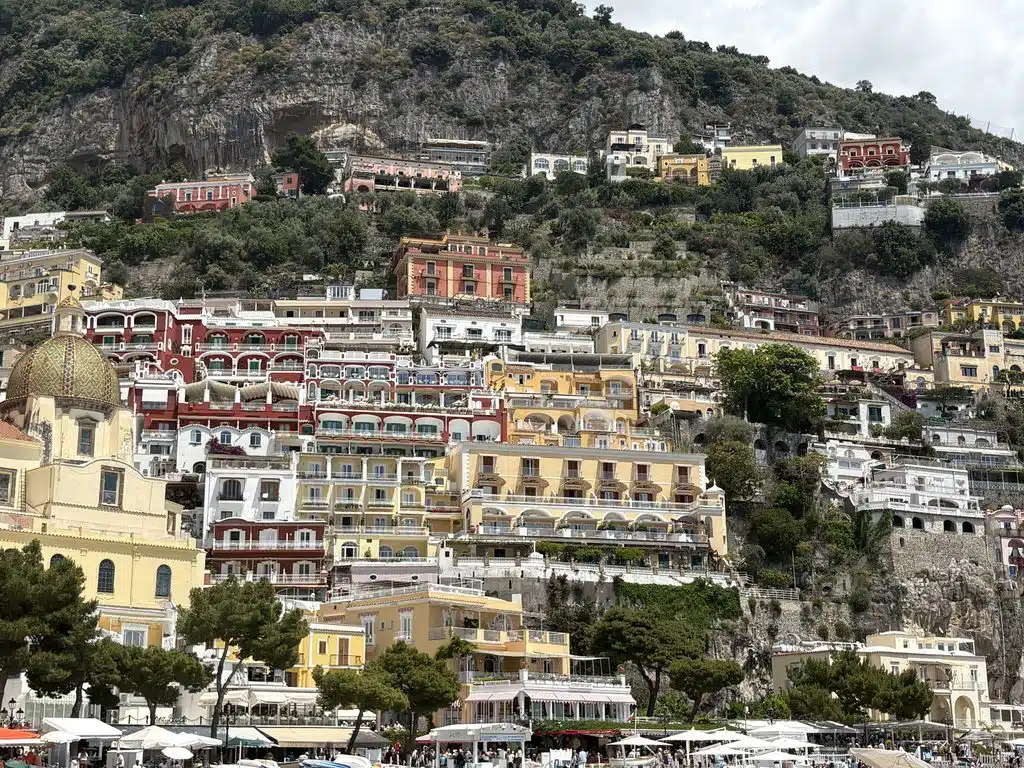
Positano was the obvious alternative, but I was worried about two things before I arrived: stairs and crowds. Both concerns turned out to be justified.
Positano is spectacular to look at, but it is built vertically. With luggage, that can mean stairs, steep streets, taxis or porter services depending on where you are staying. For a solo traveller moving with a roller suitcase and daypack, Amalfi was much easier.
When I reached Positano after hiking the Path of the Gods, the narrow streets were also extremely busy. It was beautiful, but I was glad I was not trying to drag luggage through the crowds or use it as the practical hub for the rest of my trip. Amalfi was busy too, especially during the day, but the basic logistics were easier and much more central to the route I had planned.
Why I ruled out Ravello
Ravello appealed to me for almost the opposite reason: it looked quieter, more elevated and removed from the busiest coastal traffic.
The problem was that it was also removed from the ferry network. Because Ravello sits up in the hills, staying there would have added another layer of bus or taxi logistics every time I wanted to move along the coast.
For a slower stay where I planned to spend more time in one place, that could be a reasonable trade-off. For this trip, it felt like unnecessary friction.
Ravello is high on my list for a future visit, but I am more likely to give it day-trip status than use it as a base if I still want easy access to the rest of the coast.
Why not Sorrento?
Sorrento was easier for me to eliminate.
It is well connected to Naples and can be a very practical base for the wider region, but it sits outside the stretch of coast I most wanted to experience. Staying there would have meant joining the day-trippers travelling toward Amalfi rather than actually being there in the evenings once many of those visitors had left.
It also felt larger and less aligned with the kind of stay I wanted. For a trip focused on Pompeii, Naples, Capri and the Amalfi Coast together, Sorrento could make a lot of sense. For my route, it would have put me one step farther away from the places I had prioritized.
Atrani was a nice surprise, but I would still choose Amalfi
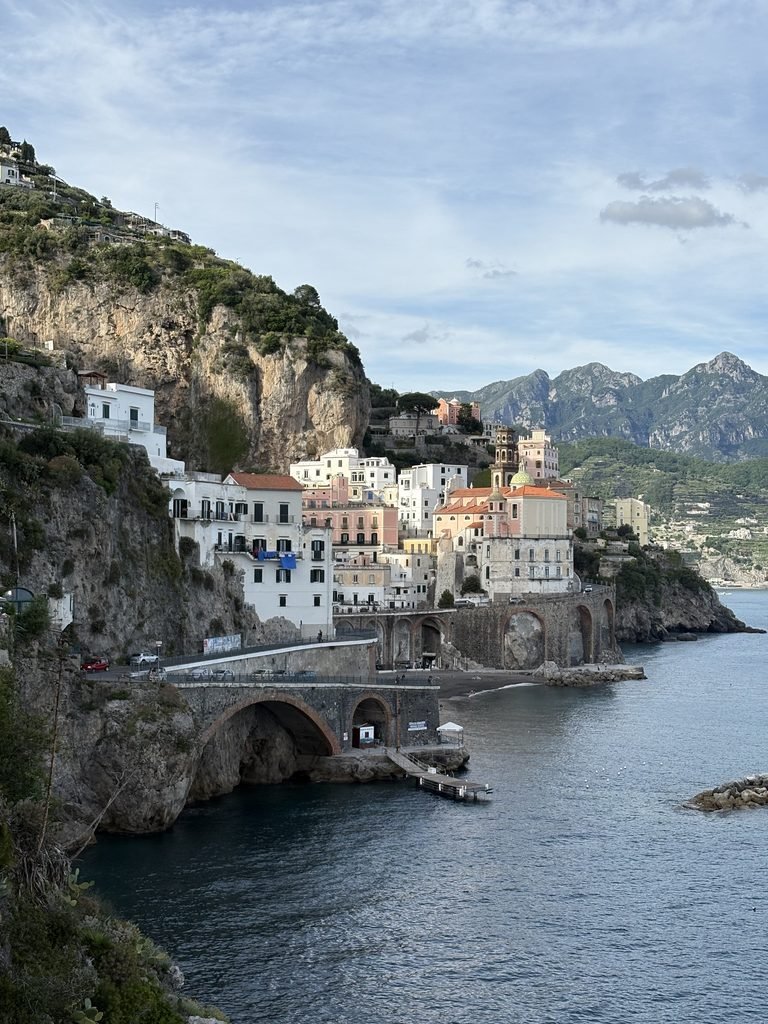
I did not seriously consider Atrani as a base before the trip, even though it sits directly beside Amalfi.
Once I was there, I understood the appeal. Atrani felt much quieter and less commercial, and being able to walk there from Amalfi was a bonus I had not fully appreciated during planning.
I would still choose Amalfi for this particular trip. Atrani has fewer restaurants and services, and it does not have Amalfi's ferry connections. Arriving with luggage would mean either walking everything over from Amalfi or arranging a taxi, which removes some of the convenience that made Amalfi work so well.
The better discovery was that staying in Amalfi gave me easy access to both: a lively transport hub when I needed it and a quieter neighbouring town within walking distance.
How the bases compared for this trip
None of these towns is inherently the “best” base. The question is which trade-off matches the trip you are actually taking.
| Base | Strongest reason to choose it | Main trade-offs for this trip |
|---|---|---|
| Amalfi | Ferries, buses, Path of the Gods logistics and manageable luggage | Busy and touristy |
| Positano | Dramatic setting | Stairs, crowds and more difficult luggage logistics |
| Ravello | Quiet hilltop atmosphere | Another transfer whenever you want to reach the coast |
| Sorrento | Excellent Naples and regional connections | Farther from the stretch of coast this trip prioritized |
| Atrani | Quieter atmosphere immediately beside Amalfi | Fewer services and no equivalent ferry hub |
Why Amalfi worked so well in practice
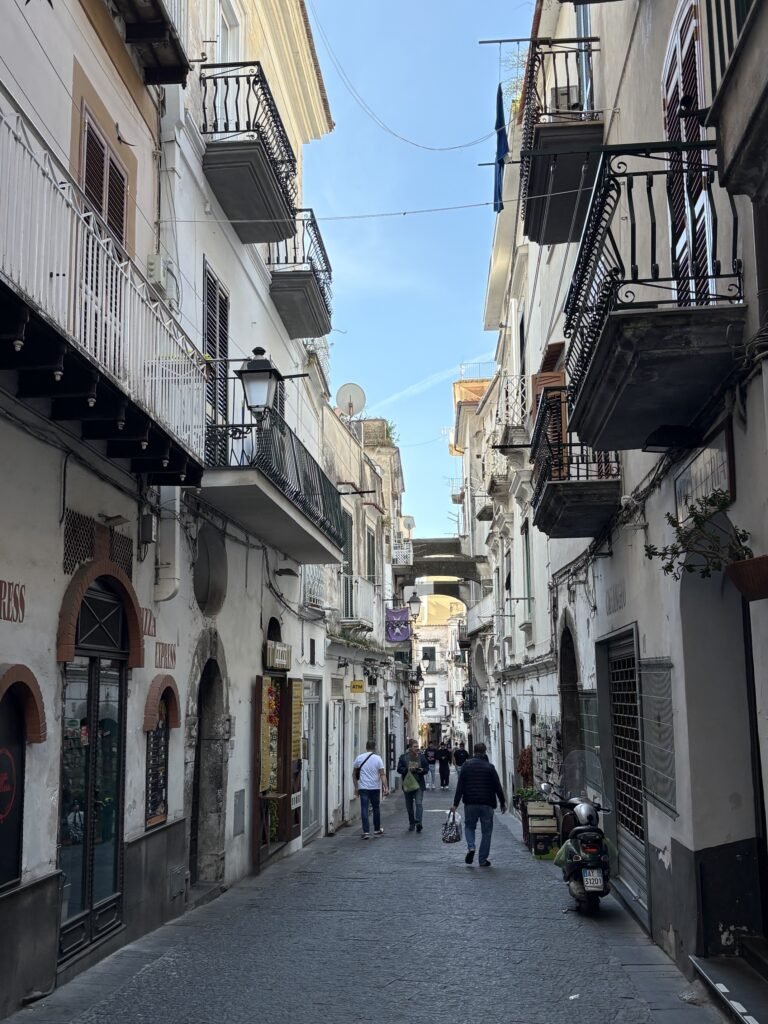
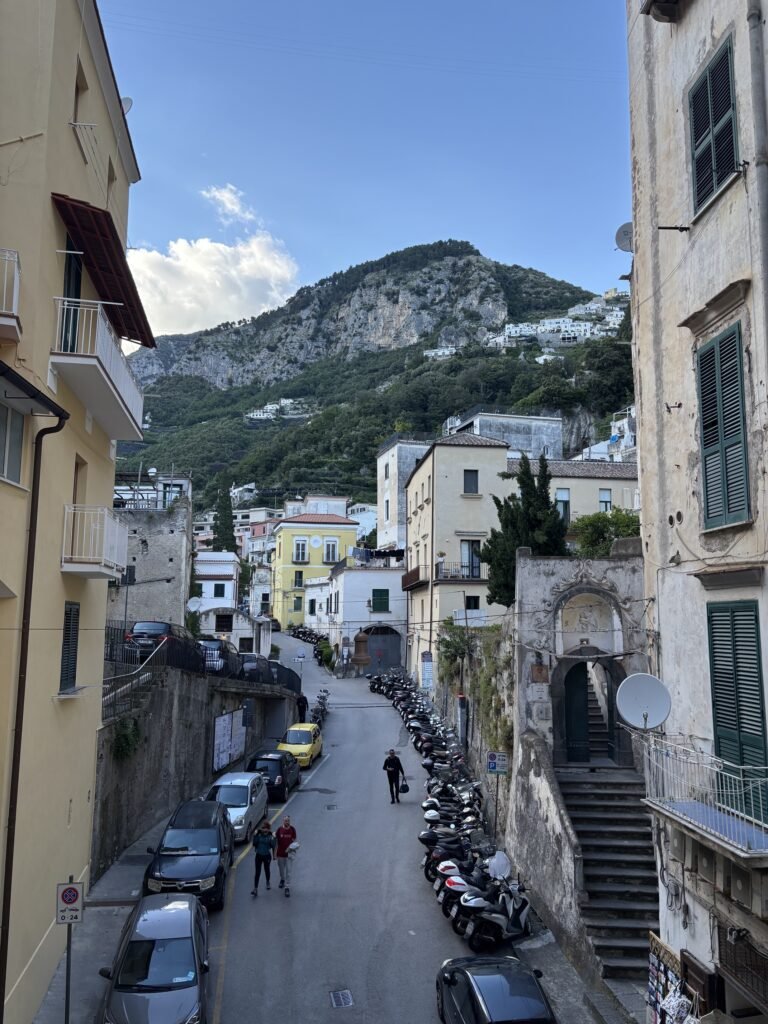
The town itself was even more compact than I expected.
The ferry and bus areas sit directly beside the centre, and the main square begins almost immediately behind them. The Duomo dominates the square, restaurants are everywhere, and the main pedestrian street runs gradually uphill through shops, cafés and food stands.
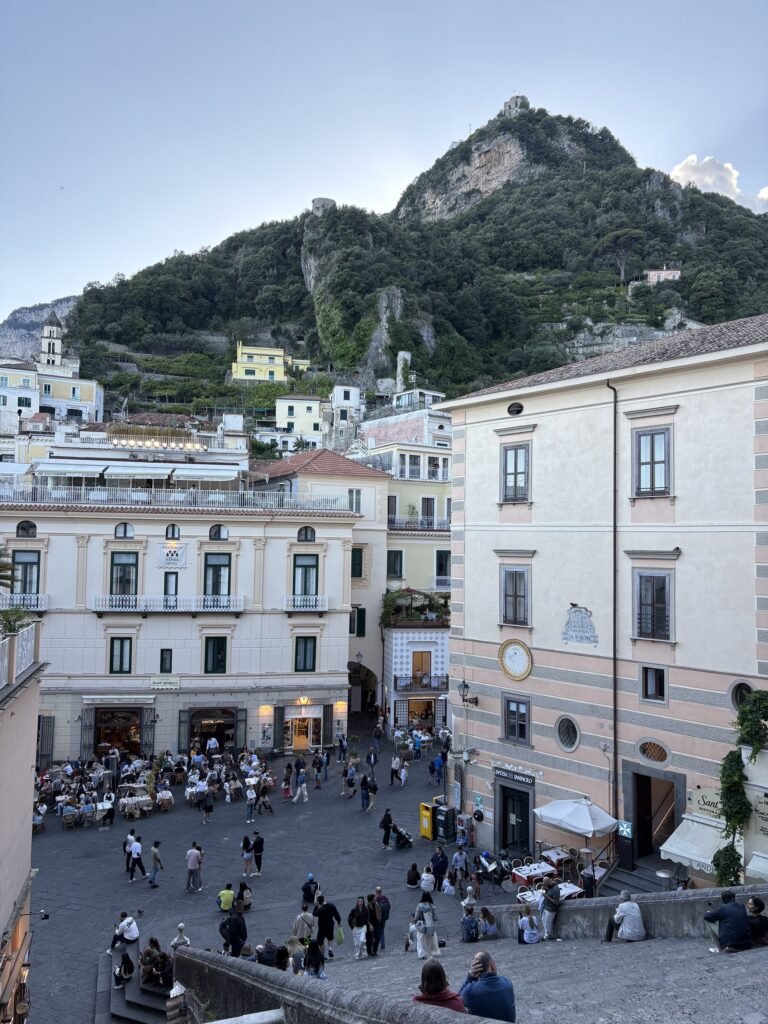
It was very difficult to get lost in the central part of town, and that simplicity mattered with luggage. My Airbnb was on the main road a little beyond the busiest tourist area, so I could roll my suitcase uphill without dealing with major stairs while still staying within an easy walk of the port, bus stops, restaurants and sights.
The location also made the Path of the Gods logistics much easier, something I cover in detail in How to Hike the Path of the Gods from Amalfi: Bus, Trail and Return Logistics.
Why Amalfi won this trade-off
- direct arrival from Capri;
- ferry options along the coast;
- bus access towards Bomerano;
- manageable with a roller suitcase;
- restaurants and services close at hand;
- Atrani within walking distance;
- comparatively good accommodation value.
The accommodation was good value
Price was not the only reason I chose Amalfi, but it definitely helped.
I paid C$453.54 for two nights in a full Airbnb apartment on the main road, just beyond the busiest part of town. It was a lot cheaper than most of the other accommodation options I saw on the Amalfi Coast and gave me more space than I needed as a solo traveller.
That value reinforced the decision, but the transport and hiking logistics had already been pointing me toward Amalfi before I found the apartment.
What I liked less about Amalfi
Amalfi is not a hidden gem.
During the day, it was extremely busy. The main street could become packed enough that getting anywhere quickly was unrealistic, and prices reflected the fact that it is one of the most visited places on the coast. The famous Amalfi lemon gelato I tried cost €20.
If your goal is to stay somewhere that feels removed from tourism, Amalfi is probably not the answer.
But it was still beautiful, and once I moved away from the busiest stretches, the experience changed. The alleys behind the main street were quieter, evenings felt calmer, and walking toward Atrani made it easy to escape the centre without changing bases.
It also worked well as a destination in its own right rather than just a transport hub. The Duomo, the waterfront, the restaurants and the compact layout made it easy to enjoy between excursions.
Would I stay in Amalfi again?
For another short trip focused on moving around the coast, yes.
It was central, well connected and easy to manage with luggage, and almost every practical reason I had for choosing it proved correct once I arrived. On a longer return trip, I might split my stay and try one of the smaller towns such as Maiori or Minori, especially if travelling with family and looking for more space, while keeping Ravello high on the list for a day trip.
Amalfi Town may not be the most dramatic answer to “where should I stay on the Amalfi Coast?”, but for the trip I was actually taking, it was the right one: practical without feeling purely functional, beautiful without requiring me to sacrifice the logistics that mattered most.
More from this trip
- How I Planned Four Nights Across Capri, the Amalfi Coast and Naples
- How to Hike the Path of the Gods from Amalfi: Bus, Trail and Return Logistics
- Italy by Train and Ferry: Strikes, Connections and How Much Buffer to Leave
- Is Staying Overnight in Capri Worth It?
Plan your own trip
Know How You Travel
Understand how pace, comfort and the number of hotel changes fit the way you travel.
Plan Your Trip
Build a route around the time, priorities and logistics that actually matter.
Explore more of Italy
Planning more of Italy? Explore our firsthand articles and practical advice from Rome, Capri, the Amalfi Coast and Naples.