

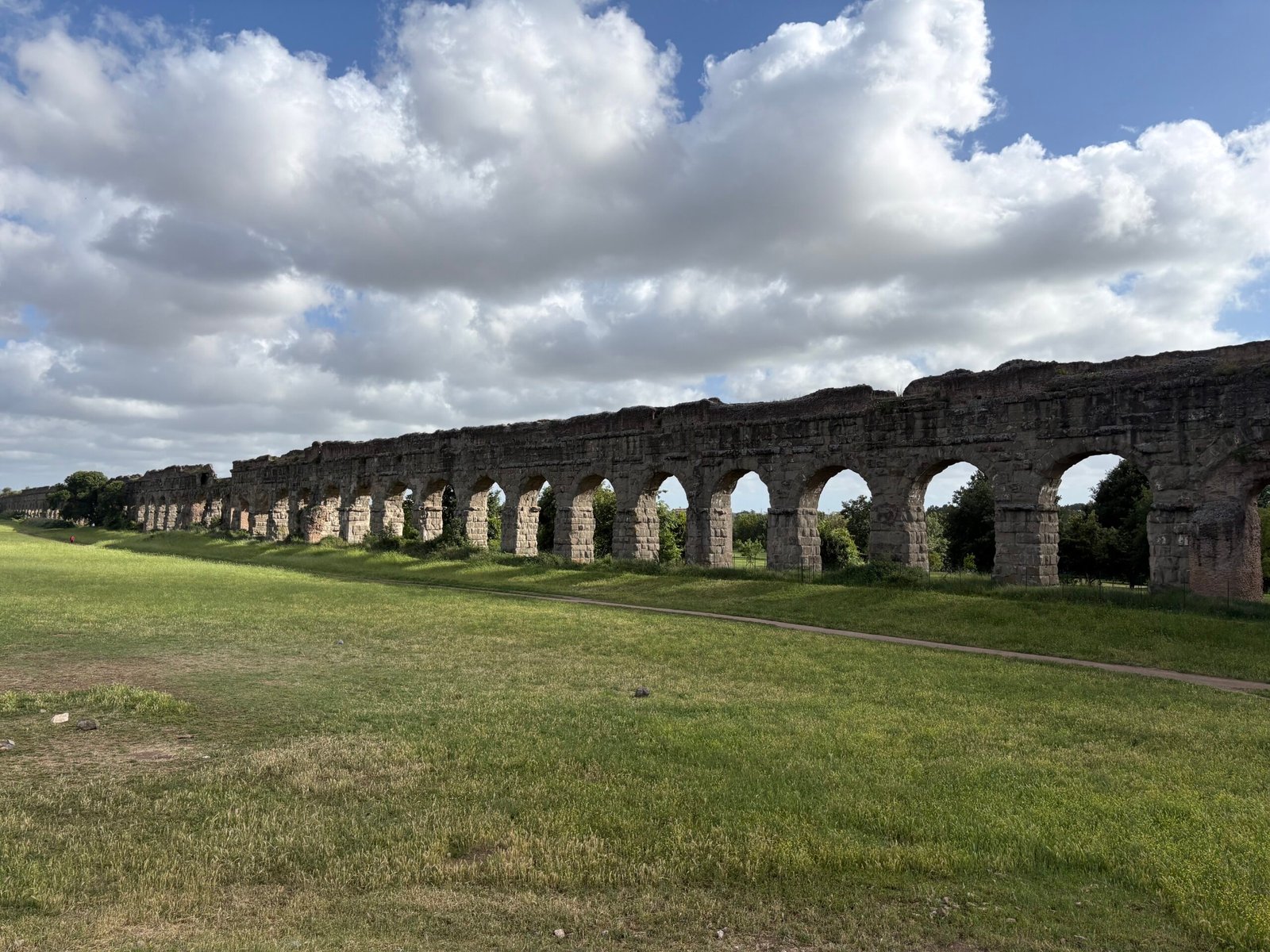
On my first trip to Rome, back in 2012, I spent most of my time on the major highlights: the Colosseum, Roman Forum, Pantheon, Vatican Museums and the other places that usually define a first visit. I loved them, and some of those experiences are still among my strongest memories of the city.
When I returned years later and had one personal day during a work trip, I did not feel much need to repeat the same itinerary. The major sites also seemed harder to access than I remembered, with more advance planning, timed tickets and cost involved. That need to build more flexibility into popular trips is something I have noticed elsewhere in Italy too, particularly when transport or advance reservations can affect the day.
What I wanted instead was a day that still felt distinctly Roman but gave me something different: ancient history, more space, and some time outdoors. That led me to the Baths of Caracalla in the morning and a five-hour e-bike tour of the Appian Way, catacombs and aqueducts in the afternoon.
It turned out to be exactly the kind of second-visit day I was looking for.
Affiliate disclosure: This article contains affiliate links. If you book or buy through one of them, I may earn a commission at no additional cost to you. This does not affect the recommendations or comparisons in the article.
The quick decision
Best for...
Travellers who have already seen Rome’s major highlights and want a mix of ancient history, outdoor space and a more active day.
Worth considering on a first trip if...
You have enough time for the Colosseum, Forum, Pantheon and Vatican first, but also want something quieter and less concentrated around the usual centre.
Choose something else if...
Your priority is seeing Rome’s headline sights for the first time, or if a five-hour bike tour sounds more exhausting than enjoyable.
The day at a glance
MORNING
Baths of Caracalla
About 1.5 hours
Optional walk / time around the Colosseum area
AFTERNOON
Appian Way → Catacombs of San Callisto → ancient road → aqueduct park → aperitivo
Why I wanted a different kind of Rome day
My travel style has changed since my first visit. I still enjoy cities, but I now notice much more quickly when I need some nature, open space or physical movement to balance them. Understanding those kinds of preferences is one of the reasons I think it helps to know how you travel before building an itinerary.
Rome can be intense: traffic, crowds, stone, noise and an enormous concentration of things to see. I wanted to spend my one free day doing something that still connected me to the city’s history without repeating the same experience I had already had.
The Appian Way and aqueduct parks had caught my attention while looking at maps because of the large stretches of green space south of central Rome. I had barely ventured beyond the Colosseum on my first trip, so this part of the city felt almost entirely new.
The bike tour I found ran either first thing in the morning or in the afternoon. Because this was my first full day after arriving in Rome and I was not sure how jet lag would hit, I chose the 2 p.m. departure rather than forcing myself into an early start. That left the morning open, and the Baths of Caracalla were conveniently close to the bike-tour meeting point.
Baths of Caracalla: an unexpectedly peaceful start
I reached the Baths of Caracalla by taking the metro from Spagna, where I was staying, to Circo Massimo and walking from there.
Admission was €8, which I paid by tapping my Wise card at the entrance. I use Wise for many small local-currency purchases like this when travelling, although a regular credit card can work just as well depending on its foreign-transaction fees. There was barely a line, and once inside, the site felt remarkably spacious.
EXPERIENCED IN MAY 2026
Admission paid: €8
Time spent: About 1.5 hours
Getting there: Metro to Circo Massimo + walk
What stood out: Large-scale ruins, surviving mosaics, lawns and plenty of space
The scale of the ruins was the first surprise. Some of the structures are still substantial enough that it is easy to imagine how enormous the bathing complex once was, and there are surviving sections of mosaic flooring that give a glimpse of how elaborate it must have been.
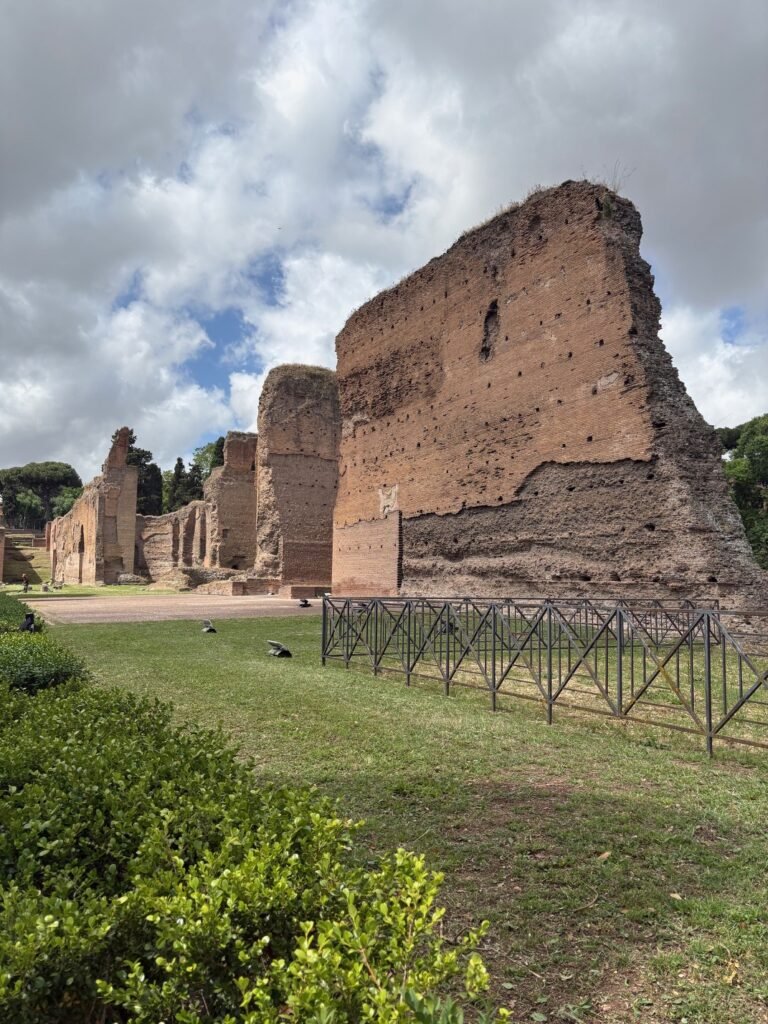
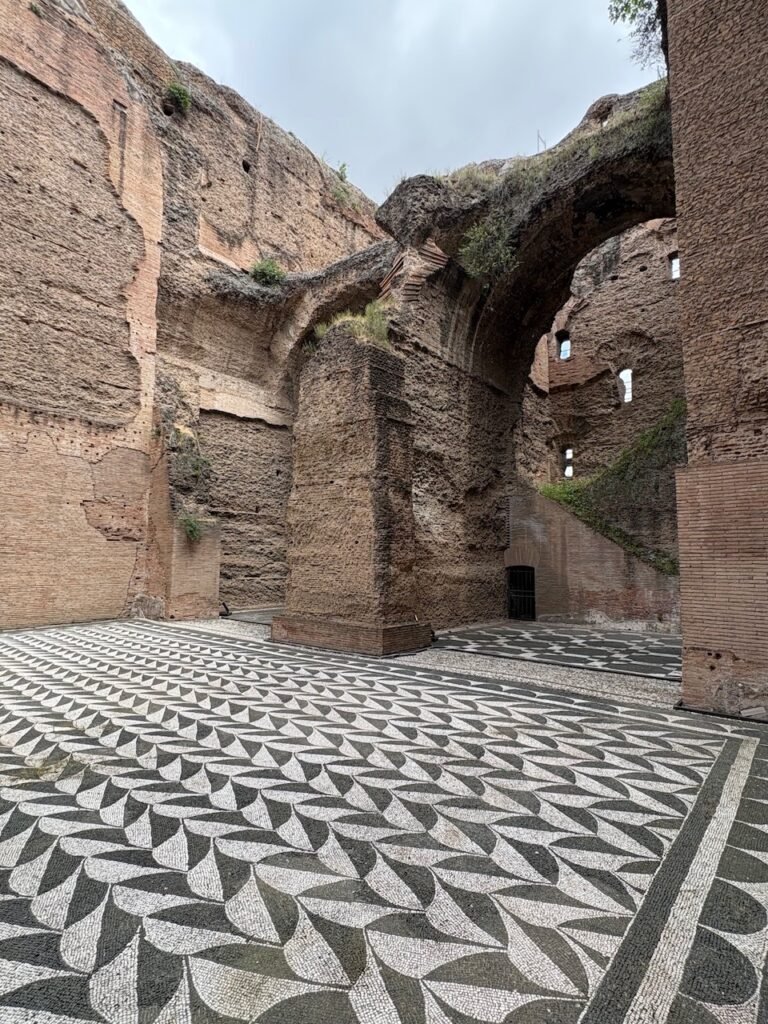
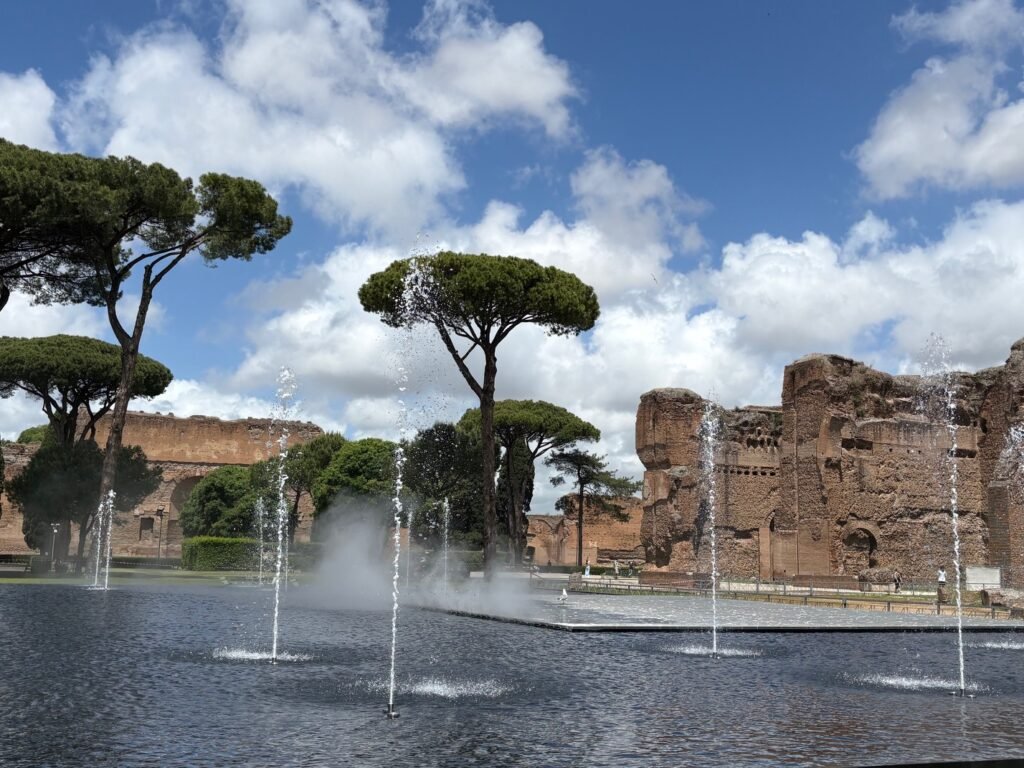
The second surprise was how much of the experience was about the grounds rather than just the ruins. There were lawns, fountains and plenty of seating, and visitors were spread across a large area. A school group was touring part of the site, but it was easy simply to move in another direction and find a quieter section.
I spent about an hour and a half exploring, then sat in one of the chairs facing the ruins and fountains for a while. I read, people-watched and enjoyed the sun without feeling any pressure to keep moving. For a major archaeological site in the middle of Rome, it felt like a small oasis.
There are also bathrooms onsite, which is the kind of minor practical detail that becomes surprisingly useful when you are building one activity directly into another.
Would I include the Baths of Caracalla on a first trip?
Possibly, but not at the expense of the major ancient sites.
The Colosseum and Roman Forum made a huge impression on me the first time I visited Rome, and I would still prioritize them, along with the Pantheon and Vatican Museums, for someone who had never been.
But if you have enough time, the Baths of Caracalla offer something different: substantial Roman ruins without the same density of crowds, plus enough green space that the visit can double as a pause from the city.
They are also easy to reach, relatively inexpensive and do not require the same level of logistical planning that some of Rome’s headline attractions now seem to demand.
Revisiting the Colosseum without needing to go inside
After leaving the baths, I still had time before the bike tour, so I walked back toward the Colosseum.
This time I did not feel any need to queue for a ticket or repeat the full visit. I had already done that years earlier.
Instead, I walked around the exterior, took new photographs and spent some time in Parco del Colle Oppio and the area around the Baths of Trajan, which gives you different views toward the Colosseum without having to stand in the busiest part of the square below.
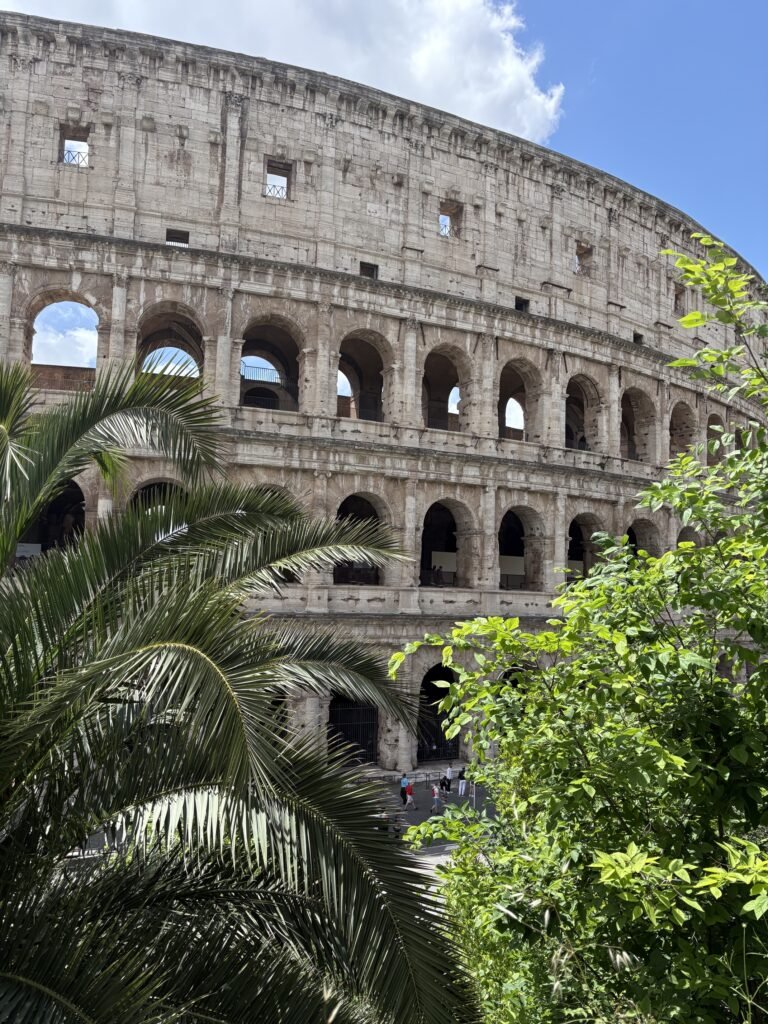
That was another small advantage of returning to a city I already knew: I could enjoy being near a famous sight without feeling that I needed to consume the entire experience again.
The afternoon e-bike tour
The main event of the day was the Rome: Appian Way & Aqueducts E-Bike Tour, which also included the Catacombs of San Callisto and an aperitivo stop.
I paid C$130.16 through GetYourGuide for the five-hour tour.
Tour: Appian Way & Aqueducts E-Bike Tour
Booked through: GetYourGuide
Price paid: C$130.16
Duration: 5 hours
Group: 6 guests + guide
Included: E-bike, guide, Catacombs of San Callisto and aperitivo
Difficulty experienced: Easy to moderate
The group met at a bike shop near the Colosseum about 15 minutes before the 2 p.m. departure. We were fitted with helmets and e-bikes, met our guide and had time to test the bikes before leaving.
There were only six guests plus the guide, which made the experience feel much more personal than a large-group tour.
Our guide was knowledgeable, spoke excellent English and explained each upcoming section before we rode it, including what traffic or road conditions to expect.
This was my first time using an e-bike. I had done bike tours before on regular bicycles and was curious about how much difference the electric assistance would make.
It turned out to be extremely easy to use. I stayed mostly on the lowest assistance setting, but having the extra support available made the ride feel relaxed rather than strenuous.
Getting out of central Rome
The first section involved some city traffic, which was probably the least relaxing part of the ride, but it did not last very long.
We passed the Baths of Caracalla — which was amusing after spending the morning inside them — and stopped near the Aurelian Walls before continuing toward the Appian Way.
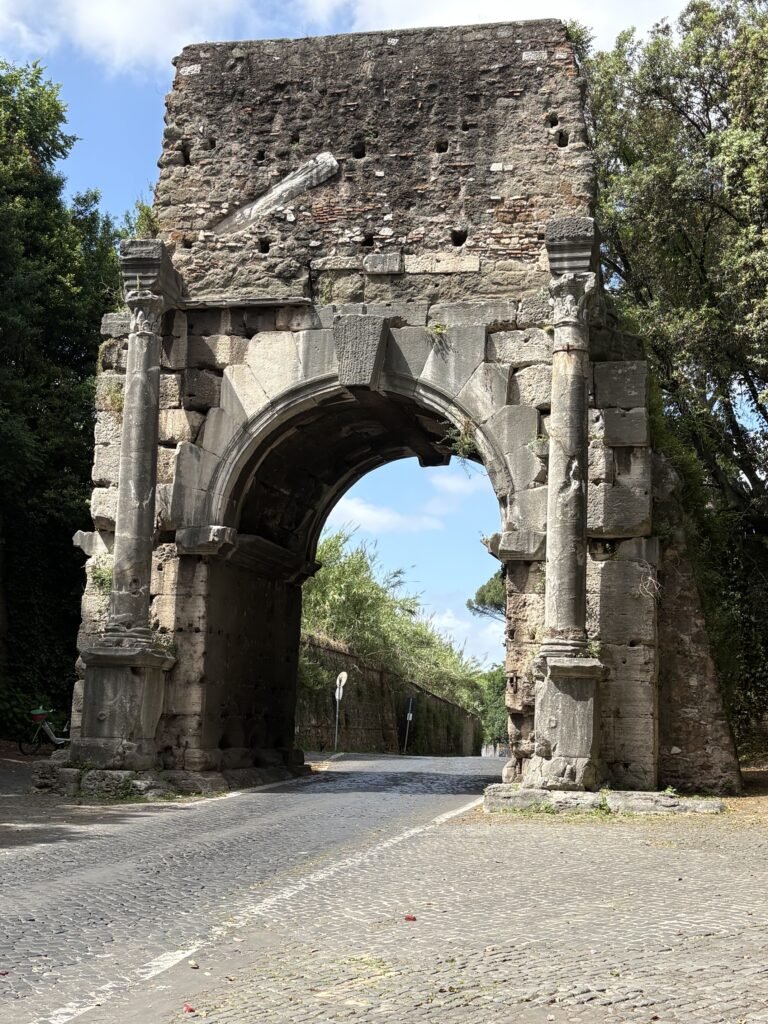
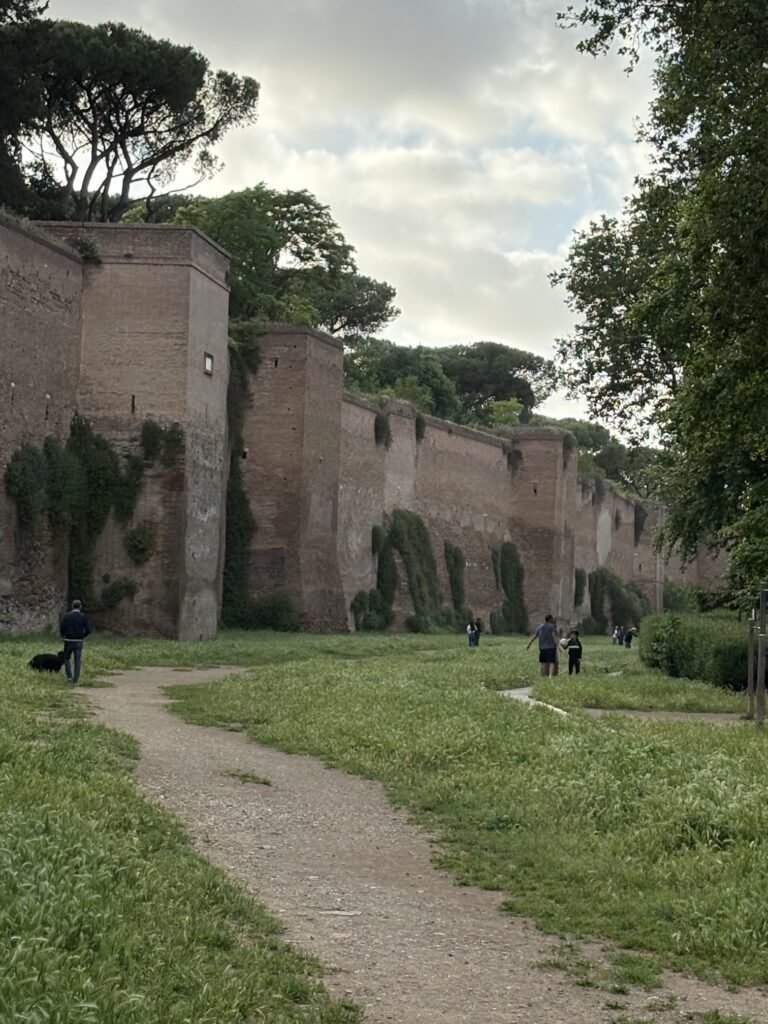
Once we reached the quieter stretches, the experience changed completely. Traffic fell away, the landscape opened up and Rome began to feel much less like a major European capital.
The Catacombs of San Callisto
A guided visit to the Catacombs of San Callisto was included in the bike tour, and this was one of the reasons I chose this particular option over similar tours that skipped them.
The catacombs added another layer to the day’s history.
We learned about how early Christians buried their dead underground and walked through part of the network of passages and tombs. What visitors see is only a small fraction of the excavation, but even that gave a sense of how extensive the burial system became.
There were also reminders that the catacombs are not simply an archaeological attraction. Religious visitors, including priests and nuns, still come there for prayer and ceremonies.
After spending the morning looking at the monumental public world of ancient Rome, going underground into the history of early Christianity felt like a completely different perspective on the same city.
Riding on the ancient Appian Way
After the catacombs, we continued farther along the Appian Way and stopped around the Church of San Nicola in Capo di Bove and the Mausoleum of Cecilia Metella.
Then we reached older sections of the road.
This was probably the most physically awkward part of the ride because the ancient paving stones are enormous, uneven and separated by deep gaps. Riding over them required slowing down considerably and choosing a careful line. Where possible, I sometimes moved onto narrow paths beside the main stones rather than bouncing directly across them.
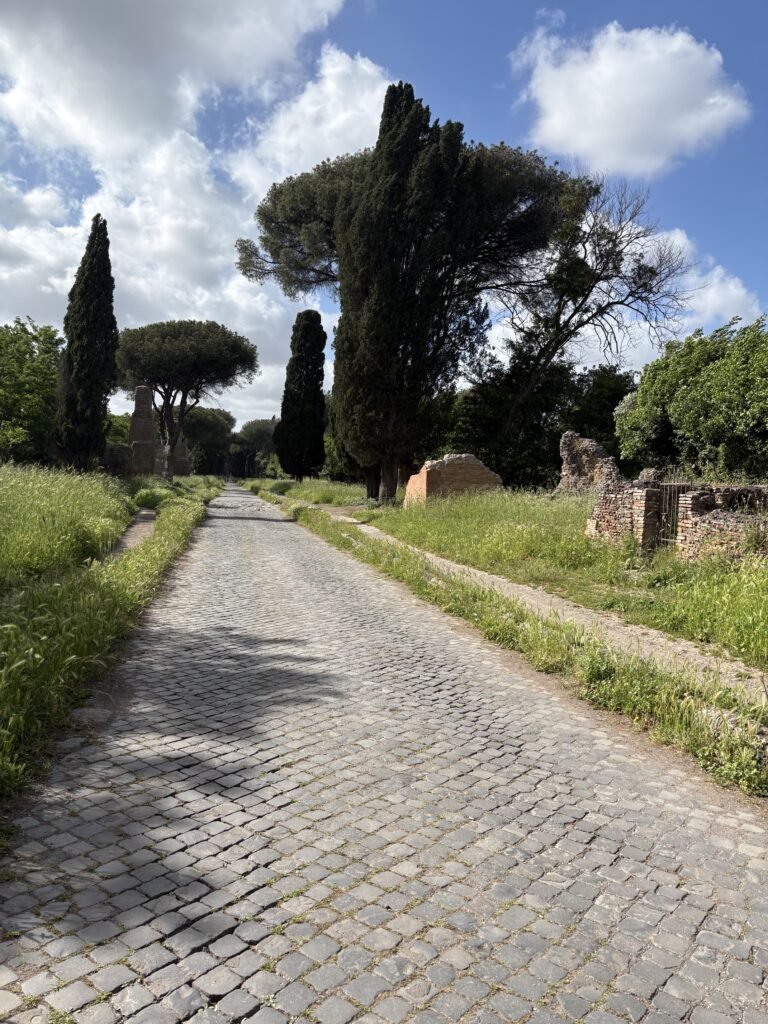
It was not technically difficult, but it required attention. It was also one of the most memorable parts of the tour.
There is something strange about travelling along a road laid down thousands of years ago and thinking about the number of people who have passed over the same ground.
I remember having a similar feeling in the Roman Forum on my first trip: that sense of being only one very small moment in a history stretching far behind and ahead of you.
Standing on the Appian Way brought that feeling back.
The aqueducts were the part of Rome I had never seen
Eventually we left the ancient road and continued through parkland on shared cycling and walking paths toward the aqueducts.
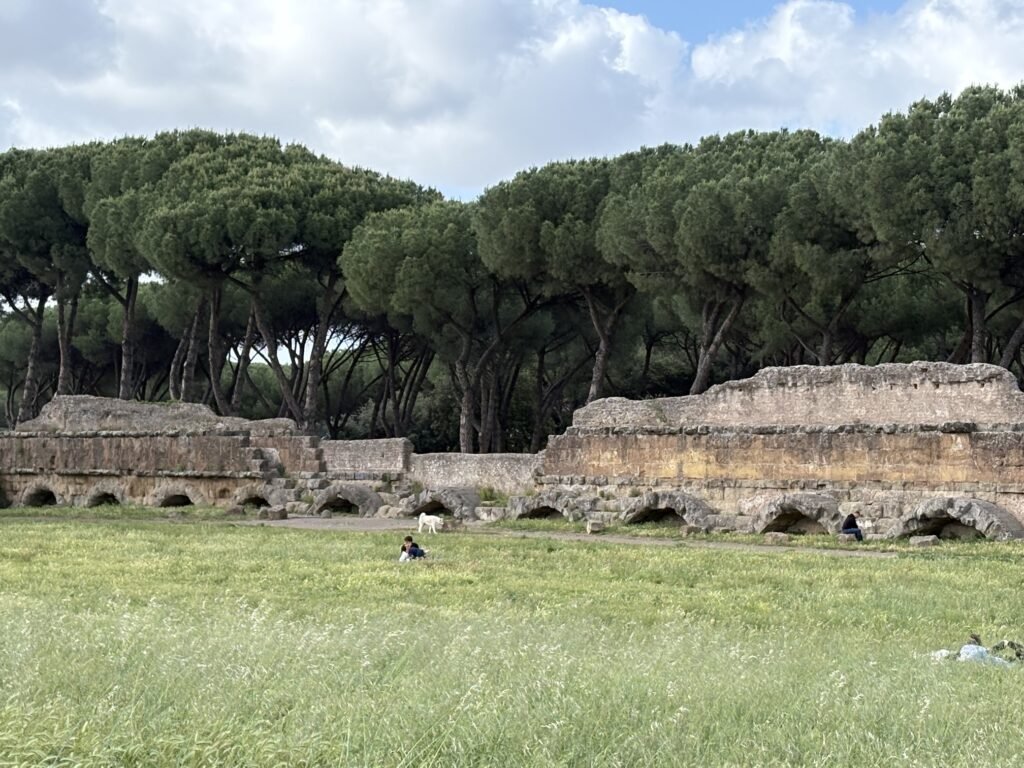
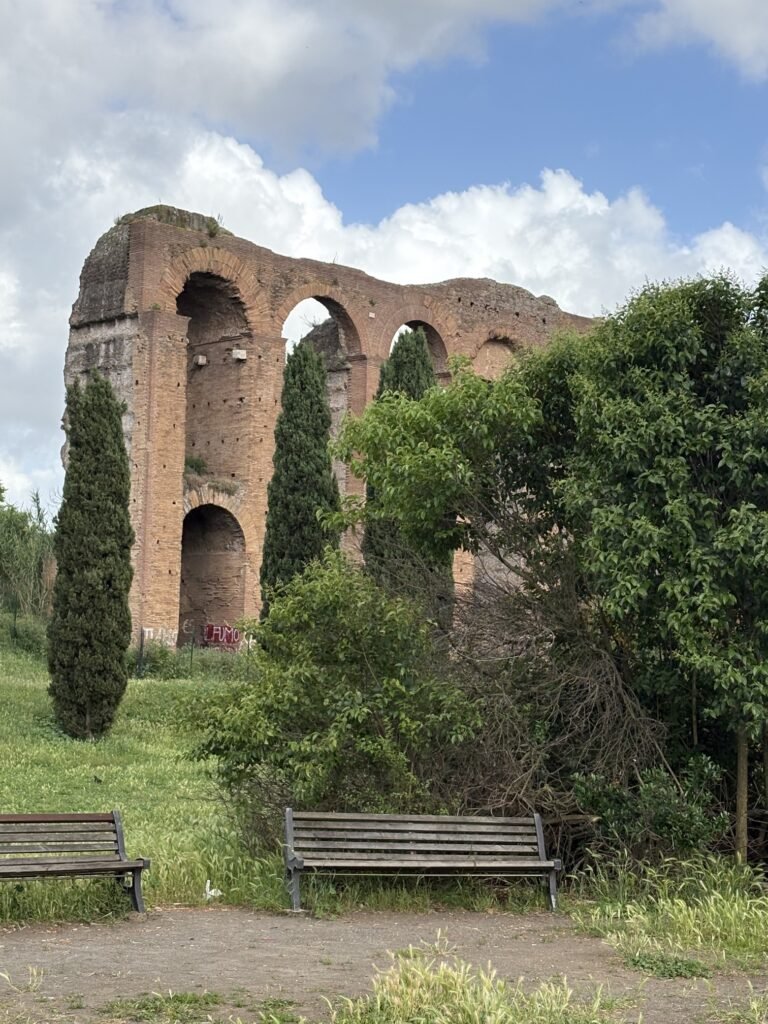
This was the landscape I had been hoping to find when I started looking for something beyond central Rome.
Long stretches of aqueduct crossed the open landscape, and our guide explained how the Romans used carefully engineered gradients to carry water over enormous distances into the city. The structures were impressive on their own, but understanding that they formed part of a functioning water system made them more interesting than simply looking at another ancient ruin.
It was also striking how different the surroundings felt from central Rome: grass, open sky, paths and long views rather than traffic and tightly packed buildings.
For someone who needs some nature mixed into a city trip, this was probably the strongest part of the day.
Was the bike tour difficult?
Overall, I would call it easy to moderate.
What mattered more than fitness
Being comfortable on a bicycle, handling uneven ancient paving and riding briefly in city traffic mattered more than climbing ability.
The route was not particularly hilly, and the e-bike made the few climbs very manageable. The main challenges were the uneven ancient stones on the Appian Way and a couple of steeper downhill sections around the aqueduct area, where slowing down and staying controlled mattered more than fitness.
The tour itself lists a minimum age of 12, so this is not something I would recommend for young children.
For adults or older teenagers who are reasonably comfortable on a bicycle, the physical demands were not the issue. Being comfortable riding briefly in city traffic and navigating uneven surfaces matters more.
The aperitivo was better than I expected
Toward the end of the ride, we stopped at a small café in the park for the food included with the tour.
I had expected a token snack and drink. Instead, it was a substantial aperitivo with a drink of choice — I had prosecco — and several trays of food shared among the group.
The unexpected part was how social the stop became. With only six people and the guide, we had spent several hours riding and talking together by then. Sitting down over food turned into a much longer conversation about travel, work and eventually artificial intelligence.
That particular group dynamic was probably luck rather than something anyone could promise when booking the tour, but it became part of what made the day memorable. I am still in touch with one of the women I met on the ride and have even seen her again since when work brought her to my home city.
Sometimes the best part of a guided experience is something that was never listed in the itinerary.
Who this kind of Rome day suits
I would particularly recommend this combination to someone on a second or later visit to Rome, especially if you have already seen the Colosseum, Forum, Pantheon and Vatican and want to experience a different side of the city.
It is also a good fit for travellers who like ancient history but do not want to spend an entire day moving between museums and crowded monuments. The Baths of Caracalla still provide substantial ruins, while the bike tour adds movement, parkland, religious history, Roman engineering and long stretches away from central traffic.
That same principle — deciding what deserves your limited time rather than trying to include everything — shaped how I planned the rest of this Italy trip as well.
For someone who needs nature to balance a city stay, that combination worked especially well.
A different Rome, not a lesser one
Nothing I did that day replaced the major Rome sights from my first visit.
I would still tell a first-time visitor to see the Roman Forum, Colosseum, Pantheon and Vatican if those places interest them. They are famous for good reason.
But returning to Rome gave me the luxury of not having to repeat them.
Instead, I spent part of the morning sitting quietly beside ancient baths, cycled along a Roman road, walked through early Christian catacombs and ended the afternoon beneath aqueducts stretching across open parkland.
It felt like a very different Rome from the one I remembered.
That was exactly the point.
More from this trip
- How I Planned Four Nights Across Capri, the Amalfi Coast and Naples
- Is Staying Overnight in Capri Worth It?
- How to Hike the Path of the Gods from Amalfi: Bus, Trail and Return Logistics
- Italy by Train and Ferry: Strikes, Connections and How Much Buffer to Leave
- Why I Chose Amalfi Town as My Base
Plan your own trip
Know How You Travel
Understand how pace, comfort and the number of hotel changes fit the way you travel.
Plan Your Trip
Build a route around the time, priorities and logistics that actually matter.
Explore more of Italy
Planning more of Italy? Explore our firsthand articles and practical advice from Rome, Capri, the Amalfi Coast and Naples.